
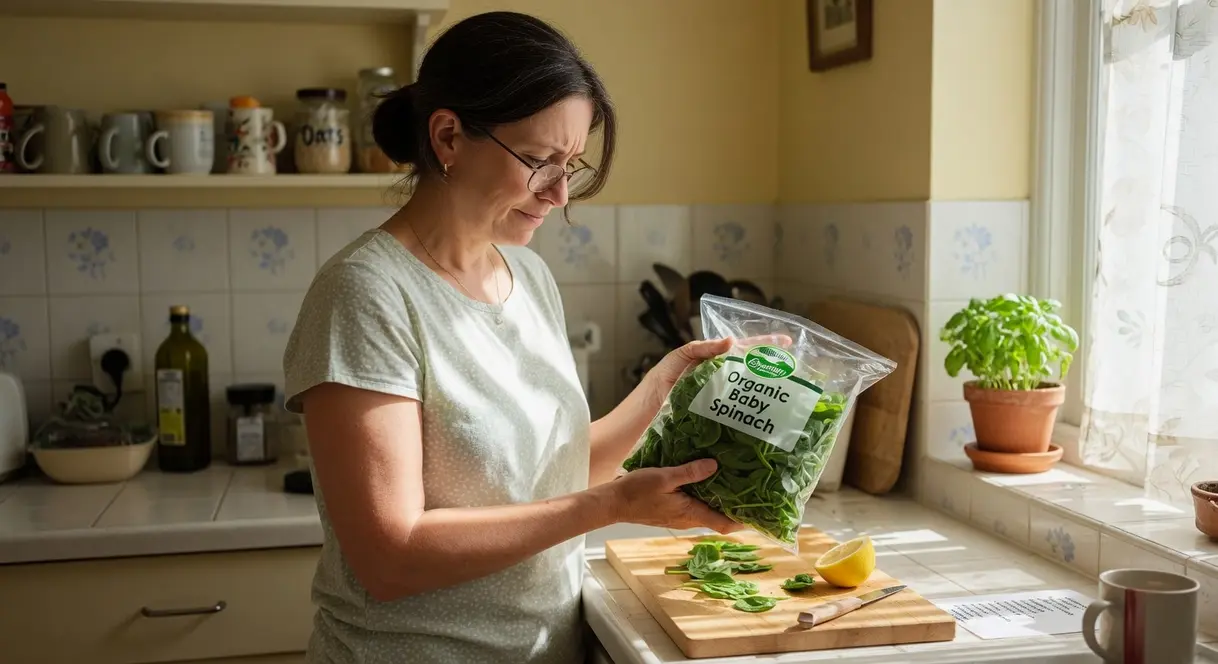
Someone hands you a printout from urgent care after a kidney stone episode, and at the bottom is a list of foods to avoid that includes spinach, almonds, chocolate, tea, beets, sweet potatoes, and dairy. The list is so long it basically rules out eating. Then a friend tells you their urologist said dairy is fine — encouraged, even. So which is it?
The confusion around foods that cause kidney stones is real, and a lot of the standard advice is either outdated or oversimplified. The truth is more useful than the printout: a few specific foods genuinely matter, several famously “bad” foods are mostly fine in normal portions, and the single biggest dietary factor for most people isn’t a food at all — it’s how much water they drink.
Why kidney stones form in the first place
Kidney stones are hard crystals that form when certain substances in urine — calcium, oxalate, uric acid, and others — become concentrated enough to clump together. About 75% of stones are calcium oxalate, which is why oxalate-rich foods get so much attention. The rest are mostly calcium phosphate, uric acid, or, less commonly, struvite or cystine stones.
The type of stone matters a lot. Dietary advice that helps one type can be irrelevant — or counterproductive — for another. If a stone was retrieved or passed and sent for analysis, that lab result is the single most useful piece of information for shaping a kidney stone diet.
The role of urine concentration
Concentrated urine is the common thread behind nearly every stone type. When fluid intake is low, minerals have more chance to crystallize. Most guidelines suggest enough fluid to produce at least 2 to 2.5 liters of urine daily, which usually means drinking around 3 liters of water. That one habit outperforms most dietary tweaks.
More Helpful Reads You Might Like:
- How to Prevent Kidney Stones: 7 Proven Strategies That Work
- Constipation and Fatigue: What Your Body May Be Trying to Tell You
The foods that actually deserve caution
For people prone to calcium oxalate stones — the most common type — a handful of foods stand out as high-oxalate enough to matter. Not because a single serving causes a stone, but because regular heavy intake can raise urinary oxalate considerably.
High-oxalate foods worth limiting
- Spinach (by far the highest — a single cup cooked can contain over 700 mg of oxalate)
- Rhubarb
- Almonds and cashews
- Beets and beet greens
- Swiss chard
- Sweet potatoes (especially with the skin)
- Wheat bran
- Dark chocolate and cocoa powder
- Soy products in large amounts (tofu, soy milk, edamame)
So can you eat spinach with kidney stones? In small amounts, occasionally, probably yes — but it’s the one food where “a little goes a long way” applies almost too well. A spinach smoothie every morning is a different story than a few leaves in a salad once a week.
Sodium: the underrated villain
Salt does something sneaky. High sodium intake increases the amount of calcium the kidneys dump into urine, which raises stone risk even if calcium intake is normal. Processed foods, deli meats, canned soups, frozen meals, restaurant food, and salty snacks are usually a bigger problem than the salt shaker. Aiming for under 2,300 mg of sodium daily — and ideally closer to 1,500 mg for stone formers — moves the needle more than most people expect.
Animal protein in excess
Large amounts of red meat, poultry, pork, organ meats, and shellfish raise uric acid and reduce urinary citrate, which normally helps prevent stones. This matters most for uric acid stones and gout-prone stone formers, but it nudges calcium oxalate risk too. “Excess” here means consistently eating large portions at multiple meals — not a chicken breast at dinner.
Added sugar and sugary drinks
Sugar-sweetened beverages, especially those with high-fructose corn syrup, are independently linked to higher stone risk. Sodas are a double problem when they’re also high in phosphoric acid, as many colas are. Fruit juice in small amounts isn’t the same threat, but it’s not protective either.
Vitamin C megadoses
The body converts excess vitamin C into oxalate. Doses above 1,000 mg daily — common in immune-support supplements — have been linked to higher stone risk in men. Getting vitamin C from food isn’t the problem; the pills are.
The foods that get blamed unfairly
This is where the standard handouts go wrong, and where a more accurate picture of what foods cause kidney stones gets useful.
Dairy and calcium
Cutting calcium to prevent calcium stones sounds logical and turns out to be backwards. Dietary calcium binds to oxalate in the gut, so the two get excreted together in stool instead of being absorbed and meeting up in the kidneys. Studies in adults have consistently shown that adequate calcium intake — roughly 1,000 to 1,200 mg daily from food — is associated with lower, not higher, stone risk. Milk, yogurt, and cheese in normal amounts are protective for most stone formers, especially when eaten with oxalate-containing foods.
Calcium supplements are a different story. Taking calcium pills between meals doesn’t get the gut-binding benefit and may slightly raise risk. When supplements are needed, taking them with food helps.
Coffee and tea
Coffee, both caffeinated and decaf, is associated with lower stone risk in large population studies. Tea contains oxalate but in modest amounts per cup — a few cups daily isn’t a meaningful problem for most people. Iced tea by the pitcher, especially the strong Southern-style brew, is the version that can become an issue.
Tomatoes, strawberries, and other “acidic” foods
These show up on old avoidance lists for no good reason. Tomatoes are low in oxalate. Strawberries are moderate at most. Neither is a meaningful trigger for the average stone former.
Beer and alcohol
Alcohol isn’t a stone-protective drink, but moderate intake isn’t strongly linked to stone formation either. The bigger issue is what alcohol replaces (water) and what it pairs with (salty bar food).
How to build a practical kidney stone diet
A reasonable kidney stone diet for most calcium oxalate stone formers looks like this: plenty of water throughout the day, normal calcium intake from dairy or fortified alternatives at each meal, moderate animal protein, low sodium, limited high-oxalate foods (rather than zero), and a generous amount of fruits and vegetables overall. Citrus fruits and lemon water are mildly helpful because citrate inhibits stone formation.
For uric acid stones, the priority shifts toward reducing red meat, organ meats, and shellfish, and addressing things like obesity and high-fructose intake. For cystine stones, fluid intake matters even more — sometimes 4 liters daily — and sodium restriction is essential.
A few practical habits that help
- Drink water steadily through the day rather than chugging it; pale yellow urine is the target
- Pair oxalate-containing foods with calcium-containing foods at the same meal
- Add a squeeze of lemon or lime to water for natural citrate
- Read sodium labels — anything over 400 mg per serving adds up fast
- Skip the high-dose vitamin C supplements unless a clinician specifically recommends them
When to talk to a doctor
A single small stone that passes without complication doesn’t always require a full workup, but recurrence is common — roughly half of people who form one stone will form another within ten years without prevention. A 24-hour urine collection can identify which substances are out of range and make dietary advice far more targeted than any general list.
Medical attention is warranted for severe flank pain that doesn’t improve, blood in the urine, fever or chills with stone symptoms, persistent vomiting, or inability to urinate. These can indicate infection or obstruction, which are urgent.
What to know about foods that cause kidney stones if you’ve had one before
The short version: hydration matters more than any single food, sodium is the most underrated culprit, dairy is usually a friend rather than an enemy, and the foods to avoid with kidney stones depend heavily on the stone type. Spinach and almonds are worth moderating if calcium oxalate stones are the issue — but cutting out half the produce aisle isn’t necessary or helpful. A stone analysis and a 24-hour urine test turn vague advice into something actually useful.
Medical Disclaimer: This content is for educational purposes only and does not replace professional medical advice, diagnosis, or treatment. Always consult your physician or a qualified healthcare provider with any questions about a medical condition.
Sources & Further Reading
- NIH NIDDK: Eating, Diet, & Nutrition for Kidney Stones
- PubMed: Dietary Oxalate and Kidney Stone Formation
- PubMed: The Role of Diet in Kidney Stone Pathogenesis and Prevention
- PMC / NIH: Nutrition and Kidney Stone Disease
- National Kidney Foundation: Kidney Stone Diet Plan and Prevention
- Mayo Clinic Health System: Preventing Kidney Stones from Forming