 Written by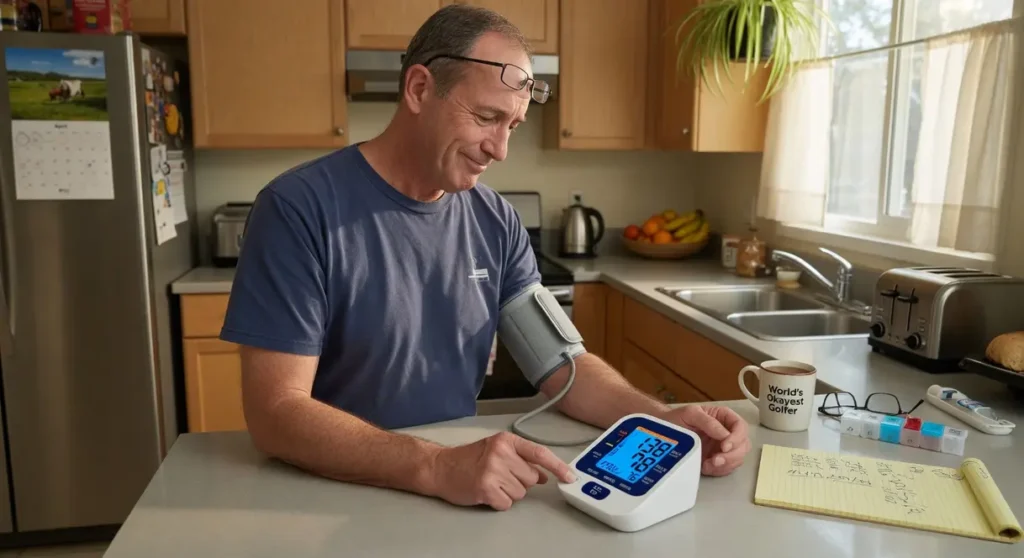
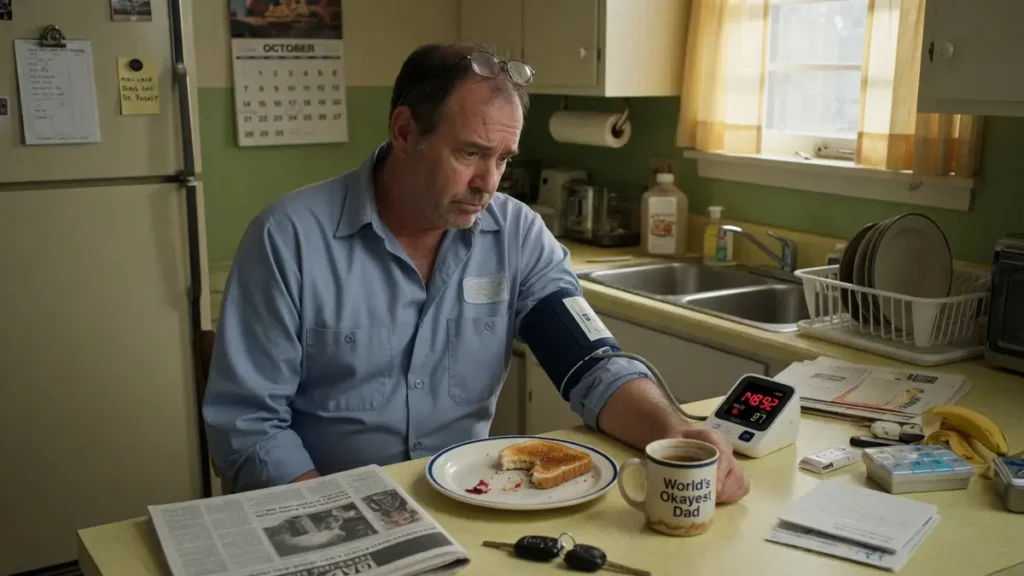
You sit down at the kitchen table, wrap the cuff around your arm, press the button, and watch the number climb. 138 over 88. A little high. You wait a minute, check again. 124 over 78. Better. One more time, just to be sure. 131 over 82. Now you’re confused — and maybe a little anxious. Which one is the real number?
In this article
The short answer: all of them are real. Blood pressure isn’t a fixed value like your height or your shoe size. It’s a moving target, and if you’re asking why does my blood pressure change every time I check it, the answer involves biology, technique, and a fair amount of normal variation that almost no one warns you about when they hand you a home monitor.
Blood pressure is supposed to move
Blood pressure reflects how hard your heart is pumping and how much resistance your blood vessels are offering at any given moment. Both of those change constantly. Your heart speeds up when you stand, slows down when you relax, and adjusts to your breathing, your thoughts, your digestion, even the temperature in the room.
So the question isn’t really whether blood pressure fluctuates throughout the day — it does, and dramatically. The real question is how much variation falls inside the normal range and how much suggests something worth paying attention to.
In healthy adults, systolic pressure (the top number) can swing 20 to 40 points across a single day. It’s typically lowest during sleep, rises in the early morning, peaks in the late afternoon, and dips again at night. Even between two readings taken five minutes apart, a difference of 5 to 10 points on either number is common and not a red flag.
What’s driving the changes minute to minute
A lot of things nudge the number up or down in real time:
- Physical activity, including walking up stairs just before sitting down
- Caffeine from coffee, tea, or soda within the past hour or two
- Nicotine from cigarettes or vaping
- A full bladder, which can raise systolic readings by 10 to 15 points
- Stress, anxiety, or even mild irritation
- Talking or being talked to during the reading
- Cold hands or a cold room
- Recent meals, especially large or salty ones
- Pain, including a stubbed toe or a headache
Stack a few of these together and a reading can shift quite a bit without anything being medically wrong.
More Helpful Reads You Might Like:
- Why Stress Can Lead to Belly Fat and Weight Gain (Cortisol Explained)
- Vitamin B12 Deficiency: 7 Early Signs You Shouldn’t Ignore
- How Sleep Affects Testosterone: What the Research Shows
Why blood pressure readings are different each time, even back to back
Here’s the thing — even when you do everything right, two readings taken two minutes apart will rarely match exactly. Part of this is biology. The other part is measurement.
Home monitors, even the good ones, have a built-in margin of error of around 3 mmHg in either direction. That means a “true” pressure of 130 might display as 127 one minute and 133 the next, with no actual change in your body. Add in tiny shifts in how the cuff sits, whether your arm moved, or how deeply you were breathing, and small variations become inevitable.
This is why clinical guidelines recommend taking two or three readings in a row, one minute apart, and averaging them. A single number on a home monitor is almost never the whole picture. The pattern across several readings — and across several days — tells you far more than any individual measurement.
How much should blood pressure vary between readings?
A useful rule of thumb: differences of up to about 10 points between consecutive readings are generally considered normal variation. Larger gaps — say, 20 points or more between back-to-back checks — usually point to a measurement issue rather than a medical one. Common culprits include an improperly sized cuff, an arm that isn’t supported, crossed legs, or talking during the reading.
Across the day, swings of 20 to 30 systolic points between morning and evening are typical. Across the week, the average of your morning readings and the average of your evening readings paint a more reliable picture than any single number.
Common technique mistakes that exaggerate the swings
Most people who track their blood pressure at home are unknowingly inflating the variability of their readings. Small fixes can tighten things up considerably.
Cuff position and size
A cuff that’s too small reads falsely high — sometimes by 10 to 15 points. A cuff that’s too large can read falsely low. The bladder inside the cuff should wrap around about 80% of your upper arm. If you’ve gained or lost significant weight, the cuff that came with the monitor may no longer fit correctly.
The cuff should sit on bare skin, not over a sleeve, and the bottom edge should rest about an inch above the bend of your elbow.
Body position
Sit in a chair with back support. Both feet flat on the floor, legs uncrossed. Rest your arm on a table so the cuff is level with your heart. An unsupported arm dangling at your side can add 10 points to the reading. Crossed legs can add another 2 to 8.
The five-minute rule
Sit quietly for five minutes before the first reading. No phone, no TV, no conversation. This isn’t ceremony — it actually matters. Just walking to the chair and sitting down activates your nervous system enough to push the number up temporarily.
Timing
Check at roughly the same times each day. Morning before coffee or medication, and evening before dinner, work well for most people. Don’t measure right after exercise, a hot shower, a stressful phone call, or a meal.
When fluctuations actually matter
Is it normal for blood pressure to fluctuate? Yes — but some patterns deserve a closer look.
Research suggests that people whose blood pressure swings widely from visit to visit (or day to day) may have a somewhat higher cardiovascular risk than people with steadier readings, even when the averages look similar. Very large variability — especially in older adults — can be associated with stiffer arteries or issues with how the nervous system regulates pressure.
That said, the kind of variability that worries clinicians usually shows up as a clear trend, not as the normal up-and-down of a healthy adult checking three times in a row.
Patterns worth mentioning to a clinician
- Consistent readings at or above 135/85 at home, averaged across a week or two
- Readings that are dramatically higher at the doctor’s office than at home (sometimes called white-coat effect) or the reverse, where home readings are higher than office readings (masked hypertension)
- Sudden drops in pressure when standing up, especially if they cause dizziness
- Wide swings — say, 160/95 one hour and 110/70 the next — happening repeatedly without obvious triggers
- A big difference between the right arm and the left arm (more than 10 to 15 points consistently)
When to seek medical care
Most variability is benign. A few situations aren’t.
Call your clinician promptly if you’re seeing readings at or above 180/120 on more than one check, even if you feel fine. Seek emergency care if a reading that high comes with chest pain, shortness of breath, severe headache, vision changes, weakness on one side of the body, difficulty speaking, or back pain. Those combinations can signal a hypertensive emergency.
On the other end, very low readings — below about 90/60 — paired with lightheadedness, fainting, confusion, or a racing heart also warrant a same-day call.
What to know when your blood pressure changes every time you check it
Blood pressure changes with each reading because it’s a snapshot of a system that never stops adjusting. Some of the variation is your body doing exactly what it should. Some is measurement noise. A smaller slice reflects how well your cardiovascular system handles the demands you put on it.
The most useful thing a home monitor can give you isn’t a single number — it’s a trend. Take two or three readings, a minute apart, twice a day for a week. Write them down or let the device store them. Bring that log to your next appointment. A pattern is harder to argue with than any individual reading, and it’s the picture your clinician actually wants to see.
Medical Disclaimer: This content is for educational purposes only and does not replace professional medical advice, diagnosis, or treatment. Always consult your physician or a qualified healthcare provider with any questions about a medical condition.
Sources & Further Reading
How we sourced this article: we rely on peer-reviewed studies, clinical guidelines and public-health agencies (CDC, NIH, AHA, WHO), check every link before publishing, and update articles when the evidence changes. Read our editorial approach.
- American Heart Association: The Rules for Measuring Blood Pressure – And Why They Exist
- American Heart Association: Fluctuations in Blood Pressure Over Time May Be Linked to Higher Sudden Cardiac Death Risk
- NIH / NHLBI: High Blood Pressure – Diagnosis
- PMC / NIH: Blood Pressure Variability in Clinical Practice: Past, Present and the Future
- PMC / NIH: Blood Pressure and Its Variability: Classic and Novel Measurement Techniques
- Mayo Clinic: Blood Pressure Chart – What Your Reading Means