 Written by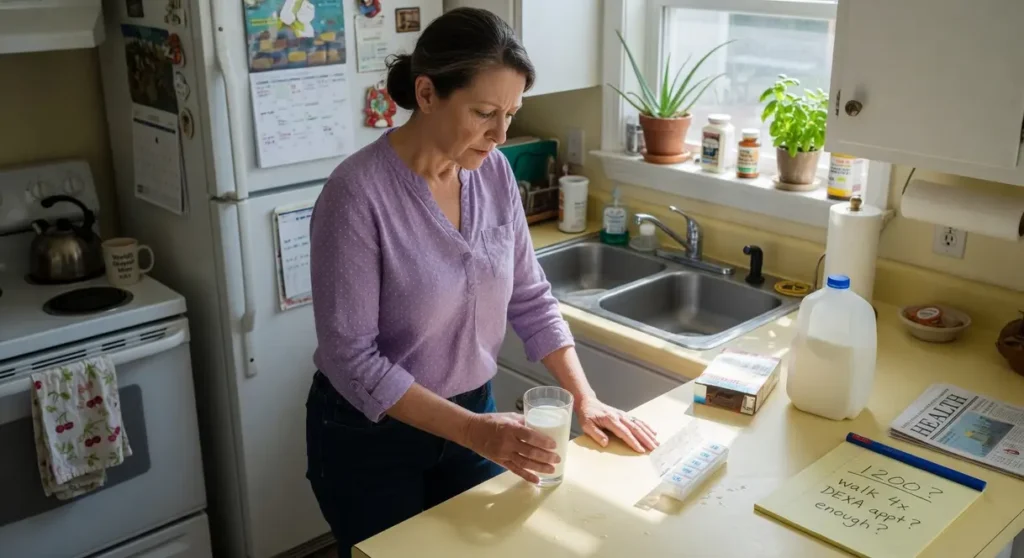
A DEXA scan comes back with the word “osteopenia” or “osteoporosis,” and the first question out of most people’s mouths is some version of: is this permanent, or can I fix it? It’s a fair question. Bone feels like one of those things that only goes one direction after a certain age — downhill, slowly, without much you can do about it.
In this article
- What “rebuilding” bone really means
- Can you rebuild bone density after 50 with exercise and food alone?
- Supplements: helpful, overhyped, or both
- Can osteoporosis be reversed with medication?
- Habits that quietly sabotage bone
- When to seek medical care
- So, can you rebuild bone density after 50 — what’s the realistic verdict?
The reality is more interesting than that, and more nuanced. So can you rebuild bone density after 50? The honest answer is: sometimes yes, sometimes only partly, and a lot depends on where you’re starting and what you’re willing to do consistently. Let’s get specific about what that actually means.
What “rebuilding” bone really means
Bone isn’t a static structure. It’s living tissue that’s constantly being broken down and rebuilt in a process called remodeling. Special cells dissolve old bone, and others lay down new bone to replace it. For most of your younger life, those two processes stay roughly balanced. After 50 — and especially in women during and after menopause, when estrogen drops — the breakdown starts outpacing the rebuilding. That’s why density declines.
Here’s the thing worth understanding before you set expectations. “Rebuilding” can mean three different things, and they’re not equally achievable:
- Slowing the loss so your bones decline more gradually than they otherwise would.
- Maintaining your current density, holding the line where you are.
- Actually increasing your bone mineral density on a scan.
The first two are realistic for most people who put in consistent effort. The third — genuine, measurable gains in density — is possible, but it tends to be modest and is far more likely with medical treatment than with lifestyle changes alone. People hoping to see their scan numbers jump back to where they were at 35 are usually setting themselves up for disappointment. Smaller, meaningful improvements are the more honest target.
More Helpful Reads You Might Like:
- Peptides for Skin Longevity: How They Really Support Aging Skin
- How to Prevent Kidney Stones: 7 Proven Strategies That Work
- 7 Proven Ways to Increase Testosterone Naturally
Can you rebuild bone density after 50 with exercise and food alone?
To a point, yes — though “rebuild” may be too strong a word for what diet and movement accomplish on their own. For many people with mild bone loss, the bigger win is preventing further decline and reducing fracture risk. That’s not a consolation prize. A bone that doesn’t break is the whole goal.
Exercise that actually moves the needle
Bone responds to stress. When muscles pull on bone and when you put weight through your skeleton, it signals the body to reinforce those areas. That’s why bone density exercises for seniors tend to fall into two categories: weight-bearing activity and resistance training.
Weight-bearing means you’re on your feet, working against gravity — walking, hiking, stair climbing, dancing. Swimming and cycling are wonderful for your heart, but they don’t load the skeleton the same way, so they don’t do much for density. Resistance training — lifting weights, using resistance bands, or bodyweight work like squats and pushups — adds the mechanical load that prompts bone to strengthen.
Research in older adults suggests that progressive resistance training, done a couple of times a week, can help maintain and sometimes modestly improve density at the hip and spine. High-impact moves like jumping can help too, but only for people whose bones and joints can safely handle them. If you already have osteoporosis or a history of fractures, certain movements — deep forward bends, heavy twisting of the spine — may raise injury risk, which is exactly why a tailored plan beats a generic one.
What food can and can’t do
Calcium and protein are the raw materials. Protein especially is underrated — it makes up a large part of bone’s structural framework, and many older adults simply don’t eat enough of it. Aim to include a protein source at each meal, and prioritize calcium-rich foods like dairy, fortified plant milks, canned fish with soft bones, tofu, and leafy greens.
Food alone won’t reverse significant bone loss. But chronically low calcium or protein intake will quietly undermine everything else you’re doing, so it’s worth getting right.
Supplements: helpful, overhyped, or both
The market for the best supplements for bone density over 50 is enormous, and most of it oversells. Here’s what the evidence actually supports.
Vitamin D matters because it lets your gut absorb calcium in the first place. Deficiency is genuinely common, particularly in northern climates and in people who spend little time outdoors. Correcting a true deficiency helps. Megadosing beyond what you need does not give you extra credit.
Calcium is best obtained from food when possible. Supplements can fill a gap if your diet falls short, but more isn’t better — very high supplemental doses have been linked in some studies to other concerns, and the benefit plateaus. A clinician can help you figure out your gap rather than guessing.
Beyond those two, the evidence gets thin. Magnesium, vitamin K2, collagen, and various mineral blends are frequently marketed for bones, and while a few small studies are intriguing, the data isn’t strong enough to promise results. If your diet is reasonable, you probably don’t need a cabinet full of pills.
Can osteoporosis be reversed with medication?
This is where the conversation around reversing bone loss in older adults gets more hopeful. So can osteoporosis be reversed? Not erased entirely — but certain prescription treatments can produce real, measurable increases in bone density, more than lifestyle changes typically manage.
Broadly, bone medications fall into two groups. Some slow the cells that break down bone, which lets the rebuilding side catch up and density stabilize or rise slightly. Others actively stimulate new bone formation and can produce more substantial gains, though they’re usually reserved for people at high fracture risk. These drugs aren’t right for everyone, and they carry their own considerations and side effects, which is a real conversation to have with a physician — not a decision to make from a blog.
The practical point is this: if your bone loss is significant, lifestyle measures support medication but rarely replace it. Pretending otherwise does people a disservice.
Habits that quietly sabotage bone
Some of the most effective things you can do involve subtraction, not addition. Smoking accelerates bone loss. Heavy alcohol use interferes with bone formation and raises fall risk. Being underweight is associated with lower density. And certain medications taken long-term — some steroids, certain acid reducers, a few others — can affect bones, which is worth reviewing with your doctor rather than stopping on your own.
Falls deserve special mention. A stronger bone still breaks if you hit the ground hard enough, so reducing fall risk — through balance work, decent lighting, removing loose rugs, and checking vision — protects you in a way density numbers alone don’t capture.
When to seek medical care
Reach out to a healthcare provider if any of the following apply to you:
- You’re over 50 and have never had a bone density scan, especially if you’re postmenopausal or have a family history of osteoporosis.
- You’ve broken a bone from a minor fall or bump that shouldn’t have caused a fracture.
- You’ve lost noticeable height or developed a stooped posture.
- You’re on long-term steroids or other medications that may affect bone.
- You want to start a new exercise program but already have osteoporosis or prior fractures and aren’t sure what’s safe.
A clinician can order a DEXA scan, check for underlying causes, and help you decide whether lifestyle measures are enough or whether treatment makes sense for your level of risk.
Medical Disclaimer: This content is for educational purposes only and does not replace professional medical advice, diagnosis, or treatment. Always consult your physician or a qualified healthcare provider with any questions about a medical condition.
So, can you rebuild bone density after 50 — what’s the realistic verdict?
You can almost always slow the loss, you can often hold your ground, and with the right combination of resistance training, adequate protein and calcium, corrected vitamin D, and — when appropriate — medication, some people do see genuine density gains. What’s unrealistic is expecting to reverse decades of change through willpower and a supplement bottle. Start with a bone density scan so you know your actual numbers, then build a plan around them with a clinician. The earlier you act after 50, the more those numbers tend to work in your favor.
Sources & Further Reading
How we sourced this article: we rely on peer-reviewed studies, clinical guidelines and public-health agencies (CDC, NIH, AHA, WHO), check every link before publishing, and update articles when the evidence changes. Read our editorial approach.
- PubMed: Effects of Exercise on Bone Mineral Density and Bone Turnover Markers in Adults: A Systematic Review and Meta-Analysis
- National Institute on Aging (NIH): Osteoporosis
- NIAMS (NIH): Osteoporosis — Causes, Risk Factors, and Symptoms
- Mayo Clinic: Osteoporosis Treatment — Medications Can Help
- NIH Office of Dietary Supplements: Vitamin D — Health Professional Fact Sheet