
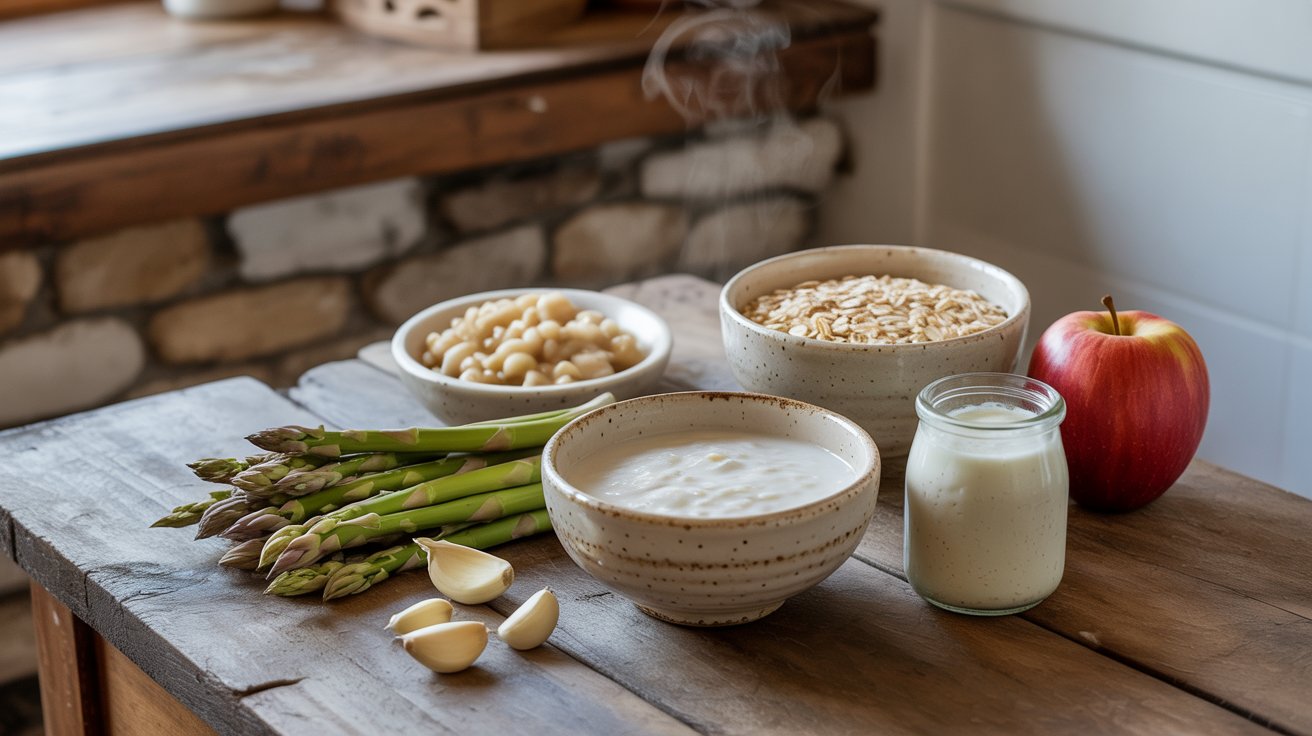
Ever notice how some people can eat a bowl of oatmeal, a plate of roasted veggies, and feel fantastic—while others with a sensitive gut end up doubled over? If you (or someone you love) lives with Crohn’s disease, it can feel like food is the enemy. The good news: emerging research suggests that certain types of fermentable fiber—think inulin from foods like garlic and asparagus, or beta-glucan from oats and barley—may help lower the risk of developing Crohn’s, especially in people at higher risk. The even better news is that you can tap these benefits without ignoring day-to-day comfort.
Below, we unpack what “fermented” (or fermentable) fiber actually is, how it works inside your body, what the evidence says about Crohn’s risk, and practical steps to try—including when to pull back if your gut is flaring.
More Helpful Reads You Might Like:
- Could Kefir Be the Key to Enjoying Dairy Again?
- What Is the Healthiest Breakfast? A Doctor’s Guide to Starting Your Day Right
- The Unsung Hero of Your Health: What Does Magnesium Do for Your Body?
- Is Cooking with Olive Oil Actually Healthy? A Scientific Look
- The Unwanted Nightly Symphony: A Guide on How to Stop Snoring
What is “fermented” fiber?
Dietary fiber isn’t just one thing. Some fibers are fermentable, meaning your gut bacteria can break them down (ferment) in the colon. As they do, they produce health-promoting compounds called short-chain fatty acids (SCFAs)—primarily acetate, propionate, and butyrate. Fermentable fibers include:
- Inulin/fructans (onions, garlic, leeks, asparagus, wheat, chicory root)
- Beta-glucan (oats, barley)
- Pectin (apples, citrus)
- Resistant starch (cooled potatoes, green bananas, legumes)
Why this matters: Americans generally undereat fiber, averaging ~15–16 grams per day vs. the 25–38 grams many experts recommend. That gap leaves a lot of potential benefit on the table.
The microbiome–immune connection: how fermented fiber might lower risk
Crohn’s disease is a chronic inflammatory condition of the digestive tract. It likely arises when genetic susceptibility (for example, variants in immune-related genes) meets environmental triggers—with the gut microbiome (the community of microbes living in your intestine) playing a central role. When the microbiome tilts out of balance (“dysbiosis”), the intestinal lining (your gut barrier) can become leaky, and the immune system can shift into a higher-inflammation setting.
Here’s where fermentable fiber enters the chat:
1) SCFAs feed and fortify the gut lining
Butyrate is the preferred fuel for colon cells. It encourages those cells to tighten the spaces between them (tight junctions) and produce protective mucus—strengthening the gut barrier so fewer irritants seep through to provoke the immune system.
2) SCFAs calm immune over-reactions
SCFAs bind to receptors on immune cells (like GPR41/43) and can also act as HDAC inhibitors, nudging the immune system toward more regulatory T cells (T-regs) and anti-inflammatory signals like IL-10. Translation: they help keep inflammation in check, which is crucial in a condition like Crohn’s.
3) SCFAs support a balanced microbial community
Feeding “good” microbes with fermentable fibers helps diversify the microbiome. A more diverse ecosystem resists invasion by harmful bacteria and produces steadier levels of protective metabolites. In active IBD, lower fecal butyrate is commonly observed, which may reflect disrupted fermentation and reduced protection.
What does the research say about risk of Crohn’s?
While no single food “prevents” Crohn’s, several lines of evidence connect fermentable fiber with lower risk:
- Long-term fiber intake & Crohn’s risk: In a large prospective study of U.S. nurses, women with the highest long-term fiber intake—especially from fruit—had a significantly lower risk of developing Crohn’s disease (not ulcerative colitis). This remains one of the most cited human studies on diet and Crohn’s risk.
- Fermentable fiber subtypes matter: Newer data focusing on specific fermentable fibers (not just total fiber) suggests that inulin and beta-glucan intakes are each associated with ~30% lower risk of Crohn’s among first-degree relatives of patients—people at elevated baseline risk. These findings were presented by North American investigators and published as a peer-reviewed abstract. That’s promising, though confirmatory trials are still needed.
- Fiber and clinical course: In people already diagnosed with IBD, higher fiber intake has been linked with fewer flares and reduced risk of surgery over time, although individual tolerance varies. Systematic reviews also suggest fiber-rich patterns may support remission.
Bottom line: The weight of evidence points toward a protective role for higher—and specifically fermentable—fiber intake in Crohn’s risk and course, but responses are individual. Large, definitive prevention trials are still in progress.
“Fermentable” doesn’t mean “always comfortable”: why symptoms can flare
If you have active inflammation, strictures (narrowed segments), or fistulas, bulky or highly fermentable fibers can trigger gas, bloating, or pain. That’s why many clinical teams recommend a temporary low-fiber/low-residue approach during flares, then a gradual re-introduction as symptoms calm. The goal isn’t to avoid fiber forever—it’s to match your intake to your gut’s current capacity.
Harvard Health also points out that the SCFAs produced by fermenting plant fibers are generally beneficial for the colon—and that people with active IBD often show decreased SCFAs—supporting the idea of re-introducing plant fiber once it’s safe to do so.
Practical ways to use fermentable fiber—safely and comfortably
Step 1: Know your fiber “families”
- Inulin/fructans (FODMAP group): onions, garlic, leeks, wheat, asparagus, Jerusalem artichokes, chicory root.
- Beta-glucan: oats, barley.
- Pectin: apples (and applesauce), citrus, carrots.
- Resistant starch: cooled potatoes, rice, lentils, greenish bananas.
These overlap with some FODMAP foods, which can be gassy during flares. That doesn’t make them “bad”—it just means timing and dose matter.
Step 2: Match your intake to your symptoms
- During a flare or with strictures: Ask your GI team about a low-fiber/low-residue plan for a short period. Choose softer textures (well-cooked, peeled, blended). Hydrate well.
- In remission or when stable: Gradually add fermentable fibers back in, starting with gentler options and small portions.
Step 3: Start low, go slow (and chew!)
- Increase fermentable fiber by ~3–5 grams every 3–4 days, not all at once.
- Chew thoroughly; cook veggies until tender.
- Keep fluids up—water helps fiber do its job.
- If you’re very sensitive to onions/garlic (high in inulin), try infused oils for flavor without the fiber load.
Step 4: Consider food first, not supplements
Whole foods deliver a mix of fibers plus polyphenols and nutrients that your microbes love. Oats (beta-glucan) at breakfast, a small side of barley soup at lunch, roasted carrots or applesauce at dinner—simple swaps go a long way. If you’re considering an inulin or partially hydrolyzed guar gum supplement, run it by your clinician first.
Step 5: Keep a simple “fiber & symptom” log
For 2–4 weeks, jot down what you ate, how much, and symptoms (pain, bloating, bowel changes) 0–10. Patterns usually jump out quickly and help you tailor choices with your dietitian.
A quick physiology detour (in everyday language)
Think of your colon as a garden and fermentable fibers as compost. When you feed your “good” microbes compostable fiber, they thrive—and in return, they make SCFAs:
- Butyrate fuels your colon lining, strengthens the barrier, and tells immune cells to cool it—less “attack mode,” more peacekeeping.
- Acetate and propionate also have anti-inflammatory roles and may influence metabolism in the liver.
- Together, these SCFAs can reduce the inflammatory signals that drive Crohn’s symptoms and, over time, may help lower risk in genetically susceptible people.
What about “I tried fiber and felt worse”?
You’re not imagining it. In active disease, or if key microbes are missing, some fermentable fibers can be too much, too soon. Early studies even suggest personalized responses based on your microbial profile—future stool tests may one day guide which fibers are your best match. For now, the personalized approach is to adjust dose, texture, and timing with your care team’s help.
Sample 7-day “gentle start” plan (food-first, fermentable-fiber aware)
Important: If you’re flaring or have strictures/fistulas, check with your GI team before adding fiber.
- Day 1–2: ¼–½ cup oatmeal (beta-glucan), well-cooked carrots (pectin), ripe banana (small).
- Day 3–4: Add ¼ cup barley to soup, ½ cup applesauce (pectin).
- Day 5–6: ½ cup lentil puree or well-cooked lentils (start small), ½ cup cooled potatoes (resistant starch).
- Day 7: Test 1–2 tbsp sautéed onions/leeks (inulin)—or use onion-infused oil if these bother you.
Track symptoms and hold at any step that triggers discomfort.
The big picture
- Evidence is growing that higher fiber—especially fermentable types like inulin and beta-glucan—may lower the risk of Crohn’s, and may support better outcomes for those already diagnosed.
- Mechanisms make sense: SCFAs nourish the gut lining and guide the immune system toward calm.
- Personalization is key: During flares, lower fiber can reduce symptoms; during remission, gradual re-introduction can rebuild resilience. Work with your gastroenterologist and a registered dietitian to tailor your plan.
Warm take-home
If Crohn’s runs in your family—or you’re managing it yourself—foods can feel fraught. You don’t need to chase perfection. Start with one small, doable change this week—maybe a cozy bowl of oatmeal or an extra spoon of applesauce—and listen to your gut (literally). Over time, those gentle choices can feed a healthier microbiome and support a calmer immune system. Your future self may thank you.
Medical Disclaimer: This content is for educational purposes only and does not replace professional medical advice, diagnosis, or treatment. Always consult your physician or a qualified healthcare provider with any questions about a medical condition.
Sources & Further Reading
- National Institute of Diabetes and Digestive and Kidney Diseases (NIH), Eating, Diet & Nutrition for Crohn’s Disease — https://www.niddk.nih.gov/health-information/digestive-diseases/crohns-disease/eating-diet-nutrition
- Ananthakrishnan AN, et al. “A Prospective Study of Long-term Intake of Dietary Fiber and Risk of Crohn’s Disease” (Gastroenterology, 2013) — https://pubmed.ncbi.nlm.nih.gov/23912083
- AGA Clinical Practice Update on Diet and Nutritional Therapies in IBD — https://pubmed.ncbi.nlm.nih.gov/38276922
- ESPEN guideline on Clinical Nutrition in Inflammatory Bowel Disease — https://pubmed.ncbi.nlm.nih.gov/36739756
- Lo CH, et al. “Dietary Inflammatory Potential and Risk of Crohn’s Disease” (2020) — https://www.sciencedirect.com/science/article/abs/pii/S001650852030603X