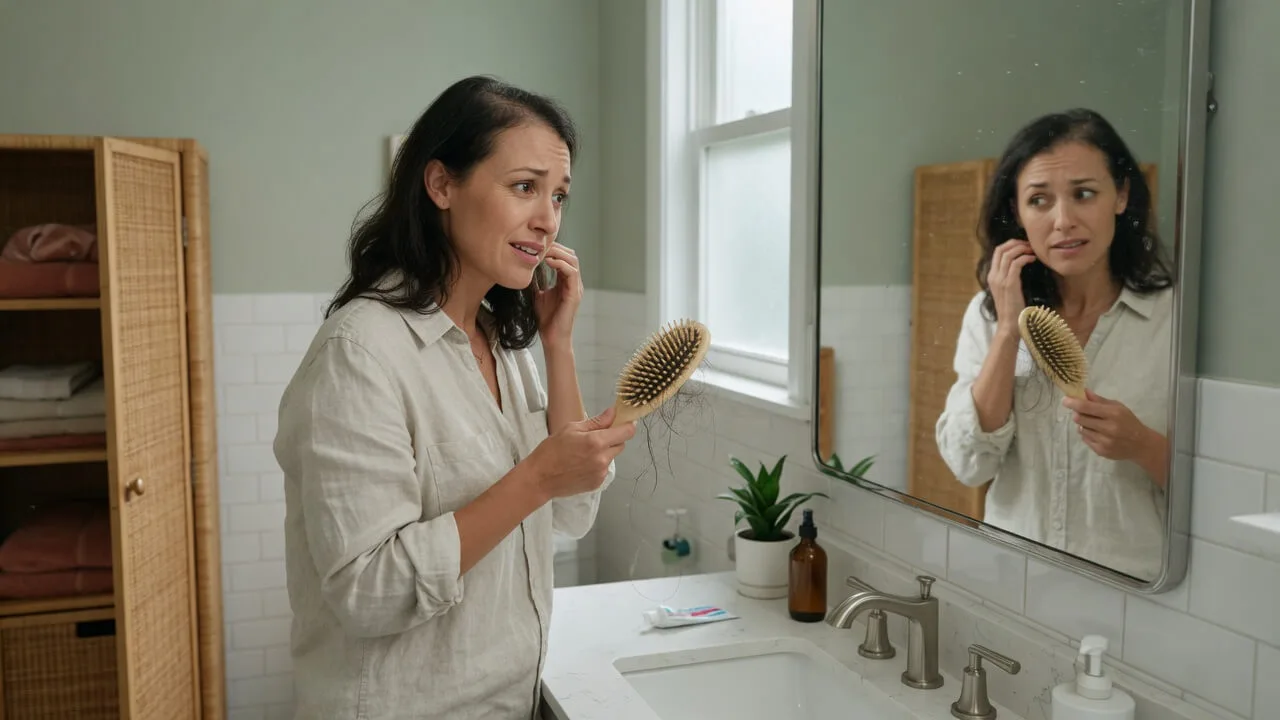
Noticing more hair than usual in the shower drain or on a hairbrush can feel alarming—especially when it seems to happen all at once. Many people immediately wonder: can stress cause sudden hair loss?
The short answer is yes, but the full explanation is more nuanced. Stress doesn’t typically make hair fall out overnight. Instead, it quietly disrupts the natural rhythm of hair growth, leading to shedding that often appears weeks or even months later.
Understanding how this process works can help reduce unnecessary worry—and clarify when it’s time to look deeper.
Why People Notice Sudden Hair Loss
Hair loss often feels sudden because the shedding phase becomes visible all at once. A person may go from normal shedding to seeing noticeably more hair on their pillow, in the shower, or while brushing.
But in many cases, the trigger happened earlier.
That’s why the question “can stress cause sudden hair loss” is so common. The timing doesn’t always seem to match the cause.
Can Stress Cause Sudden Hair Loss?
Yes—stress can trigger a specific type of hair loss known as telogen effluvium, which is one of the most common causes of diffuse hair shedding.
How Stress Disrupts the Hair Growth Cycle
Hair grows in cycles:
- Growth phase (anagen): lasts years
- Resting phase (telogen): lasts a few months
- Shedding phase: when hair naturally falls out
Under normal conditions, most hair remains in the growth phase.
However, physical or emotional stress can shift a larger number of hairs into the resting phase too early. When that happens, shedding increases noticeably later.
This is the key biological explanation behind the question: can stress cause sudden hair loss?
The Role of Telogen Effluvium in Stress Hair Loss
Telogen effluvium occurs when a stressor—such as illness, emotional strain, or major life changes—pushes many hair follicles into the resting phase at once.
Common triggers include:
- Significant emotional stress
- Illness or infection
- Surgery
- Rapid weight loss
- Hormonal changes
Several weeks later, those hairs begin to shed in larger amounts, creating the impression of sudden hair loss.
More Helpful Reads You Might Like:
What Stress-Related Hair Loss Looks Like
Understanding the pattern helps distinguish stress-related shedding from other causes.
Common Signs of Sudden Hair Shedding
- Increased hair in the shower or brush
- Hair shedding throughout the day
- Thinning across the scalp (not patches)
- More hair on pillows or clothing
- No pain or scalp inflammation
In stress hair loss, the scalp typically looks normal.
Why Hair Loss Feels Sudden but Isn’t
Even though shedding may seem abrupt, the underlying shift in the hair cycle began earlier.
This delayed response is one of the most important clarifications when asking: can stress cause sudden hair loss?
Timeline of Stress and Hair Loss
When Shedding Starts After Stress
Most people begin noticing increased shedding about:
- 2 to 3 months after a stressful event
This delay is a hallmark of telogen effluvium.
How Long Recovery Typically Takes
In many cases:
- Shedding lasts 3 to 6 months
- Hair gradually regrows afterward
For most individuals, the condition is temporary and reversible once the body stabilizes.
When Hair Loss Might Not Be Just Stress
While stress is a common factor, it is not the only explanation for sudden hair loss.
Signs That Point to Other Causes
- Bald patches instead of diffuse thinning
- Persistent shedding beyond 6–9 months
- Hair loss affecting eyebrows or body hair
- Scalp redness, itching, or pain
When to Seek Medical Evaluation
Medical evaluation may be important if hair loss is:
- Severe or rapidly worsening
- Accompanied by fatigue or other symptoms
- Interfering with daily life or emotional well-being
Other potential causes include thyroid disorders, iron deficiency, hormonal imbalances, or autoimmune conditions such as alopecia areata.
How to Support Hair Recovery After Stress
While there is no instant fix, certain habits may support recovery.
Simple Habits That Help Hair Regrow
- Prioritize consistent sleep
- Maintain a balanced diet with adequate protein
- Manage stress through sustainable routines
- Avoid overly aggressive hair treatments
- Stay consistent with gentle hair care
These steps help create the conditions for normal hair cycling to resume.
When Treatment May Be Needed
In some cases, healthcare providers may recommend:
- Nutritional evaluation
- Treatment for underlying conditions
- Dermatology consultation
Treatment depends on the underlying cause—not just the presence of stress.
The Bottom Line
So, can stress cause sudden hair loss?
Yes—but what often appears sudden is actually a delayed response to stress that occurred weeks or months earlier. This type of hair loss is usually temporary and linked to disruptions in the natural hair growth cycle.
For many people, shedding improves as the body recovers. Still, persistent or unusual patterns of hair loss deserve medical attention to rule out other causes.
Understanding the timeline and mechanism behind stress hair loss can make the experience less confusing—and help guide the next steps with clarity.
Medical Disclaimer
This content is for educational purposes only and does not replace professional medical advice, diagnosis, or treatment. Always consult your physician or a qualified healthcare provider with any questions about a medical condition.
Sources & Further Reading
Stress and the Hair Growth Cycle: Cortisol Effects on Hair Follicles
https://pubmed.ncbi.nlm.nih.gov/27538002/
American Academy of Dermatology — Hair Loss: Who Gets and Causes
https://www.aad.org/public/diseases/hair-loss/causes/18-causes
Mayo Clinic — Hair Loss: Symptoms and Causes
https://www.mayoclinic.org/diseases-conditions/hair-loss/symptoms-causes/syc-20372926
Cleveland Clinic — Telogen Effluvium
https://my.clevelandclinic.org/health/diseases/24486-telogen-effluvium