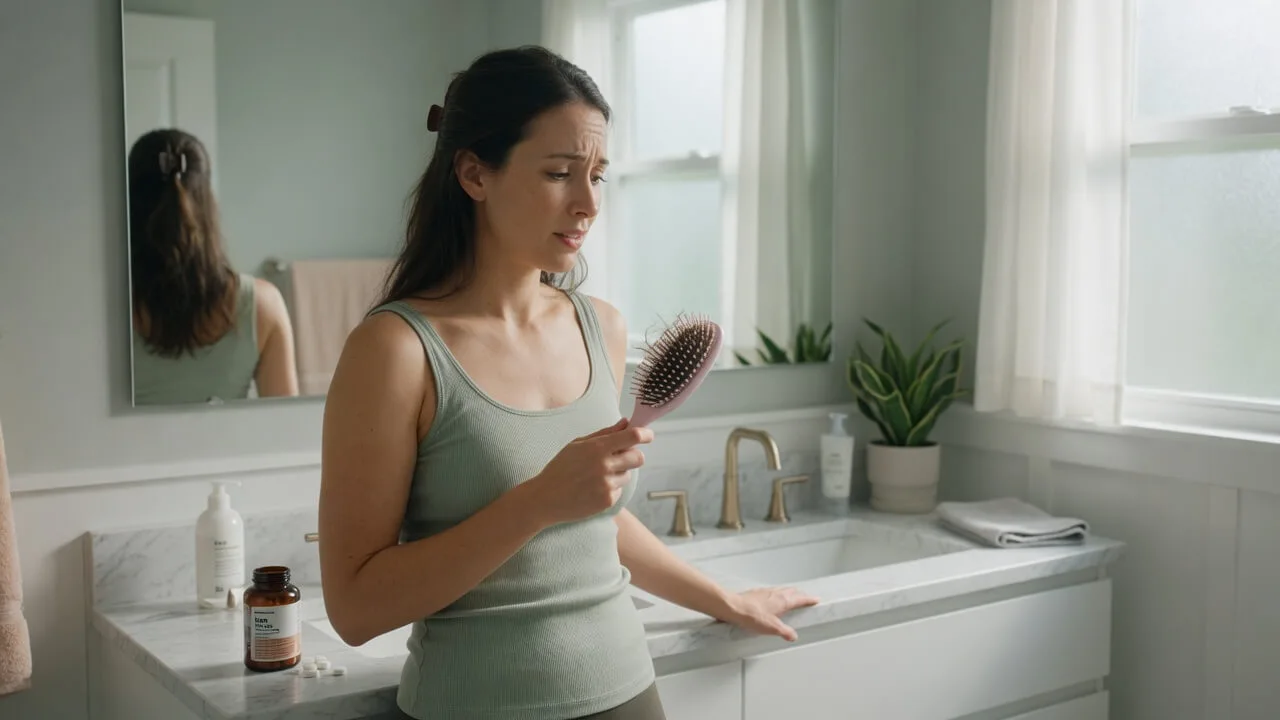
Hair loss can feel confusing—especially when it seems to come out of nowhere. One day everything looks normal, and the next, more strands than usual are showing up in the shower drain or on a hairbrush.
Among the many possible causes, low iron hair loss is one of the most commonly overlooked. It does not always come with obvious warning signs, and in many cases, hair shedding may be the first noticeable clue.
At the same time, not all hair loss is caused by iron deficiency. Understanding how this connection works can help clarify when iron levels might be playing a role—and when something else deserves attention.
What Low Iron Hair Loss Really Means
Low iron hair loss usually refers to increased shedding, not permanent hair loss. This type of shedding is often linked to a condition called telogen effluvium, where more hair follicles shift into the resting phase of the growth cycle.
Instead of growing steadily, hair begins to fall out more easily, often weeks or months after a trigger. Iron deficiency is one of several known triggers.
This is why many people describe the experience as:
- “My hair is falling out more than usual”
- “My ponytail feels thinner”
- “I’m shedding everywhere”
Why Iron Matters for Hair Growth
The Role of Iron in the Hair Growth Cycle
Iron supports essential cellular functions, including oxygen transport and energy production. Hair follicles are among the most metabolically active tissues in the body, meaning they rely on a steady supply of nutrients to function normally.
When iron levels drop, the body may prioritize vital organs over processes like hair growth. As a result, more follicles may shift prematurely into the shedding phase.
What Happens When Ferritin Levels Drop
Ferritin reflects the body’s stored iron. Even when standard blood counts appear normal, ferritin levels may be lower than optimal.
Some individuals with low ferritin hair loss may notice increased shedding, fatigue, or reduced hair density—though responses vary widely. Not everyone with low ferritin experiences hair changes.
7 Signs Your Hair Loss Might Be Caused by Low Iron
- Shedding has increased noticeably
More hair than usual appears on pillows, in the shower, or on brushes. - Hair loss is diffuse, not patchy
The thinning seems spread evenly across the scalp rather than concentrated in one area. - You feel more tired than usual
Fatigue often accompanies iron deficiency, even before anemia is diagnosed. - You notice brittle nails or pale skin
These subtle physical changes can sometimes appear alongside low iron levels. - Hair feels thinner overall
Ponytails may feel smaller, and volume may gradually decrease. - You have risk factors for iron deficiency
Heavy menstrual periods, recent pregnancy, restrictive diets, or endurance training may increase risk. - Hair shedding started after a physical stressor
Illness, weight loss, or significant life stress may combine with low iron to trigger shedding.
More Helpful Reads You Might Like:
When Hair Loss Is Not Just Low Iron
Other Common Causes of Hair Loss in Women
Hair loss often has more than one contributing factor. Other common causes include:
- Hormonal changes (such as thyroid disorders)
- Genetic hair thinning (androgenetic alopecia)
- Nutritional deficiencies beyond iron
- Stress-related shedding
- Medication side effects
When to Seek Medical Evaluation
Medical evaluation becomes especially important if:
- Hair loss is persistent or worsening
- There are symptoms like dizziness, shortness of breath, or heart palpitations
- Thinning follows a recognizable pattern (such as widening part lines)
How to Address Low Iron Hair Loss Safely
Testing and Diagnosis
A healthcare provider may evaluate:
- Ferritin levels
- Complete blood count (CBC)
- Iron studies
Because ferritin can be influenced by other factors, results are interpreted in clinical context rather than in isolation.
Nutrition and Treatment Options
If iron deficiency is confirmed, treatment may include:
- Dietary adjustments (iron-rich foods like lean meats, legumes, leafy greens)
- Oral iron supplementation when appropriate
- Addressing underlying causes of iron loss
Iron supplements should not be started without medical guidance, as excessive intake may cause side effects or complications.
The Bottom Line
Low iron hair loss is a real and often underrecognized contributor to increased hair shedding—especially when the loss is diffuse and accompanied by subtle systemic symptoms.
However, hair loss is rarely explained by a single factor. Iron deficiency may be part of the picture, but not always the entire story.
When hair changes feel persistent, unexplained, or concerning, a thoughtful medical evaluation can help identify the underlying cause and guide the most appropriate next steps.
Medical Disclaimer
This content is for educational purposes only and does not replace professional medical advice, diagnosis, or treatment. Always consult your physician or a qualified healthcare provider with any questions about a medical condition.
Sources & Further Reading
Iron Deficiency and Nonscarring Alopecia in Women
https://pmc.ncbi.nlm.nih.gov/articles/PMC8928181/
The Diagnosis and Treatment of Iron Deficiency and Its Potential Relationship to Hair Loss
https://pubmed.ncbi.nlm.nih.gov/16635664/
American Academy of Dermatology — Hair Loss: Who Gets and Causes
https://www.aad.org/public/diseases/hair-loss/causes/18-causes
NIH Office of Dietary Supplements — Iron Fact Sheet
https://ods.od.nih.gov/factsheets/Iron-HealthProfessional/
American Society of Hematology — Iron-Deficiency Anemia
https://www.hematology.org/education/patients/anemia/iron-deficiency
Mayo Clinic — Hair Loss
https://www.mayoclinic.org/diseases-conditions/hair-loss/symptoms-causes/syc-20372926