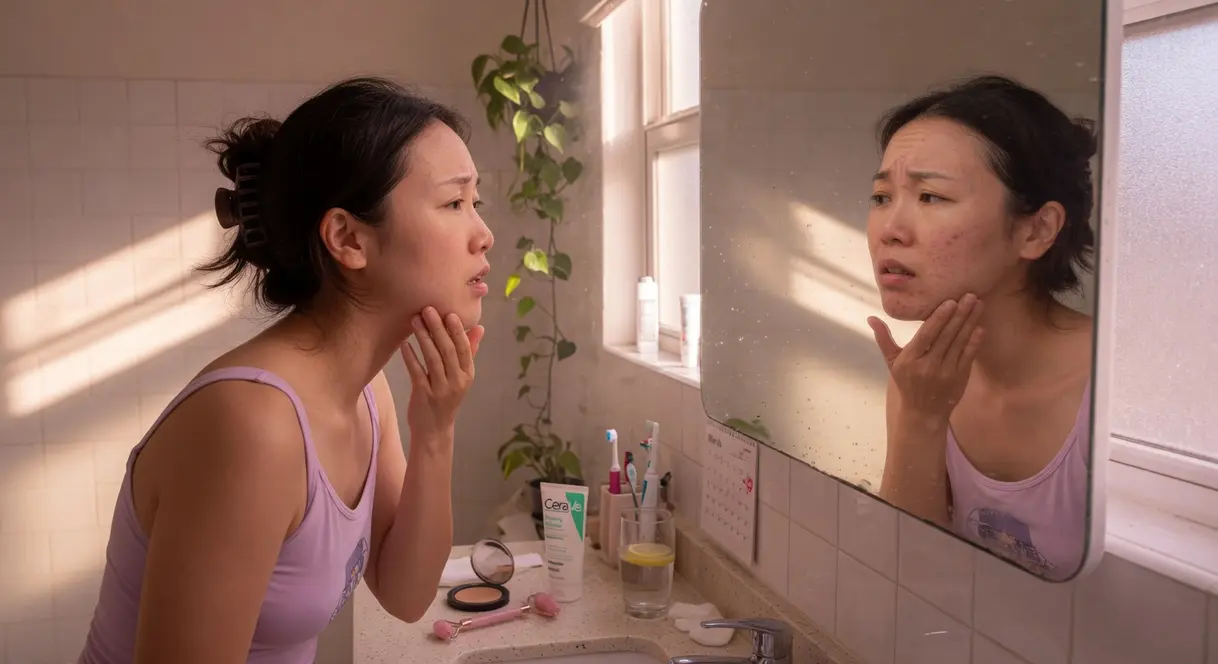
A 28-year-old walks into her gynecologist’s office frustrated about stubborn jawline acne, thinning hair at her temples, and dark hairs sprouting along her chin. Her periods? They show up every 29 days like clockwork. Her doctor says PCOS is unlikely because her cycles are regular. She leaves with a prescription for spironolactone and no real answers.
This scenario plays out far more often than it should. So can you have PCOS with regular periods? The honest answer is yes — and a meaningful number of women diagnosed with polycystic ovary syndrome have menstrual cycles that look perfectly normal on a calendar.
Why the “irregular periods” assumption sticks around
PCOS earned its reputation as the irregular-periods condition for a reason. Menstrual irregularity is one of the most common features, and it’s often what pushes someone to see a doctor in the first place. But the diagnostic criteria — the actual checklist clinicians use — never required irregular cycles as a mandatory feature.
The most widely used framework is called the Rotterdam criteria. To be diagnosed with PCOS under these guidelines, a person needs to meet two out of three findings:
- Irregular or absent ovulation, which usually shows up as irregular periods
- Signs of elevated androgens (male-pattern hormones), either on a blood test or visible in symptoms like acne, excess facial or body hair, or scalp hair thinning
- Polycystic-appearing ovaries on ultrasound, meaning many small follicles arranged around the ovary
Read that again. Two out of three. Someone with high androgens and polycystic ovaries on ultrasound — but a textbook 28-day cycle — still meets criteria. This is sometimes called the “ovulatory PCOS” phenotype.
How common is PCOS with normal periods?
Estimates vary, but research suggests somewhere between 15% and 30% of people with PCOS fall into the ovulatory subtype. That’s not a rare footnote. It’s a substantial slice of the PCOS population that gets missed when clinicians use “do your periods come regularly?” as a gatekeeping question.
More Helpful Reads You Might Like:
- Can PCOS Cause Weight Gain and Fatigue? A Clear Medical Guide
- How to Prevent Kidney Stones: 7 Proven Strategies That Work
- 7 Uterine Fibroid Treatment Options—With and Without Surgery
What PCOS symptoms with normal periods can look like
When cycles are regular, the clues tend to cluster around androgen excess and metabolic changes. None of these on their own confirms PCOS, but in combination they raise the question.
Androgen-related signs
Hirsutism is the medical term for coarse, dark hair growing in a male pattern — chin, upper lip, sideburns, chest, lower abdomen, inner thighs. Acne that persists into the late twenties and beyond, especially along the jawline and chin, is another flag. Some women notice their scalp hair thinning at the crown or temples, similar to early male-pattern baldness.
Metabolic signs
Insulin resistance, where the body needs more insulin than usual to manage blood sugar, is common in PCOS regardless of cycle regularity. It can show up as weight gain around the midsection that’s hard to budge, sugar crashes between meals, dark velvety patches of skin in the armpits or neck folds (called acanthosis nigricans), or skin tags. A growing body of evidence also links PCOS to higher long-term risks of type 2 diabetes and cardiovascular disease, even in people with regular cycles.
Fertility clues
Here’s something worth knowing: regular periods don’t always mean regular ovulation. It’s possible to bleed on schedule without actually releasing an egg every month, a pattern called anovulatory cycles disguised as regular ones. Some women only discover this when they start trying to conceive and a fertility workup catches it.
How is PCOS diagnosed without irregular periods?
The diagnostic process looks similar whether or not cycles are regular, but the focus shifts toward the other two Rotterdam features. A clinician familiar with PCOS will typically work through the following.
A detailed history
Expect questions about cycle length and flow, acne timeline, hair growth patterns, weight changes, family history of PCOS or diabetes, and fertility history. Photos of skin changes over time can help.
Blood work
Hormone testing usually includes total and free testosterone, DHEA-S, sex hormone binding globulin (SHBG, a protein that binds testosterone), and sometimes androstenedione. Other tests rule out conditions that mimic PCOS, like thyroid disorders, elevated prolactin, or rarer adrenal conditions. Metabolic labs often include fasting glucose, hemoglobin A1c, fasting insulin, and a lipid panel.
One nuance: androgen levels can be normal on blood tests even when symptoms are clearly present. The body’s androgen receptors vary in sensitivity, so two women with identical testosterone levels can have very different skin and hair responses. Visible signs of androgen excess count toward diagnosis even if labs look unremarkable.
Pelvic ultrasound
A transvaginal ultrasound looks at ovarian volume and counts the small follicles. Current guidelines generally define polycystic morphology as 20 or more follicles per ovary on high-resolution imaging, or an ovarian volume above 10 mL. The name “polycystic” is misleading, by the way — these aren’t true cysts but normal small follicles that didn’t mature and ovulate.
Why getting the right diagnosis matters even when periods are normal
It would be easy to assume that if periods are fine and fertility isn’t an immediate concern, a PCOS label doesn’t change much. That’s not quite right.
PCOS carries elevated long-term risks for type 2 diabetes, gestational diabetes, high blood pressure, abnormal cholesterol, sleep apnea, endometrial changes, and mood disorders including anxiety and depression. Knowing the diagnosis allows for earlier screening, lifestyle interventions, and targeted treatments — whether that’s metformin for insulin resistance, spironolactone or combined hormonal contraceptives for androgen symptoms, or inositol supplements that some studies suggest may help with metabolic and ovulatory function.
It also validates symptoms that have often been dismissed. A lot of women spend years being told their acne is just bad luck, their facial hair is genetic, or their weight is a willpower problem, when an underlying hormonal condition is driving the picture.
Advocating for yourself at the doctor’s office
If a clinician dismisses the possibility of PCOS because your periods are regular, it’s reasonable to ask specifically about the Rotterdam criteria and whether the other two features have been evaluated. A few practical phrasings that tend to land well:
- “I understand my cycles are regular, but I’m noticing several signs of androgen excess. Can we check testosterone, DHEA-S, and SHBG?”
- “Would a pelvic ultrasound help clarify whether my ovaries have polycystic morphology?”
- “Even if I have regular periods, can we screen for insulin resistance with a fasting insulin and A1c?”
If the response is still dismissive, a referral to a reproductive endocrinologist or a gynecologist with PCOS expertise is reasonable. PCOS is one of those conditions where having a clinician who sees it often makes a real difference in how quickly and accurately it gets identified.
When to see a doctor
Worth a visit if any of the following apply: new or worsening hirsutism, persistent adult acne that doesn’t respond to typical treatments, unexplained scalp hair thinning, difficulty conceiving after six to twelve months of trying, signs of insulin resistance like darkening skin in the folds, or a strong family history of PCOS or type 2 diabetes paired with any of the above symptoms. Sudden or rapidly progressive symptoms — especially a deepening voice, significant muscle changes, or very rapid hair growth — warrant prompter evaluation to rule out other hormonal causes.
So can you have PCOS with regular periods, and what should you do about it?
Yes, regular cycles don’t rule out PCOS, and the ovulatory subtype is more common than most people realize. If the picture fits — androgen-related symptoms, metabolic clues, or polycystic-appearing ovaries — the diagnosis deserves a proper workup regardless of how predictable your period app looks. Bring a symptom list to your next appointment, ask about the Rotterdam criteria by name, and request the labs and imaging that go beyond cycle tracking.
Medical Disclaimer: This content is for educational purposes only and does not replace professional medical advice, diagnosis, or treatment. Always consult your physician or a qualified healthcare provider with any questions about a medical condition.
Sources & Further Reading
- PubMed: Do hyperandrogenic women with normal menses have polycystic ovary syndrome?
- NCBI StatPearls: Polycystic Ovarian Syndrome (ovulatory dysfunction with regular cycles)
- PubMed: Recommendations from the 2023 International Evidence-Based Guideline for the Assessment and Management of Polycystic Ovary Syndrome
- NICHD – NIH: Polycystic Ovary Syndrome (PCOS) – Symptoms and Health Risks
- WHO: Polycystic Ovary Syndrome Fact Sheet (including PCOS with regular cycles and underdiagnosis)