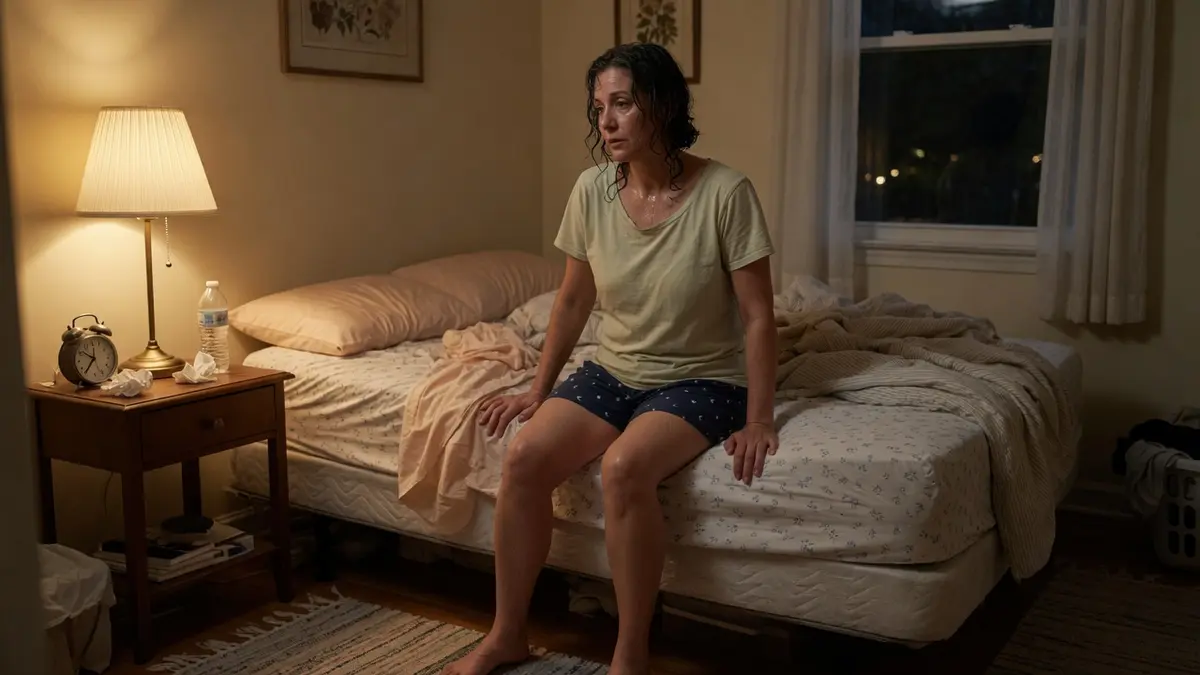
Picture this: it’s day two of your period, you’ve taken the maximum dose of ibuprofen, you’re curled up on the bathroom floor sweating through your shirt, and someone — a partner, a coworker, your mom — says, “Cramps are just part of being a woman.” If that scene feels uncomfortably familiar, the pain you’re describing may not actually be normal cramps at all.
Endometriosis is a condition where tissue similar to the lining of the uterus grows in places it shouldn’t — on the ovaries, the bowel, the bladder, the pelvic wall. So what does endometriosis pain feel like in real life, and how can someone tell it apart from a rough but ordinary period? The short version: it’s usually more intense, more unpredictable, and far more disruptive than typical menstrual cramps. The longer version is worth reading carefully, because this is a condition that takes an average of seven to ten years to get diagnosed, and a big reason for that delay is pain being dismissed as “just period stuff.”
How normal period cramps usually behave
Typical menstrual cramps — what doctors call primary dysmenorrhea — happen because the uterus contracts to shed its lining. The discomfort is usually a dull, crampy ache in the lower belly, sometimes with a tugging sensation in the lower back. It tends to start within a day of bleeding, peaks in the first 24 to 48 hours, and fades as the period winds down.
Most importantly, normal cramps usually respond to things like a heating pad, rest, and over-the-counter pain relievers such as ibuprofen or naproxen. They might make someone irritable or slow them down for a day, but they generally don’t cancel plans, send anyone to urgent care, or cause vomiting.
More Helpful Reads You Might Like:
What does endometriosis pain feel like in practice?
Ask a room full of people with confirmed endometriosis to describe their pain, and the words that come up again and again aren’t “crampy” or “achy.” They’re sharper, weirder, more violent. Common descriptions include:
- Stabbing or knife-like pain deep in the pelvis
- A burning or hot, twisting sensation low in the belly
- Pain that feels like being kicked from the inside
- A heavy, dragging pressure, as if something is being pulled downward
- Electric, shooting pain down the back of the legs or into the rectum
- Pain so severe it causes nausea, vomiting, sweating, or fainting
Another hallmark: the pain often doesn’t stay neatly inside the pelvis. People describe it traveling into the lower back, the hips, the thighs, even up under the ribs. Some have rectal pain or sharp pain with bowel movements, especially around their period — a symptom that’s underreported because nobody wants to bring it up.
And here’s the part that catches a lot of people off guard: endometriosis pain frequently shows up outside the period itself. Mid-cycle pain around ovulation, pain during or after sex (particularly with deep penetration), pain with urination, and random flare days that have no obvious trigger are all part of the picture.
The intensity test
One of the clearest distinctions in endometriosis vs period cramps is how much the pain disrupts daily life. Normal cramps are annoying. Endometriosis pain tends to be disabling. If someone is regularly missing school, work, or social plans because of pelvic pain — or has built their entire calendar around their cycle — that’s a meaningful signal. Pain that doesn’t respond to ibuprofen, naproxen, or a heating pad, or that requires lying flat in a dark room, isn’t standard.
Signs of endometriosis pain that get missed
Pelvic pain is the headline symptom, but endometriosis is a sneaky condition that affects more than just the uterus. Some symptoms that often get blamed on other things:
- Bowel symptoms that cycle with the period: diarrhea, constipation, painful bowel movements, or bloating so severe it’s been nicknamed “endo belly”
- Bladder symptoms: a feeling of needing to urinate constantly, or pain when the bladder is full, often misdiagnosed as recurrent UTIs
- Pain with sex, particularly a deep, internal pain rather than entry pain
- Shoulder or chest pain during the period, which can happen in rare cases when endometriosis tissue grows on the diaphragm
- Heavy or unusually long periods, sometimes with large clots
- Fatigue that lands like a brick in the days before and during bleeding
- Difficulty getting pregnant after a year of trying
None of these alone confirm endometriosis, and plenty of them overlap with conditions like irritable bowel syndrome, interstitial cystitis, fibroids, or adenomyosis. That overlap is part of why diagnosis takes so long.
How to know if cramps are endometriosis: questions worth asking
There’s no at-home test, but a few honest questions can help clarify whether the pain pattern fits typical menstruation or something more.
- Does the pain regularly stop you from working, sleeping, or eating?
- Does over-the-counter pain medication barely take the edge off?
- Has the pain gotten worse over the years rather than better?
- Do you have pain on days you’re not bleeding?
- Is sex painful in a deep, internal way?
- Do you have GI symptoms — bloating, painful bowel movements, diarrhea — that line up with your cycle?
- Has anyone in your family been diagnosed with endometriosis? (It tends to run in families.)
The honest answer is that severity alone isn’t the whole story. Some people with endometriosis have relatively mild pain and severe disease on imaging; others have crushing pain and minimal visible disease. Pain isn’t a reliable measure of how much tissue is growing where, which is one of the more frustrating aspects of this condition.
When to see a doctor
Period pain that consistently interferes with daily life deserves an evaluation. Specifically, it’s reasonable to make an appointment if any of the following apply:
- Pain requires regular use of prescription-strength pain medication, or OTC medication isn’t enough
- Pain causes vomiting, fainting, or missed school or work each cycle
- Pelvic pain happens outside of the period
- Sex is painful
- There’s been difficulty conceiving after about a year of trying (or six months if over 35)
- Bowel or bladder symptoms cycle with the period
A few situations warrant faster attention: sudden, severe pelvic pain, pain with a fever, heavy bleeding that soaks through a pad or tampon every hour for several hours, or fainting. Those can signal something other than endometriosis and need same-day evaluation.
A gynecologist familiar with endometriosis can take a detailed history, do a pelvic exam, and order imaging like a transvaginal ultrasound or MRI. Imaging often misses smaller lesions, so a normal scan doesn’t rule it out. The only definitive diagnosis still comes from laparoscopy, a minimally invasive surgery, though many clinicians will start treatment based on symptoms alone.
If a first doctor brushes off the symptoms — and this happens often — it’s reasonable to seek a second opinion, ideally from a clinician who specifically lists endometriosis as a focus. Keeping a simple pain diary for two or three cycles, noting pain intensity, location, what helped, and what didn’t, can make those appointments much more productive.
The bottom line on what endometriosis pain feels like
Endometriosis pain isn’t simply “worse cramps.” It’s often sharper, more unpredictable, and more disruptive — showing up outside the period, in places like the bowel, bladder, lower back, and legs, and frequently shrugging off the remedies that handle normal menstrual discomfort. The pattern matters as much as the intensity. Anyone whose periods regularly derail their life, or whose pelvic pain doesn’t match the textbook description of cramps, deserves a thorough evaluation rather than reassurance that this is just how periods are.
Medical Disclaimer: This content is for educational purposes only and does not replace professional medical advice, diagnosis, or treatment. Always consult your physician or a qualified healthcare provider with any questions about a medical condition.
Sources & Further Reading
- NICHD: What are the symptoms of endometriosis?
- ACOG: Endometriosis – Patient FAQ
- ACOG: Diagnosis of Endometriosis – Clinical Practice Guideline
- Mayo Clinic: Endometriosis – Symptoms and Causes
- PubMed – Frontiers in Cellular Neuroscience: Pain in Endometriosis
- PubMed: Endometriosis-Related Chronic Pelvic Pain