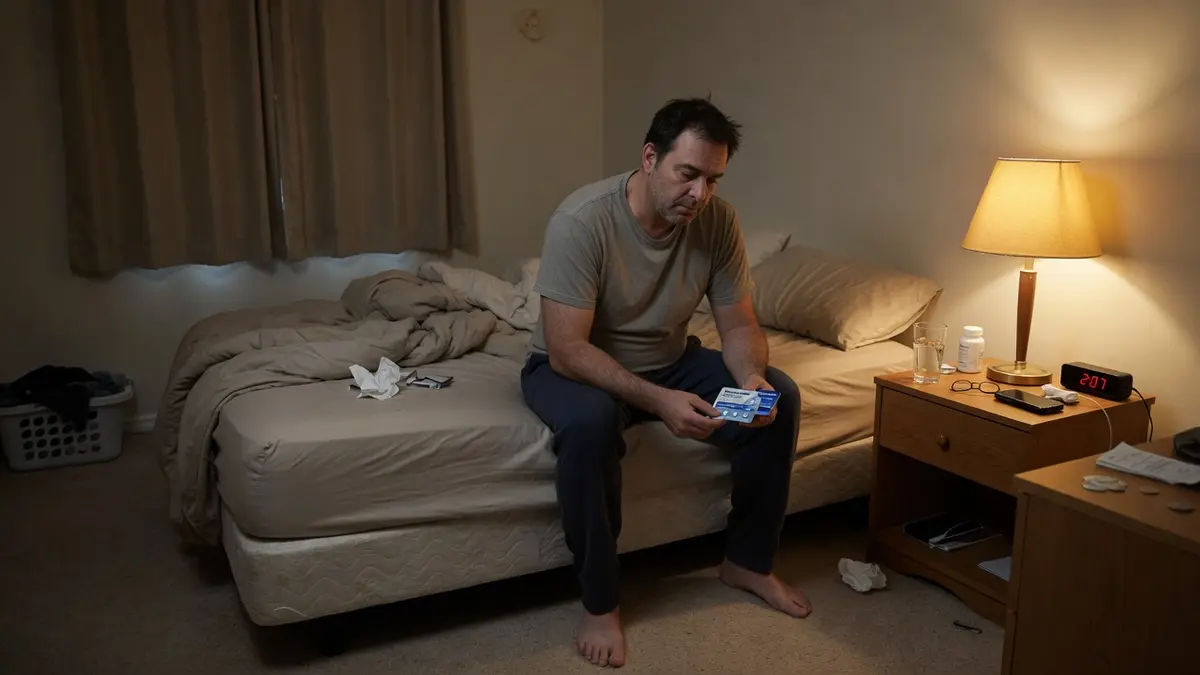
A woman walks into urgent care with a urinary tract infection — her third this year. The first round of antibiotics didn’t work. Neither did the second. Now she’s being told she may need an IV medication that requires a hospital visit. Ten years ago, this same infection would have cleared with a three-day pill regimen and a glass of cranberry juice.
Stories like hers are becoming routine in clinics across the country, and they’re the clearest answer to a question more patients are starting to ask: why are infections harder to treat than they used to be? The short version is that bacteria are evolving faster than the drugs designed to kill them. The longer version — the one that actually matters for your health — has more layers, and a few of them are within your control.
What’s Actually Happening Inside Your Body
Antibiotics work by targeting specific weaknesses in bacteria — the walls that hold them together, the machinery they use to copy themselves, the proteins they need to function. When a course of antibiotics works, it kills off the bacteria that are vulnerable to that particular drug. But bacteria reproduce fast. A single bacterium can become a million in about ten hours. And every so often, a random genetic mutation produces one that survives the drug.
That survivor multiplies. Its descendants share resistance genes with neighboring bacteria — sometimes even with bacteria from entirely different species. Over time, the population of bacteria living in hospitals, soil, water, and human bodies shifts. The susceptible ones die off. The resistant ones thrive.
This is antibiotic resistance explained at the cellular level: it’s not your body becoming resistant to a drug. It’s the bacteria themselves changing. Which is why a person who has never taken a particular antibiotic can still catch an infection that doesn’t respond to it.
The Speed Has Picked Up
Resistance has existed since antibiotics were invented. Penicillin was introduced in the 1940s, and resistant strains appeared within a decade. What’s changed in recent years is the pace. Multiple factors have accelerated the problem: heavy use of antibiotics in livestock, overprescription for viral infections that antibiotics can’t touch, patients stopping their course early, and the slowing pipeline of new antibiotic development. Pharmaceutical companies have largely stepped away from antibiotic research because these drugs aren’t profitable the way chronic disease medications are.
The result is a growing list of drug resistant infections — strains of E. coli, Klebsiella, Staphylococcus, and others that don’t respond to the medications doctors used to reach for first.
More Helpful Reads You Might Like:
What This Means at Your Next Doctor’s Visit
The practical effects show up in small ways that patients often don’t notice until they’re affected directly. A doctor may order a culture before prescribing an antibiotic instead of just guessing — which means waiting a day or two for results. Prescriptions may be narrower or stronger than they used to be. Some infections that used to be treated at home now require hospitalization for IV antibiotics. Surgical procedures, chemotherapy, and organ transplants all depend on reliable antibiotics to prevent or treat infection, so resistance affects far more than just the obvious cases.
There’s also a frustration baked into the system. When antibiotics don’t work the first time, patients sometimes feel like their doctor made the wrong call. In many cases, the doctor made a reasonable choice based on the most common bacteria for that infection — but the bacteria turned out to be resistant. That’s not a mistake. It’s the new reality of prescribing.
Superbugs and Antibiotics: What the Term Actually Means
The word “superbug” gets used loosely. Technically, it refers to bacteria resistant to multiple classes of antibiotics. MRSA — methicillin-resistant Staphylococcus aureus — is probably the most well-known. CRE (carbapenem-resistant Enterobacteriaceae) is another, and it’s particularly worrying because carbapenems are often the drugs of last resort. Drug-resistant tuberculosis and gonorrhea are also on the rise globally.
Most healthy people aren’t going to encounter the worst superbugs in daily life. They’re more common in hospitals, nursing homes, and dialysis centers. But community-acquired resistant infections — UTIs, skin infections, sinus infections — are increasing, and those are the ones that affect ordinary people doing ordinary things.
How to Prevent Antibiotic Resistance in Your Own Life
The honest answer is that individual choices can’t fix a global problem, but they do matter — both for your own health and for slowing the broader trend.
- Don’t push for antibiotics when you have a cold, the flu, or most sore throats. These are viral infections. Antibiotics do nothing for them and may disrupt your gut bacteria in ways that make future infections more likely.
- Take the full course as prescribed. Stopping early because you feel better can leave behind the hardier bacteria — the ones most likely to become resistant.
- Don’t share antibiotics or use leftover pills. The dose, drug, and duration are matched to a specific infection. Using them for something else is a fast track to resistance.
- Practice basic hygiene that prevents infections in the first place. Handwashing, wound care, vaccination, and food safety reduce the number of times you’ll need antibiotics at all.
- Ask your doctor questions. If you’re prescribed an antibiotic, it’s reasonable to ask whether it’s truly necessary, whether a culture would help, and what to do if symptoms don’t improve.
Worth knowing: the advice about always finishing your course has been nuanced in recent years. Some research suggests shorter courses may be just as effective for certain infections and may reduce resistance pressure. But that’s a decision for your prescriber, not a reason to stop on your own.
When Antibiotics Don’t Work: Signs to Watch For
If you’ve been on an antibiotic for 48 to 72 hours and your symptoms aren’t improving — or they’re getting worse — that’s a reason to contact your doctor. Don’t wait it out. Specific warning signs include:
- Fever that returns or climbs higher after starting treatment
- Spreading redness, swelling, or streaking from a skin infection
- Worsening pain, particularly in the back, abdomen, or chest
- Confusion, rapid heartbeat, or difficulty breathing
- New symptoms like severe diarrhea, which can sometimes signal a serious gut infection triggered by antibiotic use
These can indicate that the bacteria aren’t responding to the drug or that a different problem is developing. Either way, they need attention rather than another few days of waiting.
Why Are Infections Harder to Treat Now — and Where Things Go From Here
Researchers are working on new antibiotics, alternative therapies like bacteriophages (viruses that infect bacteria), and better diagnostics that can identify resistant strains within hours instead of days. Public health agencies are pushing for better antibiotic stewardship in hospitals and farms. None of this will reverse resistance overnight, but it’s a more honest picture than the doom-and-gloom version that sometimes circulates.
For now, the most useful thing for an individual to know is that antibiotics are still effective for the vast majority of common infections — just not always the first one tried, and not always as quickly as patients expect. Treating them as a finite resource rather than an automatic fix is part of keeping them that way.
Medical Disclaimer: This content is for educational purposes only and does not replace professional medical advice, diagnosis, or treatment. Always consult your physician or a qualified healthcare provider with any questions about a medical condition.
Sources & Further Reading
- CDC: Antimicrobial Resistance – Causes and How It Spreads
- CDC: Antimicrobial Resistance Threats in the United States, 2021–2022
- WHO: Global Antibiotic Resistance Surveillance Report 2025
- PubMed: Antibiotic Action and Resistance – Updated Review of Mechanisms, Spread, Influencing Factors, and Alternative Approaches for Combating Resistance
- PubMed: Molecular Mechanisms of Antibiotic Resistance Revisited
- NIH StatPearls: Antibiotic Resistance