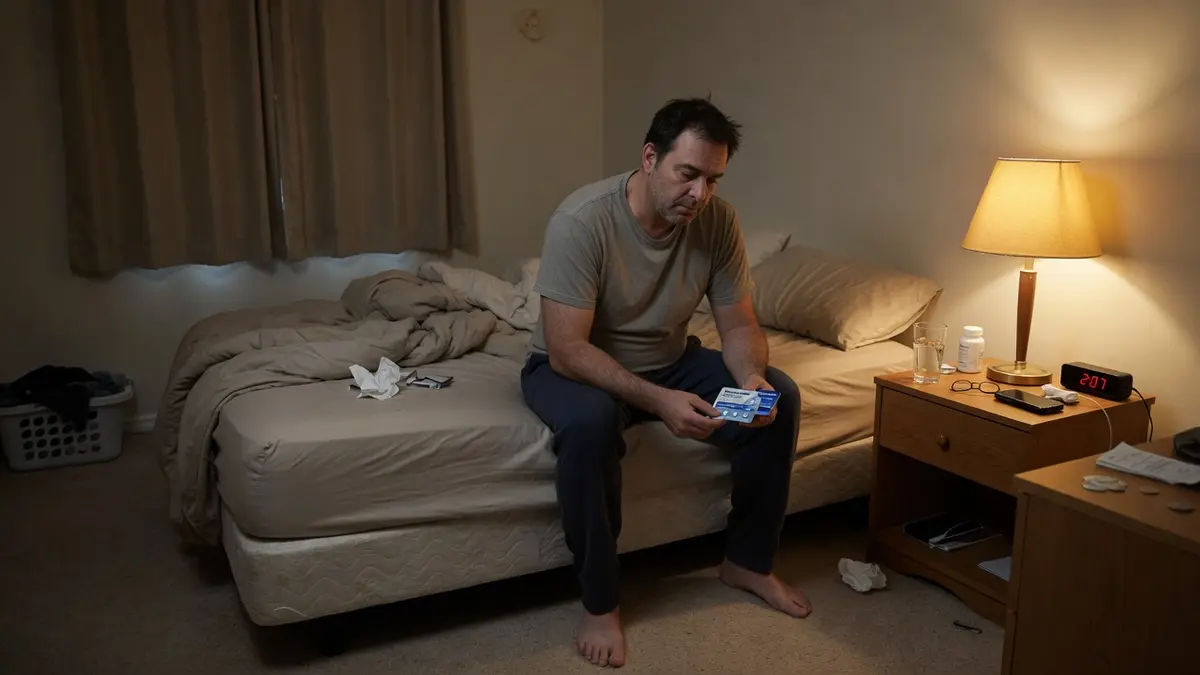

You roll over at 3 a.m., land on your favorite shoulder, and feel a dull ache settle in. By morning, lifting your arm to grab a coffee mug sends a sharp twinge through the joint. Sound familiar? Shoulder pain after sleeping on your side is one of the most common complaints physicians hear from people who sleep curled up on one side night after night.
The good news is that most of the time, this kind of pain isn’t a sign of something serious. It’s a mechanical problem — your shoulder spending hours in a position it wasn’t really built to hold. Understanding why that happens makes it a lot easier to fix.
Why side sleeping puts your shoulder in a tough spot
Your shoulder is a remarkably mobile joint. That mobility comes at a cost: it relies heavily on soft tissues — muscles, tendons, and a fluid-filled cushion called a bursa — to stay stable and comfortable. When you sleep on your side, your entire upper-body weight presses down through that joint for hours at a stretch.
Here’s the thing about that position. Your arm is often tucked underneath you or stretched forward, which compresses the space where your rotator cuff tendons (the band of muscles and tendons that hold your arm in its socket) glide back and forth. Squeeze that space long enough and the tissues get irritated. Blood flow to the area can drop too, which is part of why the ache often feels worse in the morning than it did when you went to bed.
A few specific things tend to make side sleeping shoulder pain worse:
- Sleeping on the same side every night, which gives that one shoulder no chance to recover.
- A pillow that’s too flat or too thick, which tilts your neck and changes how weight loads through the shoulder.
- An arm position that pins the shoulder forward, narrowing the space your tendons need.
- An older or sagging mattress that lets your shoulder sink awkwardly instead of supporting it.
In practice, it’s usually a combination of these — not one single culprit.
Normal next-morning soreness versus something more
A little stiffness that loosens up within 15 or 20 minutes of moving around is generally nothing to worry about. That’s just compressed tissue waking up. What’s more telling is pain that lingers through the day, gets worse over weeks, or limits how far you can lift your arm.
Rotator cuff pain from sleeping is often a clue that there was already some low-grade irritation in the tendon, and the nighttime pressure tipped it into something you actually notice. Side sleeping rarely creates a rotator cuff problem out of nowhere — but it can absolutely aggravate one that was quietly brewing.
More Helpful Reads You Might Like:
How to stop shoulder pain at night before it starts
Most fixes here are about reducing the load on the joint and keeping it in a neutral position. None of this is complicated, but small changes often make a real difference.
Adjust your sleeping position
If you sleep on your side, try not to land directly on the painful shoulder. Switching to the opposite side gives the irritated joint a break. Tucking a pillow against your chest and draping your top arm over it keeps the shoulder from rolling forward and collapsing the space inside the joint.
The best sleeping position for shoulder pain, for a lot of people, turns out to be on the back rather than the side. Lying flat takes nearly all the direct pressure off the joint. If back sleeping feels unnatural, a small pillow or rolled towel under the sore arm can support it and stop it from falling into an awkward angle.
Rethink your pillow setup
Your neck pillow does more for your shoulder than you’d expect. When your head is properly supported, your neck and shoulder muscles aren’t fighting to compensate all night. A pillow that fills the gap between your ear and the mattress — keeping your head level rather than tilted up or drooping down — tends to ease the strain.
For side sleepers specifically, a slightly firmer or thicker pillow often works better than a soft, flat one, because it keeps your spine and shoulder in a straighter line. The evidence on any single “best” pillow is mixed, so it’s worth experimenting rather than assuming the most expensive option is the answer.
Check your mattress
A mattress that’s gone soft in the middle lets your shoulder and hip sink while your spine sags. A surface with enough support to keep your body roughly aligned, but enough give to cushion the shoulder, hits the sweet spot. If your mattress is many years old and you wake up sore in more places than your shoulder, that’s a reasonable sign it’s part of the problem.
Loosen things up before bed and in the morning
Gentle shoulder movement can help on both ends of the night. Some people find that a few easy range-of-motion exercises — slow shoulder rolls, light stretches across the chest, reaching the arm gently overhead — reduce morning stiffness. The goal is comfortable movement, not pushing into pain. If a stretch hurts sharply, back off.
Applying heat before bed can relax tight muscles, while a cold pack in the morning may calm inflammation if the joint feels hot or swollen. Neither is a cure, but both are low-risk ways to take the edge off.
When your shoulder hurts when you wake up and won’t settle down
Most cases of shoulder pain after sleeping improve within a week or two once you adjust your position and setup. When they don’t, it’s worth getting checked. Some symptoms point toward a problem that benefits from a professional eye rather than another new pillow.
Consider seeing a doctor or physical therapist if you notice any of the following:
- Pain that lasts longer than two to four weeks despite changing how you sleep.
- Weakness or difficulty lifting your arm, reaching overhead, or behind your back.
- Pain that radiates down the arm or comes with numbness or tingling.
- A shoulder that’s visibly swollen, red, or warm to the touch.
- Night pain so intense it consistently wakes you and keeps you awake.
- A sense that the joint catches, clicks painfully, or feels unstable.
One symptom deserves a faster response. Shoulder or upper-arm pain that comes on suddenly along with chest pressure, shortness of breath, sweating, or jaw pain isn’t a sleeping-position issue — that combination can signal a heart problem and warrants emergency care right away.
For the more typical aches, a clinician can sort out whether you’re dealing with rotator cuff irritation, bursitis (inflammation of that cushioning sac), a pinched tendon, or something else. The honest answer is that these conditions can feel similar from the outside, and a proper exam usually clears up the picture faster than guesswork at home.
What actually fixes shoulder pain after sleeping
The pieces that tend to matter most are simple: stop sleeping directly on the sore shoulder, support your arm and head so the joint stays neutral, and give an irritated tendon a chance to calm down instead of loading it the same way every night. If those changes don’t help within a couple of weeks, or if you’re losing strength or range of motion, that’s your cue to have it looked at rather than wait it out. Shoulder pain after sleeping is usually fixable — and figuring out which small adjustment your particular shoulder needs is most of the battle.
Medical Disclaimer: This content is for educational purposes only and does not replace professional medical advice, diagnosis, or treatment. Always consult your physician or a qualified healthcare provider with any questions about a medical condition.
Sources & Further Reading
- PubMed: Sleep Position and Shoulder Pain
- PubMed: Association Between the Side of Unilateral Shoulder Pain and Preferred Sleeping Position — A Cross-Sectional Study of 83 Danish Patients
- PMC / PubMed: Rotator Cuff Tears Are Related to the Side Sleeping Position
- BMC Musculoskeletal Disorders: Is Sleep Position Associated With Glenohumeral Shoulder Pain and Rotator Cuff Tendinopathy — A Cross-Sectional Study
- Mayo Clinic: Rotator Cuff Injury — Symptoms and Causes
- OrthoInfo – AAOS: Shoulder Pain and Common Shoulder Problems