 Written by
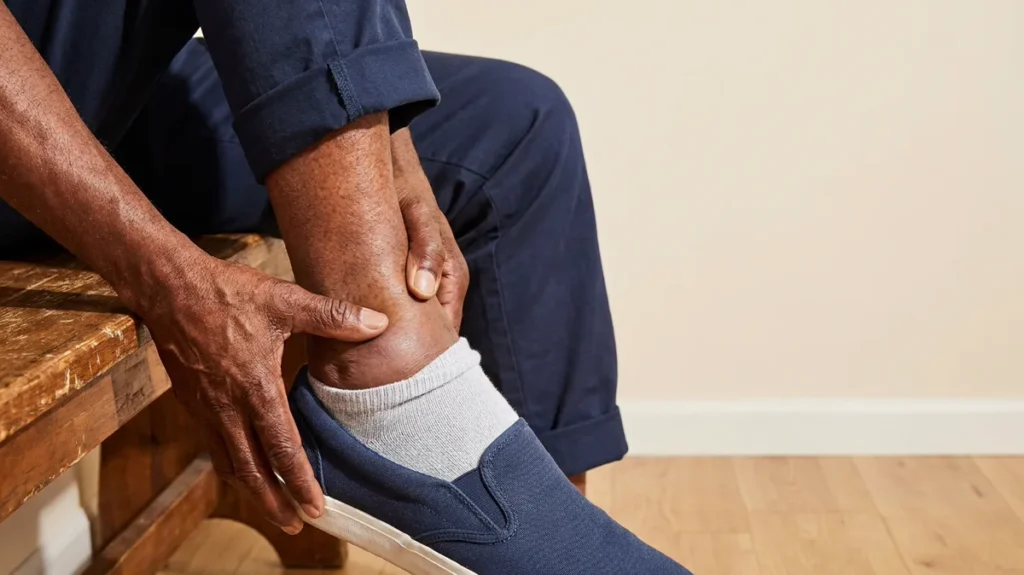
Getting winded on the stairs is easy to blame on age, but tight shoes by evening or waking up short of breath can mean the heart is falling behind. Doctors call this heart failure: the heart keeps beating but can’t keep up with what your body asks. A few of these changes can’t wait, and it pays to know which.
Quick answer: Signs your heart is getting weaker include breathlessness with everyday effort or when lying flat, swollen ankles, fast weight gain, a nagging cough, unusual tiredness and a racing heartbeat. A scale jump of more than 2 to 3 pounds in a day, or 5 in a week, is likely fluid and worth a call to your doctor.
In this article
What ‘heart failure’ means
If the words ‘heart failure’ made your stomach drop, that’s fair; it’s a badly chosen label, because it sounds like the heart has quit. It hasn’t. Some hearts squeeze weakly; others squeeze fine but have turned stiff and fill poorly, and that stiff kind makes up about half of U.S. cases.
The heart works like a pump on a water line. When it lags, fluid backs up into the pipes behind it (your lungs, legs and belly), and less reaches the faucets downstream (your muscles and brain). A pump in your basement can’t adjust, but your body can: the heart stretches and speeds up, and the kidneys hold on to salt and water. Those fixes hide the problem without solving it, so months can pass before anyone notices.
What are the first signs your heart is getting weaker?
The first five all come from the same place: fluid seeping into your lungs and tissues.
1. Winded by things that used to be easy
Stairs or your usual walk leave you more winded than a few months ago. Lung fluid makes every breath work harder.
2. Breathless lying flat or at night
Some people wake an hour or two after falling asleep, short of breath. Others start stacking pillows because lying flat makes breathing harder.
3. Swollen ankles, legs or belly
Shoes that fit in the morning may pinch by evening as backed-up blood pushes fluid into your ankles, legs or belly.
4. Fast weight gain
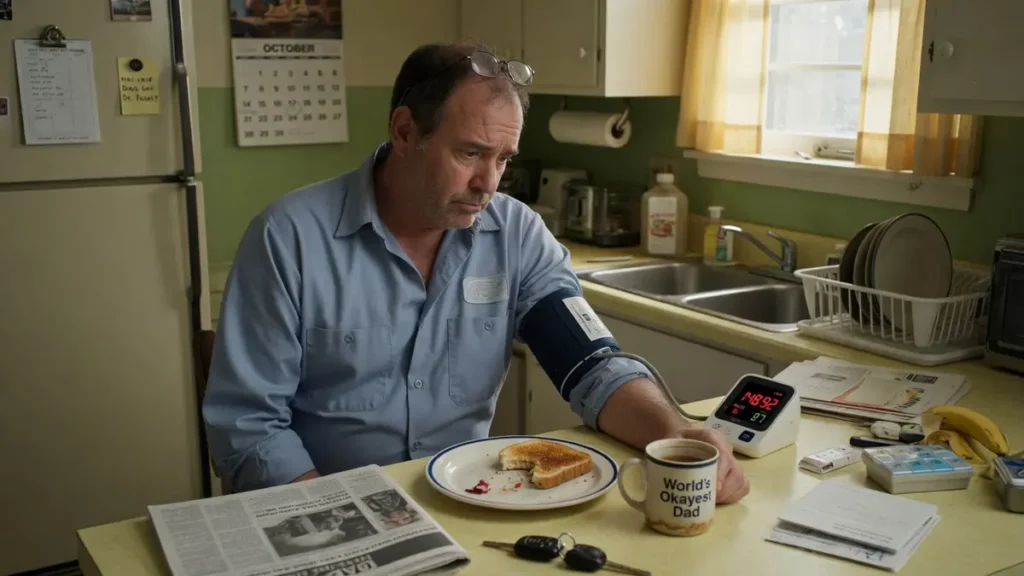
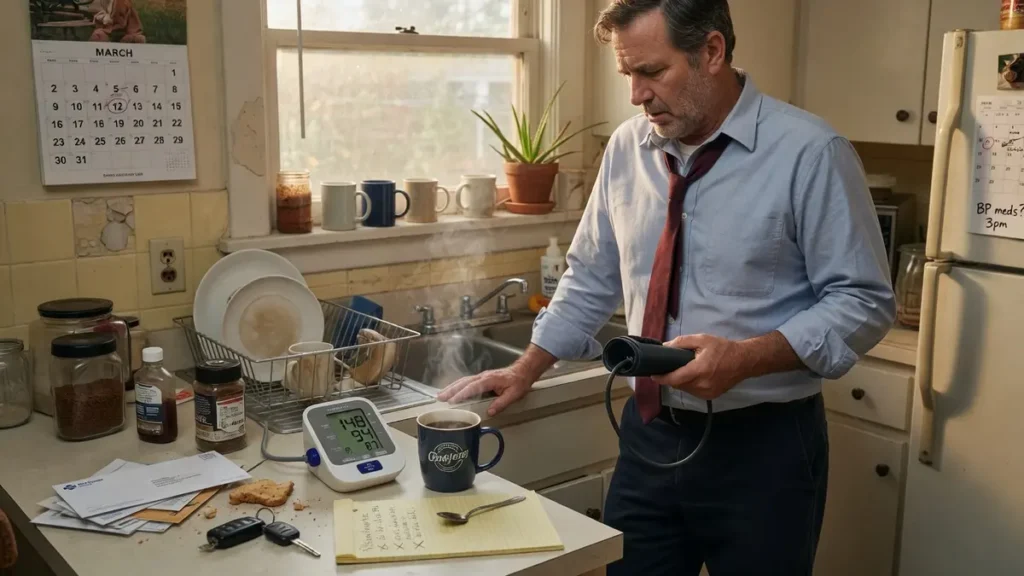
The bathroom scale is the least glamorous medical device you own, and one of the most useful. A quick jump is fluid, not fat. Weigh yourself each morning before breakfast, and if you’re up more than 2 to 3 pounds in a day or 5 in a week, phone your doctor’s office.
5. A cough or wheeze that lingers
The same fluid can cause a cough or wheeze that won’t clear up. Pink, foamy mucus is worth reporting; with real trouble breathing, it’s a 911 call.
Why does a weaker heart leave you tired, with a pounding pulse?
The last two come from the far end of the line, where too little blood reaches your muscles.
6. Tiredness that rest doesn’t fix
Legs feel heavy, errands feel like a workout, appetite may fade, and some people turn foggy or forgetful in ways family notices first.
7. A racing or pounding heartbeat
To make up for each weaker squeeze, the heart beats faster, and you may feel it racing or throbbing. Tell your doctor about a pulse that stays fast, but if the beats also turn uneven, check the 911 column below.
Are you more likely to have a weakening heart?
Nearly 6.7 million American adults live with heart failure. Your odds go up with age and with each of these you carry: a past heart attack, years of high blood pressure, diabetes, obesity, sleep apnea or kidney disease. Past chemotherapy or chest radiation for cancer counts too, as does an irregular heart rhythm called atrial fibrillation.
Women more often get the stiff kind, and Black adults are more likely to develop heart failure, often younger. If you’re in either group, you’re among the people most worth checking, so don’t sit on these signs. Blood pressure, blood sugar and weight are the risks you can push back on.
When to call 911 and when to call your doctor
Anything in the “Call 911 now” column can’t wait, even if you’re worried about overreacting.
| Call your doctor this week | Call 911 now |
|---|---|
| Winded by usual activities | New or severe chest pain |
| Extra pillows or waking breathless | Severe trouble breathing |
| Swollen ankles, legs or belly | Fainting |
| Weight up over 2 to 3 lb a day or 5 lb a week | Fast, uneven heartbeat, especially with other symptoms |
| Lingering cough, tiredness or a fast, steady pulse | Any of these signs suddenly getting much worse |
Breathing trouble is a 911 call when you’re struggling for air sitting still, or wake gasping in a way that doesn’t ease once you sit up. For the slower signs, the American Heart Association says even one is worth a heart check.
How do doctors check, and can a weaker heart recover?
The key test is usually an echocardiogram, an ultrasound that shows the heart squeezing and filling and measures your pumping number: the share of blood pushed out with each beat. A pumping number of 50% or higher is in the normal range. Between 41% and 49% counts as mildly reduced, and at 40% or less, it’s the weak-squeeze kind.
Depending on your symptoms and what the echo shows, your doctor may add an ECG, a chest X-ray or a blood test that picks up a hormone the heart releases when it’s under strain. Which tests come next is the doctor’s call.
Catching it early matters, because guidelines back a set of heart medicines that ease the heart’s load, slow the disease and help some hearts regain strength. For the stiff kind, treatment leans on keeping blood pressure, weight and blood sugar in check, and a newer class of heart medicine now has a place there too.
If you recognize yourself in these signs, take your morning weights to your doctor and say what you’ve noticed; the tests follow from there.
More Helpful Reads You Might Like:
- The Truth About Heart Palpitations: When to Worry and When to Relax
- How Fast Can Lifestyle Changes Actually Lower Your Blood Pressure?
- Why Do I Wheeze When I Breathe? Causes You Shouldn’t Ignore
- Why Am I Snoring More Than Usual? What Your Body May Be Telling You
Frequently Asked Questions
Can a weak heart get stronger again?
Sometimes, and when it does, the medicines usually stay. Stopping them often lets the weakness come back, even once the heart has regained strength and you feel fine. Doctors even have a name for a heart that’s bounced back: heart failure that has ‘improved.’ How far any one heart will recover can’t be predicted.
Is a weak heart the same as having a heart attack?
No. A heart attack is a sudden event, while a weakening heart usually falls behind slowly as the body covers for it. The two are linked, though. A past heart attack is one of the most common reasons a heart weakens, so anyone who’s had one has extra reason to watch for these seven signs.
Can your heart be failing if your pumping number is normal?
Yes. A pumping number of 50% or higher counts as normal, and the stiff kind of heart failure sits right in that range: the heart squeezes fine but fills poorly. The same echocardiogram also shows how well the heart fills, and your doctor reads that together with your symptoms.
Could these symptoms just be aging or being out of shape?
They could, and that’s why they’re so easy to brush off. The useful clue is a change from your own normal, like stairs that used to be easy or shoes that now pinch by evening. It’s still worth asking for a heart check, because a couple of simple tests can tell whether it’s your heart or something else.
Medical Disclaimer: This content is for educational purposes only and does not replace professional medical advice, diagnosis, or treatment. Always consult your physician or a qualified healthcare provider with any questions about a medical condition.
Sources & Further Reading
How we sourced this article: we rely on peer-reviewed studies, clinical guidelines and public-health agencies (CDC, NIH, AHA, WHO), check every link before publishing, and update articles when the evidence changes. Read our editorial approach.
- American Heart Association: Heart Failure Signs and Symptoms (Warning Signs of Heart Failure)
- American Heart Association: What is Heart Failure?
- CDC: About Heart Failure
- NHLBI: Heart Failure – Causes and Risk Factors
- Cleveland Clinic: Heart Failure
- ACC: 2022 AHA/ACC/HFSA Heart Failure Guideline – Key Perspectives (Heidenreich et al., JACC 2022)
- MedlinePlus Medical Encyclopedia: Heart failure
- Current Cardiology Reviews: A Contemporary Review on Heart Failure with Preserved Ejection Fraction (Shahid et al.)
- MedlinePlus: Natriuretic Peptide Tests (BNP, NT-proBNP)
- MedlinePlus: Heart failure – home monitoring