You wrapped the cuff around your arm at the pharmacy kiosk, pressed the button, and a few seconds later two numbers blinked back at you: something over something else. Maybe it was 128 over 82. Maybe it was higher, and now you’re sitting in your car trying to decide whether that’s fine or whether you should be worried. That moment — staring at a screen and not quite knowing how to read it — is exactly where most people get stuck.
So let’s actually break down what those numbers are, what they measure, and how to tell when yours has drifted into territory worth paying attention to. Understanding what does a blood pressure reading mean isn’t complicated once someone explains it plainly, and the numbers stop feeling like a mystery pretty quickly.
What the Two Numbers Actually Measure
Every blood pressure reading comes as a pair, written as one number over another — like 120/80. Those two figures describe the pressure your blood pushes against the walls of your arteries at two different moments in each heartbeat.
The top number is your systolic pressure. That’s the force in your arteries when your heart contracts and pumps blood out. It’s the higher of the two because that’s the peak — the moment of maximum push.
The bottom number is your diastolic pressure, which is the force when your heart relaxes between beats and refills with blood. It’s lower because the heart isn’t actively squeezing at that point. When people talk about systolic and diastolic meaning, that’s really all there is to it: one is the squeeze, the other is the rest.
Both numbers are measured in millimeters of mercury, which is where the “mm Hg” you sometimes see comes from. You don’t need to memorize that. What’s useful to know is that both numbers matter, and a problem with either one can count as elevated pressure — even if the other looks perfectly normal.
More Helpful Reads You Might Like:
- LDL Cholesterol Targets: What the Latest Guidelines Really Recommend
- Why Does My Urine Smell Strong? What Your Body May Be Telling You
- Do Healthy Adults Need Heart Screening? What Really Matters
Blood Pressure Numbers Explained: Normal, Elevated, and High
Here’s the part most people actually want. Clinical guidelines in the U.S. sort blood pressure into a few categories, and knowing which bucket your reading falls into tells you a lot about what is normal blood pressure and what isn’t.
- Normal: A systolic reading below 120 and a diastolic below 80 — written as less than 120/80.
- Elevated: Systolic between 120 and 129, with diastolic still below 80. This isn’t high blood pressure yet, but it’s a nudge that things are trending upward.
- Stage 1 high blood pressure (hypertension): Systolic from 130 to 139, or diastolic from 80 to 89.
- Stage 2 high blood pressure: Systolic of 140 or higher, or diastolic of 90 or higher.
Notice the word “or” in those last two categories. You only need one number to cross the line to land in that group. So a reading of 142/78 still counts as Stage 2 because the systolic number alone qualifies, even though the diastolic looks fine.
There’s also a level above all this — a reading at or above 180/120 — that clinicians treat as a crisis. More on that in a moment, because it’s the one situation where the right move is to act fast rather than wait and recheck.
Why your reading at home might not match the doctor’s office
The honest answer is that blood pressure is a moving target. It shifts throughout the day, rising when you’re stressed, after coffee, when you’ve just climbed stairs, or when you’re sitting awkwardly with your legs crossed and your arm dangling. A single number is a snapshot, not a verdict.
Some people run higher at the doctor’s office simply because they’re nervous — a real phenomenon sometimes called white-coat effect. Others read normal at the clinic but higher at home, which can matter just as much. That’s why a diagnosis of high blood pressure usually rests on several readings taken on different days, not one number on one afternoon.
When Is Blood Pressure Too High Enough to Worry About?
A single elevated reading isn’t a reason to panic. Bodies fluctuate. But a pattern of readings at 130/80 or above, showing up consistently across days, is the kind of thing worth bringing to a doctor — because sustained high blood pressure is often associated with increased risk to the heart, kidneys, brain, and eyes over time, even when nothing feels wrong.
And that’s the tricky part. High blood pressure usually has no symptoms at all. It’s earned the nickname “the silent condition” for a reason. Plenty of people walk around for years with elevated numbers and feel completely fine, which is exactly why checking matters more than waiting for a sign.
When high blood pressure symptoms do appear, they tend to show up only at very high levels and can include:
- Headaches that feel different or more severe than usual
- Shortness of breath
- Chest discomfort
- Vision changes or blurriness
- Dizziness or a pounding sensation in the chest, neck, or ears
- Nosebleeds, in some cases
None of these are reliable enough to use as a self-check. You can have dangerously high pressure with zero symptoms, and you can have a headache with perfectly normal numbers. Symptoms aren’t the measuring tool here — the cuff is.
How to Get a Reading You Can Actually Trust
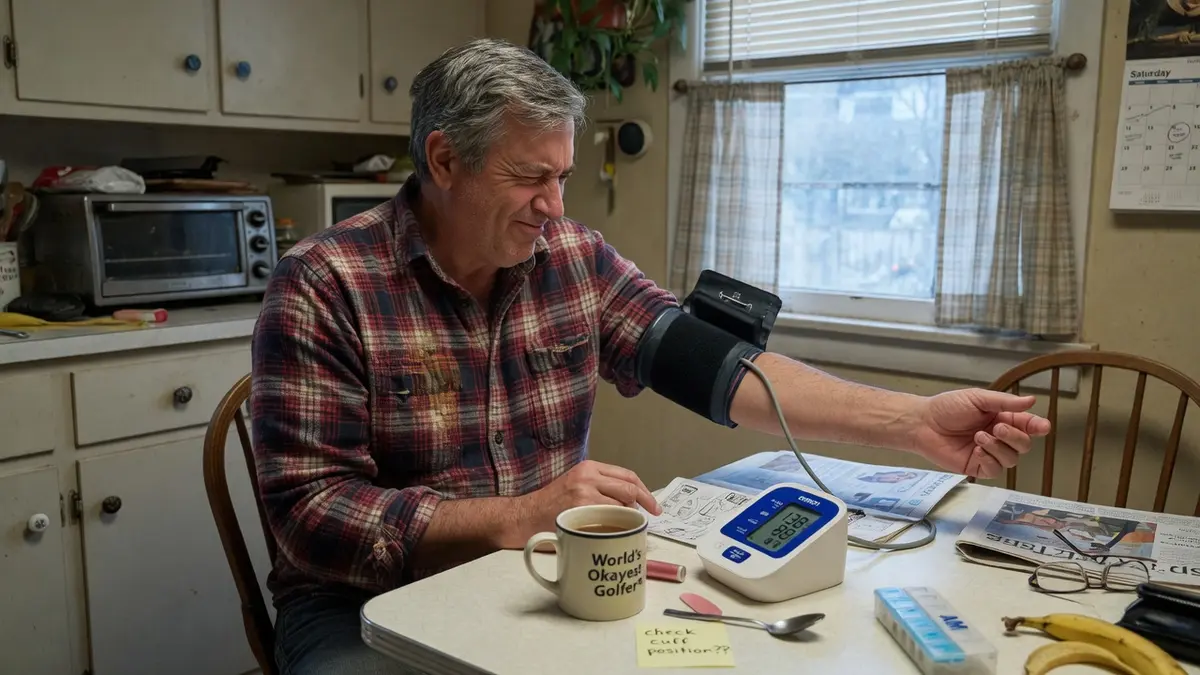
If you’re checking at home, a little technique goes a long way. Sloppy measurement is one of the most common reasons people get readings that scare them unnecessarily — or falsely reassure them.
A few things that genuinely improve accuracy:
- Sit quietly for about five minutes before measuring, with your back supported.
- Keep both feet flat on the floor and don’t cross your legs.
- Rest your arm on a table so the cuff sits at roughly heart level.
- Avoid caffeine, exercise, and smoking for about 30 minutes beforehand.
- Don’t talk during the reading — conversation can nudge the numbers up.
- Take two or three readings a minute apart and look at the average rather than fixating on the highest one.
An upper-arm cuff is generally more reliable than a wrist or fingertip device. And it’s worth occasionally bringing your home monitor to an appointment so it can be checked against the office equipment.
When to Seek Medical Care
Most blood pressure concerns can wait for a regular appointment. A pattern of readings at or above 130/80 deserves a conversation with your doctor, but it’s not an emergency, and there’s usually time to recheck and discuss next steps calmly.
The exception is a reading at or above 180/120. If you get a number that high, sit quietly for five minutes and measure again. If it stays that high and you have symptoms like chest pain, shortness of breath, weakness or numbness, trouble speaking, or vision changes, that’s a reason to call 911 or get emergency help right away — those can signal an active problem with the heart or brain. If the reading is that high but you have no symptoms, contact your doctor promptly rather than waiting it out.
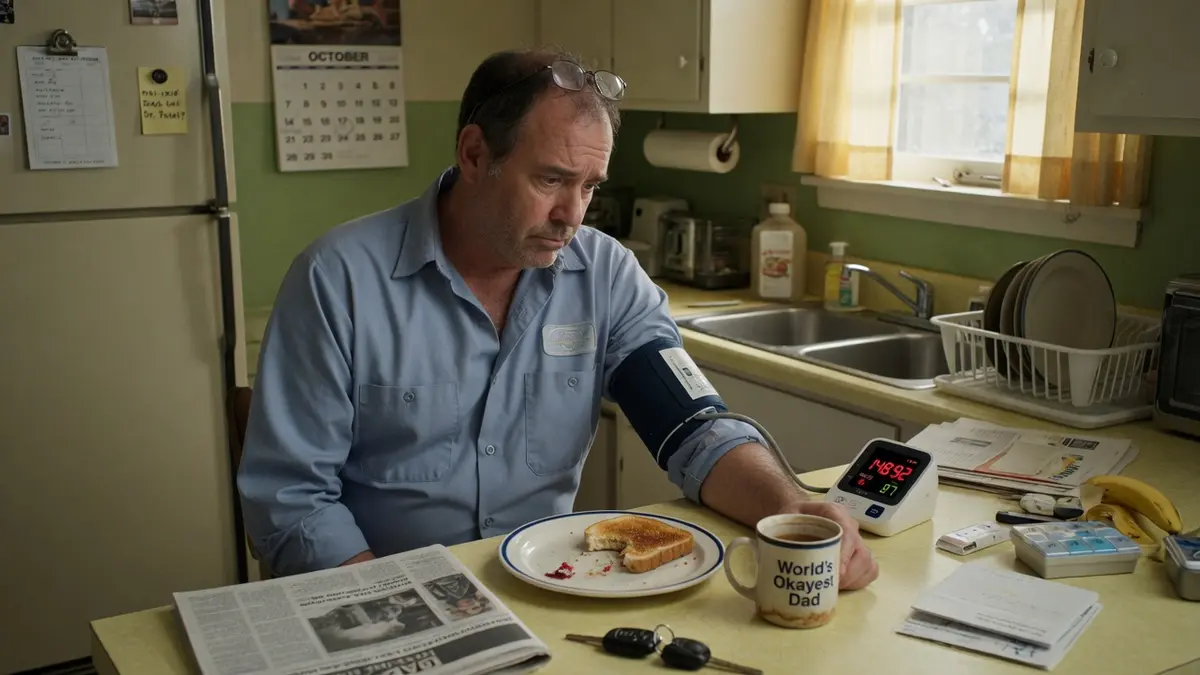
One more thing worth saying plainly: if you’ve been prescribed blood pressure medication, don’t stop it or change the dose based on a few good or bad home readings. That’s a decision to make with your physician, not your kitchen-table cuff.
What Does a Blood Pressure Reading Mean for You, Specifically?
So when you look down at those two numbers, you now know the top one is the push when your heart beats, the bottom one is the pressure when it rests, and that anything consistently at or above 130/80 is worth a conversation. A single high reading on a stressful day isn’t a diagnosis. A pattern across several days is real information. Understanding what does a blood pressure reading mean gives you the context to know the difference between a fluke and a trend — and to decide, sensibly, when to pick up the phone.
If your numbers have been creeping up, jot down a few readings over the next week, note the time of day for each, and bring that list to your next appointment. It’s far more useful to your doctor than a single number remembered from a pharmacy kiosk.
Medical Disclaimer: This content is for educational purposes only and does not replace professional medical advice, diagnosis, or treatment. Always consult your physician or a qualified healthcare provider with any questions about a medical condition.
Sources & Further Reading
- American Heart Association: Understanding Blood Pressure Readings
- Mayo Clinic: Blood Pressure Chart — What Your Reading Means
- NHLBI, NIH: High Blood Pressure — What Is High Blood Pressure?
- CDC: About High Blood Pressure (Hypertension)
- AHA Journals / Circulation: 2025 AHA/ACC Guideline for the Prevention, Detection, Evaluation and Management of High Blood Pressure in Adults