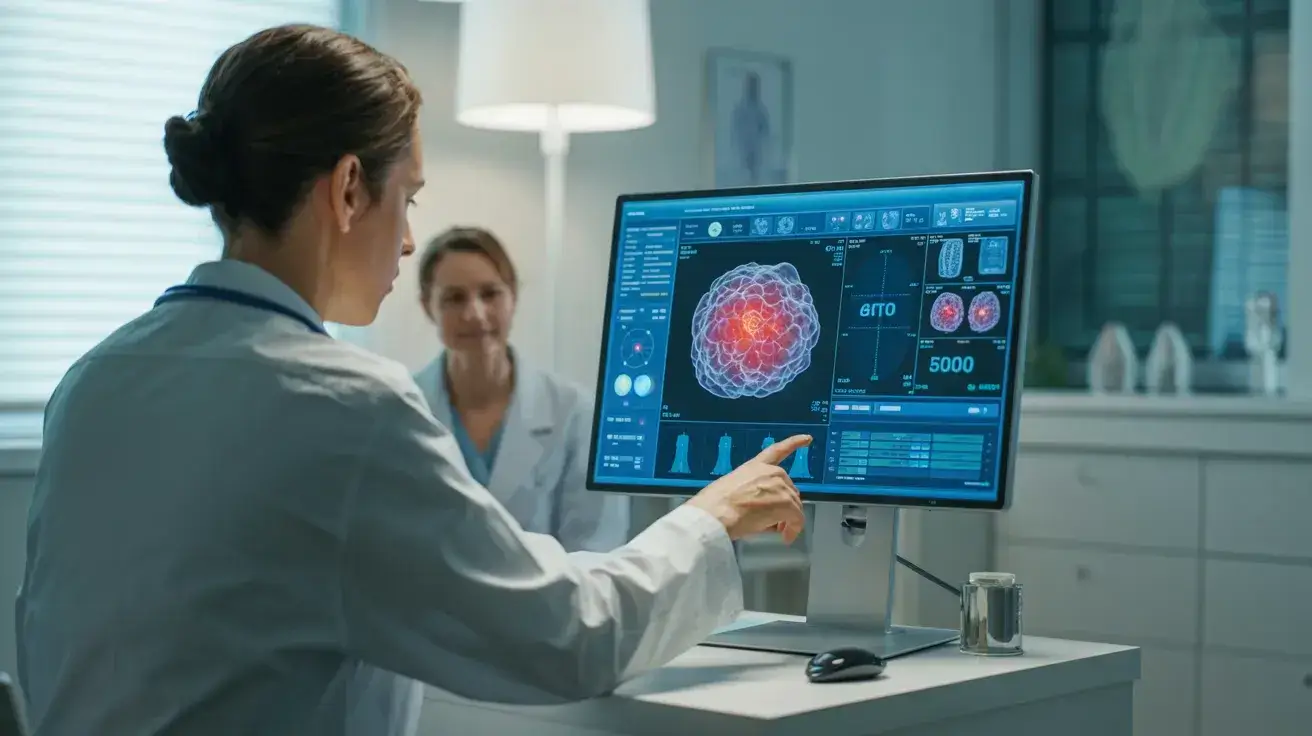
Cancer treatment has always faced one critical question: will the cancer spread—or stay contained?
Now, a new development is changing how that question may be answered. Researchers have created a system where AI predicts cancer spread by analyzing patterns deep inside tumor cells—patterns that are often invisible through traditional methods.
This approach could reshape how treatment decisions are made, helping some patients avoid unnecessary therapies while ensuring others receive care early, when it matters most.
What Does It Mean When AI Predicts Cancer Spread?
Understanding cancer metastasis in simple terms
Cancer becomes more dangerous when it spreads beyond its original location. This process, called metastasis, is responsible for the majority of cancer-related deaths, according to the National Cancer Institute.
In early stages, many tumors are localized and may be highly treatable. But once cancer cells travel to other organs—such as the liver, lungs, or bones—treatment becomes more complex.
The challenge is that metastasis doesn’t happen the same way in every person.
Some tumors grow slowly and never spread. Others become aggressive quickly.
Why predicting spread is so difficult
Traditional tools rely on factors like:
- Tumor size
- Stage at diagnosis
- Imaging results
- Biopsy findings
While helpful, these methods don’t always capture the biological behavior of the cancer.
This is where the idea that AI predicts cancer spread becomes especially important—it looks beyond what the eye can see.
How This New AI Tool Works
The role of gene expression in cancer behavior
Every cancer cell carries genetic information that influences how it behaves.
“Gene expression” refers to how active certain genes are inside those cells. Some genes may:
- Promote tumor growth
- Help cancer evade the immune system
- Enable cells to spread
By studying these patterns, researchers can better understand whether a tumor is likely to metastasize.
How artificial intelligence detects hidden patterns
The new AI model analyzes thousands of gene expression profiles from tumor samples.
Using machine learning, it identifies combinations of signals linked to:
- Cancer spread
- Recurrence after treatment
Instead of focusing on one marker, it evaluates complex patterns across many genes at once.
This is what allows the system to make predictions that are difficult for humans alone.
How Accurate Is AI at Predicting Cancer Spread?
What early research shows
Initial studies suggest that when AI predicts cancer spread, it can reach around 80% accuracy in certain cancers, such as colon cancer.
This level of performance is considered promising, especially given how complex metastasis is.
How it compares to traditional methods
Standard prediction tools often rely on clinical staging and pathology reports.
AI-based approaches may:
- Detect risk earlier
- Capture subtle biological differences
- Provide more individualized predictions
However, it’s important to recognize that accuracy varies depending on the type of cancer and available data.
More Helpful Reads You Might Like:
Why This Breakthrough Matters for Cancer Treatment
Avoiding unnecessary treatments
One of the most important implications of using AI to predict cancer spread is the potential to reduce overtreatment.
Some patients receive aggressive therapies—such as chemotherapy—even when their cancer may never spread.
These treatments can cause:
- Fatigue
- Nausea
- Long-term side effects
If AI identifies patients at low risk, it may help avoid treatments that are unlikely to provide benefit.
Identifying high-risk patients earlier
At the same time, patients with higher-risk tumors could be identified sooner.
This allows for:
- Earlier intervention
- Closer monitoring
- More targeted therapies
In this way, the idea that AI predicts cancer spread becomes not just a technological advance, but a shift toward more precise care.
The Role of AI in Precision Oncology
What is precision medicine?
Precision oncology is an approach that tailors treatment based on individual characteristics, including:
- Genetic makeup of the tumor
- Patient-specific factors
- Molecular biomarkers
Rather than using a one-size-fits-all model, care becomes more personalized.
How AI is changing cancer care
Artificial intelligence is already being explored in several areas:
- Interpreting imaging scans
- Analyzing pathology slides
- Predicting treatment response
The ability for AI to predict cancer spread adds another layer—helping guide decisions before metastasis occurs.
Limitations and What to Expect Next
Why this tool isn’t widely available yet
Despite encouraging results, this technology is still in development.
Before becoming part of routine care, it must go through:
- Larger clinical trials
- Validation across diverse populations
- Regulatory review
The importance of clinical validation
Medical tools must prove that they improve outcomes—not just predictions.
Even if AI predicts cancer spread accurately, doctors still need to confirm:
- Does it lead to better survival?
- Does it reduce unnecessary treatments safely?
Until then, it remains a promising but evolving tool.
What Patients Should Know Today
For now, most patients will not encounter this specific AI tool in everyday care.
However, the broader trend is clear:
- Cancer care is becoming more personalized
- Data-driven tools are playing a larger role
- Treatment decisions may become more precise over time
For patients, this may eventually mean clearer answers to difficult questions like:
- “Do I need chemotherapy?”
- “What is my real risk of recurrence?”
Bottom Line
The idea that AI predicts cancer spread is no longer theoretical—it is becoming a reality backed by early research.
While still under study, this technology may:
- Improve cancer metastasis prediction
- Support more personalized treatment decisions
- Reduce unnecessary therapies for some patients
As research continues, tools like this could help bring oncology closer to a goal long sought in medicine: the right treatment, for the right patient, at the right time.
Medical Disclaimer
This content is for educational purposes only and does not replace professional medical advice, diagnosis, or treatment. Always consult your physician or a qualified healthcare provider with any questions about a medical condition.
Sources & Further Reading
- Aravind Srinivasan, Arwen Conod, Yann Tapponnier, Marianna Silvano, Luca Dall’Olio, Céline Delucinge-Vivier, Isabel Borges-Grazina, Ariel Ruiz i Altaba. Emergence of high-metastatic potentials and prediction of recurrence and metastasis. Cell Reports, 2026; 45 (1): 116834 DOI: 10.1016/j.celrep.2025.116834