For years, the advice seemed simple: if you have diabetes, avoid sugar and choose a sugar substitute.
But in 2026, the question has become more nuanced. New research suggests that some sweeteners—especially certain sugar alcohols—may carry potential cardiovascular risks when consumed in high amounts. At the same time, reducing added sugar remains a critical goal for blood glucose control.
So what is the best sugar substitute for people with diabetes today?
The most accurate answer is not a single product. It’s a strategy—one that balances blood sugar control, heart health, and long-term eating habits.
More Helpful Reads You Might Like:
Why Choosing a Sugar Substitute Is More Complex Now
Blood Sugar Control vs. Long-Term Heart Health
Most sugar substitutes do not raise blood glucose the way table sugar does. For someone monitoring A1C or post-meal spikes, that’s important.
However, diabetes management is not only about glucose. The American Diabetes Association (ADA) emphasizes cardiovascular risk reduction as a central goal of care. Heart disease remains the leading cause of complications in people with diabetes.
That shift in focus has changed how sweeteners are evaluated. A product that does not spike blood sugar still needs to be considered in the broader context of long-term health.
Why Recent Studies Changed the Conversation
In the past few years, studies published in high-impact journals raised concerns about erythritol and xylitol, two popular sugar alcohols often found in “keto” or “zero sugar” products.
Researchers observed that higher blood levels of erythritol were associated with increased cardiovascular events in high-risk populations. Laboratory studies also suggested possible effects on platelet activity, which plays a role in clot formation. Similar concerns have been explored with xylitol.
These findings do not prove that occasional use causes harm. However, they introduced enough uncertainty that many clinicians now recommend caution with frequent or high-dose consumption, particularly in individuals already at elevated cardiovascular risk.
This does not mean all sweeteners are unsafe. It means thoughtful selection matters.
What the American Diabetes Association Recommends
Reducing Added Sugars Comes First
The ADA Standards of Care emphasize limiting added sugars and refined carbohydrates as part of overall nutrition therapy.
Replacing sugar-sweetened beverages with water is strongly encouraged. Even beverages sweetened with nonnutritive sweeteners are not positioned as the first-line daily drink. Water remains the preferred option.
Where Nonnutritive Sweeteners Fit
The ADA states that nonnutritive sweeteners may reduce calorie and carbohydrate intake if they replace sugar, particularly in the short term. However, the goal is not to increase overall sweetness in the diet.
In other words, sweeteners can be a bridge—but not the foundation of a healthy eating pattern.
7 Smart Sugar Substitutes for People With Diabetes
When evaluating the best sugar substitute for people with diabetes, these options are generally considered more reasonable when used in moderation.
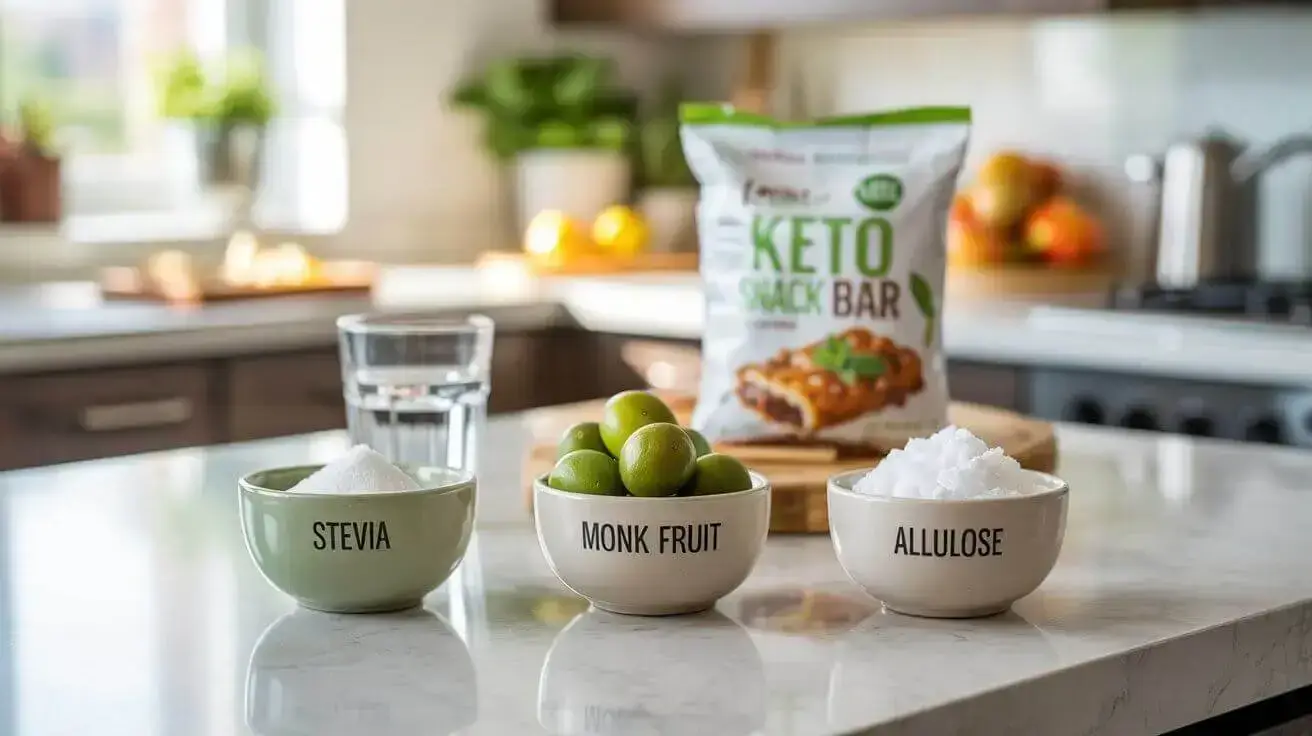
1. Stevia
Derived from the stevia plant, purified steviol glycosides provide intense sweetness with minimal carbohydrate.
Stevia for people with diabetes is often well tolerated and used in small amounts. It does not raise blood glucose in meaningful ways.
Important note: many commercial stevia products are blended with other ingredients. Checking labels helps avoid unnecessary fillers.
2. Monk Fruit
Monk fruit sweetener contains compounds called mogrosides that provide sweetness without glucose impact.
Monk fruit sweetener for diabetes can be useful for beverages or light cooking. As with stevia, label review matters because many products are blended with sugar alcohols.
3. Allulose
Allulose is a rare sugar with minimal caloric contribution and little glycemic effect.
It behaves more like sugar in baking, making it appealing for cooking applications. While early safety data are reassuring, long-term cardiovascular outcome data remain limited compared with older sweeteners.
Moderation remains prudent.
4. Sucralose
Sucralose is widely used and FDA-approved. It does not significantly raise blood sugar.
Some observational studies suggest possible associations with metabolic changes, but evidence remains inconsistent. For individuals transitioning away from sugary beverages, sucralose may be helpful when not consumed excessively.
5. Aspartame
Aspartame has been studied for decades and is considered safe within acceptable daily intake limits established by regulatory agencies.
People with phenylketonuria (PKU) must avoid it. For others, occasional use appears reasonable within recommended limits.
6. Saccharin and Acesulfame-K (Ace-K)
These older high-intensity sweeteners remain approved for use. They are often found in diet beverages and tabletop sweeteners.
As with other artificial sweeteners and diabetes safety discussions, moderation is emphasized.
7. Flavor Enhancers That Reduce the Need for Sweetness
Sometimes the best sugar substitute for people with diabetes is not a sweetener at all.
Cinnamon, vanilla extract, nutmeg, unsweetened cocoa, and citrus zest enhance flavor perception without increasing sweetness intensity. Gradually retraining the palate to expect less sweetness can reduce dependence on sweeteners altogether.
Sugar Alcohols: Are They Safe for Diabetics?
Sugar alcohols deserve separate attention.
What Studies Show About Erythritol Heart Risk
Recent research linked elevated erythritol levels with increased cardiovascular events in certain high-risk populations. Mechanistic studies suggested possible effects on clot formation.
These studies do not establish direct causation for moderate dietary intake. However, they raise questions about frequent, high-dose consumption—particularly in individuals with diabetes who already face elevated cardiovascular risk.
This is why erythritol heart risk has become a topic of discussion in medical circles.
What About Xylitol?
Emerging research has explored similar pathways with xylitol, though data are still evolving.
At present, many clinicians advise avoiding heavy reliance on products where erythritol or xylitol are primary ingredients—especially multiple servings daily.
The Dose Issue Most People Overlook
Sugar alcohols are common in:
- Keto snack bars
- Sugar-free candy
- Protein desserts
- Low-carb baked goods
A person may unknowingly consume large cumulative amounts in a single day.
In addition to potential cardiovascular concerns, sugar alcohols frequently cause bloating, gas, and diarrhea in sensitive individuals.
For these reasons, when patients ask about the best sugar substitute for people with diabetes, sugar alcohols are rarely positioned as first choice options for daily use.
A Practical Way to Decide What’s Best for You
A helpful framework includes three questions:
- Does this help reduce added sugar overall?
- Am I using it occasionally or multiple times daily?
- Does it improve my long-term eating pattern—or simply maintain a high preference for sweetness?
For many individuals, rotating small amounts of stevia or monk fruit, prioritizing water, and gradually reducing sweetness intensity offers a balanced approach.
Those with established cardiovascular disease may wish to be especially cautious with erythritol and xylitol until more long-term data are available.
The Bottom Line
The best sugar substitute for people with diabetes is not about finding a perfect chemical replacement for sugar.
It is about reducing added sugars while protecting long-term heart health.
Stevia, monk fruit, and modest use of approved high-intensity sweeteners can be reasonable tools. Heavy reliance on sugar alcohols such as erythritol or xylitol may warrant caution, especially in individuals with elevated cardiovascular risk.
Most importantly, gradually lowering overall sweetness in the diet may offer benefits that no sweetener can match.
Medical Disclaimer: This content is for educational purposes only and does not replace professional medical advice, diagnosis, or treatment. Always consult your physician or a qualified healthcare provider with any questions about a medical condition.
Sources & Further Reading
- American Diabetes Association. Standards of Care in Diabetes—2026.
https://professional.diabetes.org/standards-of-care - American Heart Association. Low-Calorie Sweetened Beverages and Cardiometabolic Health.
https://www.ahajournals.org/doi/10.1161/cir.0000000000000569 - U.S. Food & Drug Administration. High-Intensity Sweeteners.
https://www.fda.gov/food/food-additives-petitions/high-intensity-sweeteners - Witkowski M et al. The artificial sweetener erythritol and cardiovascular event risk. Nature Medicine. 2023.
https://pubmed.ncbi.nlm.nih.gov/36849732/ - CDC. Added Sugars and Nutrition.
https://www.cdc.gov/nutrition/php/data-research/added-sugars.html