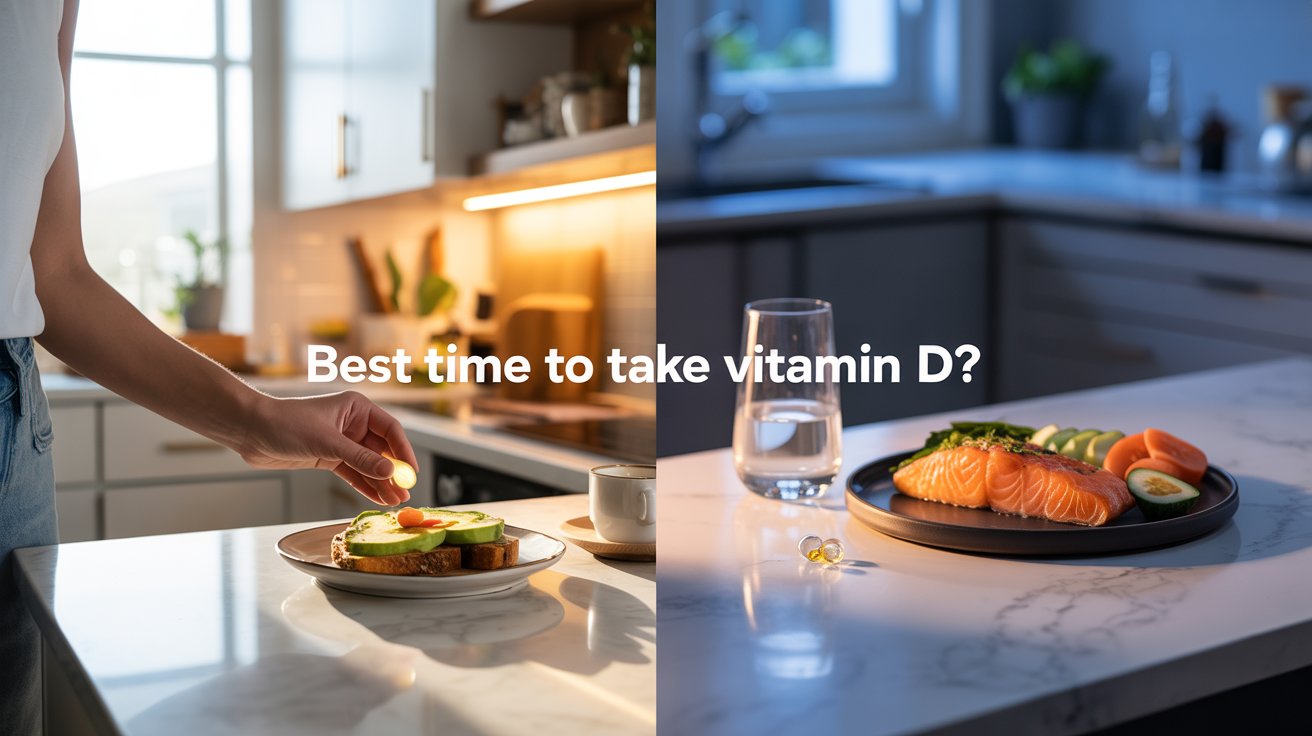
Most people know vitamin D is essential for bone health and immunity, but few realize when you take it can affect how much your body absorbs. If you’ve been taking your vitamin D supplement at night and not seeing results, timing might be the missing piece.
In this guide, discover the best time to take vitamin D for maximum absorption, how food impacts its uptake, and science-backed tips to help your body get the most from every dose.
Why Timing Matters for Vitamin D
Vitamin D acts more like a hormone than a typical supplement. It supports calcium balance, bone strength, immune response, and even mood regulation.
To work properly, it must be absorbed in the digestive system and converted into its active form by the liver and kidneys—a process that depends on factors like timing, food intake, and your body’s natural rhythm.
Taking vitamin D at the right time and under the right conditions helps your body make the most of every dose.
More Helpful Reads You Might Like:
How Vitamin D Is Absorbed
When you take vitamin D (either D₂ or D₃), it’s absorbed through fat in the small intestine. Because it’s fat-soluble, it needs dietary fat to be absorbed effectively. Once in the bloodstream, it’s stored in fat tissue and activated as needed.
That means one simple habit—taking vitamin D with a meal containing healthy fats—can dramatically improve how much your body actually uses.
✅ Pro Tip: Pair your supplement with avocado toast, salmon, nuts, or olive oil for optimal absorption.
Morning vs. Night: What Research Shows
Many people wonder: Is it better to take vitamin D in the morning or at night?
While research doesn’t show a strict “best” time for everyone, studies and real-world data highlight some helpful trends.
Morning May Support Energy and Consistency
Some people feel more alert when they take vitamin D earlier in the day. Because vitamin D helps regulate melatonin, taking it too late might interfere with restful sleep in sensitive individuals.
Nighttime Can Still Work for Some
If morning doses are hard to remember, taking vitamin D with your largest meal—usually lunch or dinner—can still boost absorption since those meals tend to contain more fat. The key is consistency, not the exact hour.
👉 In short: Take vitamin D at the same time every day, ideally with a meal that includes healthy fats.
Should You Take Vitamin D With Food?
Yes—this step matters even more than timing alone.
A 2014 study in the Journal of the Academy of Nutrition and Dietetics found that vitamin D taken with a fat-containing meal increased absorption by 32% compared with fasting.
Best Foods to Pair With Vitamin D
- Avocado or nut butter toast
- Salmon, tuna, or sardines
- Eggs cooked in olive oil
- Greek yogurt with seeds or nuts
Whether it’s breakfast or dinner, pair your supplement with fat-rich foods—especially if it’s vitamin D₃, which tends to be better absorbed than D₂.
Who Should Pay Extra Attention to Timing
Some people need to be more strategic about when and how they take vitamin D:
- Older adults: The skin produces less vitamin D from sunlight with age.
- People with higher body weight: Vitamin D can get trapped in fat tissue, lowering circulating levels.
- Individuals with digestive issues: Conditions like Crohn’s disease, celiac disease, or pancreatic insufficiency can reduce fat absorption.
- Those on certain medications: Steroids, orlistat, and some cholesterol drugs may interfere with vitamin D metabolism.
If any of these apply, ask your healthcare provider for a 25-hydroxyvitamin D blood test to check your levels and adjust dosage or timing accordingly.
Recommended Daily Amounts
According to the U.S. National Institutes of Health (NIH):
- Adults (19–70 years): 600 IU per day
- Adults over 70: 800 IU per day
Many people, especially those living in northern regions or spending little time outdoors, may need higher doses under medical supervision.
Always check with your physician before increasing your supplement intake.
Natural Ways to Boost Vitamin D Levels
1. Take it with a meal that includes fat.
Your body absorbs vitamin D far better when paired with dietary fats.
2. Be consistent.
Choose a time—morning or evening—and stick with it daily.
3. Get safe sun exposure.
About 10–30 minutes of midday sunlight on arms and legs, several times per week, supports natural vitamin D production. (Use sunscreen for longer exposures.)
4. Include vitamin D–rich foods.
Fatty fish, fortified milks, and egg yolks are great sources.
5. Check your blood levels.
Regular testing ensures your supplement plan is working.
Safe Sun Exposure and Supplement Use
While sunlight is the body’s natural source of vitamin D, too much exposure raises skin cancer risk. Dermatologists recommend daily sunscreen and supplements when needed.
Remember: more isn’t always better.
Excess vitamin D can raise calcium levels too high, leading to nausea, weakness, or kidney issues. Stay within recommended doses unless advised otherwise by a healthcare provider.
Key Takeaways
- The best time to take vitamin D is whenever you can be consistent—ideally with a meal containing healthy fats.
- Morning may be preferable for better energy and sleep balance.
- Taking vitamin D on an empty stomach can cut absorption in half.
- Always confirm your vitamin D level with a blood test and follow your doctor’s advice.
FAQs
1. Is it better to take vitamin D in the morning or at night?
Morning may help maintain energy and prevent sleep issues, but the key is consistency and taking it with food.
2. Can taking vitamin D at night affect sleep?
It can for some people, since vitamin D influences melatonin. If you notice sleep disruption, switch to a morning dose.
3. Should vitamin D be taken with or without food?
With food—preferably one that includes healthy fats like nuts, avocado, or salmon.
4. How can I increase my vitamin D absorption naturally?
Take your supplement with fat-containing meals, get safe sun exposure, and include vitamin D–rich foods.
5. What are the symptoms of low vitamin D levels?
Fatigue, low mood, muscle weakness, and frequent illness can all signal deficiency.
Medical Disclaimer: This content is for educational purposes only and does not replace professional medical advice, diagnosis, or treatment. Always consult your physician or a qualified healthcare provider with any questions about a medical condition.
Sources & Further Reading
- National Institutes of Health: Vitamin D Fact Sheet for Health Professionals
- Mayo Clinic: Vitamin D and Your Health
- Harvard Health Publishing: Time of Day to Take Vitamin D (Vitamin D and Your Health)
- Cleveland Clinic: How to Take Vitamin D for Maximum Benefits
- PubMed: Fat-containing meal enhances vitamin D absorption