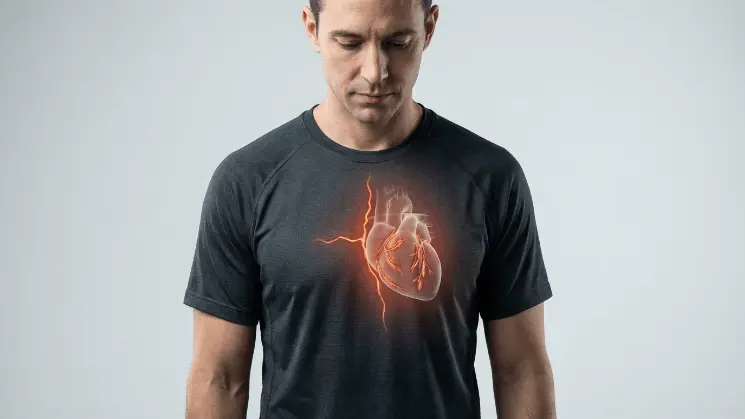
A heart attack is often seen as something that happens to people with obvious health problems.
But that assumption doesn’t always hold up.
There are many cases where someone who exercises regularly, eats reasonably well, and feels completely fine suddenly faces a cardiac event. It can feel confusing—and even unsettling—because nothing seemed “wrong” beforehand.
What’s often missing from that picture is this: heart disease can develop quietly, long before it becomes visible or symptomatic.
In fact, many of the processes that lead to a heart attack—like plaque buildup, inflammation, or subtle metabolic changes—can progress silently for years.
So when this happens in someone who appears healthy, it’s usually not random. It’s the result of underlying factors that weren’t obvious on the surface.
Understanding how this works is one of the most important steps toward real prevention.
Why Healthy People Can Have Heart Attacks Without Warning
Silent plaque buildup in the arteries
Most heart attacks begin with a process called atherosclerosis, where fatty deposits gradually accumulate inside the arteries.
This can develop over decades without causing noticeable symptoms. A person may stay active, maintain a balanced diet, and still have plaque forming silently in the background.
What happens when plaque suddenly ruptures
A heart attack often occurs when one of these plaques becomes unstable and ruptures.
When that happens, the body forms a clot to “repair” the area—but that clot can block blood flow to the heart muscle.
This is why events can feel sudden. The underlying condition has often been there for years, but the trigger happens quickly.
Why symptoms are often absent until it’s serious
Many major risk factors—like high blood pressure or elevated cholesterol—don’t cause symptoms early on.
Without routine screening, it’s easy to assume everything is fine while changes continue silently.
Hidden Risk Factors Most People Don’t Know About
At first glance, someone may look completely healthy—normal weight, active, and symptom-free.
But cardiovascular risk is not always visible.
In many cases, what drives a heart attack is not what shows on the outside, but what’s happening underneath.
Genetics and family history: the risk you inherit, not choose
Family history is one of the strongest predictors of heart disease.
If a close relative had heart disease at an early age (before 55 in men or 65 in women), that risk may be significantly higher—even in someone who takes good care of their health.
Genetics can affect how the body processes cholesterol, regulates inflammation, and maintains blood vessel function.
Some individuals are simply more prone to developing plaque earlier or more aggressively.
A helpful way to understand this: lifestyle plays a major role—but genetics can influence how sensitive the system is from the start.
Lipoprotein(a): the cholesterol most people have never heard of
Most people know about LDL cholesterol—but fewer have heard of lipoprotein(a), or Lp(a).
Lp(a) is a genetically determined cholesterol particle that can increase heart risk in ways that go beyond standard cholesterol levels.
It acts in three important ways:
- Atherogenic: it helps build plaque inside the arteries
- Pro-inflammatory: it irritates the vessel walls, making plaque more unstable
- Pro-thrombotic: it makes blood more likely to clot when a plaque ruptures
In simple terms, Lp(a) not only contributes to blockage—but may also make that blockage more likely to happen suddenly.
Because it’s not part of routine testing, many people have elevated levels without knowing it—even when their cholesterol appears normal.
For this reason, several medical societies now recommend considering Lp(a) testing at least once in adulthood, particularly when there’s a family history of early heart disease.
Inflammation and metabolic health: the invisible driver
Heart disease is not only about cholesterol—it’s also about inflammation.
Chronic, low-grade inflammation can weaken plaques and make them more likely to rupture.
Common contributors include:
- Insulin resistance
- Abdominal fat (even in people with normal weight)
- Poor sleep
- Diets high in ultra-processed foods
A person may look fit and still have underlying metabolic imbalance.
That’s why outward appearance doesn’t always reflect what’s happening inside the arteries.
Stress and psychological factors: more physical than it seems
Stress is often thought of as emotional—but it has real physical effects.
Over time, chronic stress can:
- Increase blood pressure
- Raise stress hormones like cortisol
- Promote inflammation
- Affect how blood clots
These changes don’t usually act alone, but they can amplify other underlying risks.
Even everyday stress—when persistent—can gradually impact heart health.
More Helpful Reads You Might Like:
Subtle Heart Attack Signs That Are Easy to Miss
Not all heart attacks present with dramatic symptoms.
In some cases, the warning signs are mild or easy to overlook.
Mild chest discomfort or unusual fatigue
Some people experience vague pressure, tightness, or unexplained fatigue.
These symptoms are often mistaken for stress, muscle strain, or lack of sleep.
Shortness of breath during routine activity
Feeling unusually winded during everyday activities may indicate that the heart isn’t getting enough oxygen.
Symptoms that may differ in women
Women may be more likely to experience less typical symptoms, such as:
- Nausea
- Back or jaw discomfort
- Lightheadedness
- Extreme fatigue
Because these symptoms are less recognized, they may be dismissed initially.
Proven Heart Attack Prevention Tips for Healthy Adults
Prevention is still highly effective—even when some risk factors can’t be changed.
Know your numbers (blood pressure, cholesterol, glucose)
Routine check-ups are essential because many risks are silent.
Tracking key markers gives a clearer picture of cardiovascular health.
Move your body consistently
Regular physical activity supports circulation, improves metabolic health, and reduces overall risk.
General recommendations suggest at least 150 minutes of moderate activity per week.
Eat for heart health—not just weight
Weight alone doesn’t define health.
A heart-supportive eating pattern includes:
- Fruits and vegetables
- Whole grains
- Lean proteins
- Healthy fats
Minimizing ultra-processed foods may also help reduce long-term risk.
Don’t ignore stress and sleep
Sleep quality and stress management are often overlooked, but they play a meaningful role in cardiovascular health.
Small, consistent improvements can have long-term benefits.
When additional evaluation may help
In some situations, a deeper cardiovascular evaluation may be appropriate—especially for individuals with factors like family history or unclear results on routine testing.
The most appropriate next step is to discuss individual risk with a physician, who can determine whether further evaluation or additional testing is needed.
This approach helps ensure that decisions are personalized and medically appropriate.
The Bottom Line: Healthy Doesn’t Mean Risk-Free
The idea that heart attacks only affect people who appear unhealthy is outdated.
Risk is often shaped by factors that aren’t immediately visible—like genetics, inflammation, and hidden lipid markers such as Lp(a).
That doesn’t mean outcomes are inevitable.
With awareness, appropriate medical guidance, and consistent habits, it becomes possible to reduce risk in a meaningful and proactive way.
Medical Disclaimer
This content is for educational purposes only and does not replace professional medical advice, diagnosis, or treatment. Always consult your physician or a qualified healthcare provider with any questions about a medical condition.