Bottled water feels clean. For many households, it also feels safer. But one widely cited NIH-backed study changed the conversation by finding that three popular bottled water brands contained an average of about 240,000 plastic particles per liter, with roughly 90% classified as nanoplastics. That does not prove every bottle is harming hormones. It does mean that microplastics in bottled water deserve a calmer, more evidence-based look than either panic posts or dismissive headlines usually offer.
The most honest way to talk about microplastics in bottled water is this: the exposure is real, the biology is plausible, and the long-term human health story is still being worked out. Federal agencies note that current evidence does not yet prove that the levels found in foods pose a proven risk to human health, but researchers and endocrine experts also note that plastics can contain or release hormone-active chemicals and that tiny plastic particles have now been detected in human blood and reproductive tissues.
What a widely cited NIH-backed study found about microplastics in bottled water
The reason that 2024 study made headlines is that it looked beyond larger fragments and counted much smaller particles too. Earlier research mostly focused on larger microplastics. This newer technique was able to detect nanoplastics, which helps explain why the total particle count looked so much higher than older estimates. In that study, the researchers examined three popular brands and found polyamide and PET among the most common materials detected.
That finding still needs context. Not all bottled water is the same, not all studies use the same methods, and researchers are still working toward standardized ways to detect and compare these particles. FDA says current scientific evidence does not demonstrate that the levels of microplastics or nanoplastics found in foods, including bottled water, pose a risk to human health right now. So the takeaway is not “all bottled water is toxic.” The better takeaway is that microplastics in bottled water are measurable and worth reducing when that can be done without stress or confusion.
More Helpful Reads You Might Like:
Why microplastics in bottled water raise hormone questions
People start asking about hormones because microplastics in bottled water are not just about the particles themselves. According to NIEHS, endocrine-disrupting chemicals are substances that can mimic, block, or interfere with hormones, and common sources include food and beverage packaging. The Endocrine Society likewise warns that many common plastics contain chemicals that can leach and affect hormone signaling.
It is not just the particles
When microplastics in bottled water come up, there are really two overlapping concerns. The first is the particle itself: microplastic or nanoplastic fragments that may move through the body in ways scientists are still trying to understand. The second is the chemistry associated with plastic, including additives such as bisphenols and phthalates, which are much better studied as endocrine disruptors. NIEHS notes that BPA is used in some plastics and can leach into food and beverages, while phthalates are used as plasticizers in many products, including some food packaging.
That distinction matters because the strongest hormone evidence today is still tied more to endocrine-disrupting chemicals than to bottled-water particles alone. The Endocrine Society summarizes decades of evidence linking endocrine-disrupting exposures with reproductive, metabolic, neurologic, and developmental effects, while CDC-reviewed literature describes associations between plasticizers such as phthalates and adverse reproductive outcomes.
What human studies do and do not show
Human evidence is growing, but it is not strong enough yet to say that microplastics in bottled water directly cause a hormone disorder in a specific person. NIH and NIEHS both emphasize that the health effects of these tiny particles remain uncertain, and FDA says current evidence has not demonstrated risk at the levels detected in food.
Even so, scientists have now documented microplastics in human blood, placenta, and testes. Recent PubMed-indexed studies reported microplastics in 90% of blood donors sampled, found microplastics in all placentas studied in one analysis, and found microplastics in all human testes sampled in another study that also raised questions about possible reproductive consequences. These findings do not prove disease, but they help explain why the issue is being taken seriously.
Can microplastics in bottled water cause symptoms you can feel?
There is no symptom checklist that can prove someone is reacting to microplastics in bottled water. Hormonal issues such as irregular periods, fertility changes, thyroid shifts, earlier puberty, or metabolic changes can have many causes. The concern here is less about a sudden symptom and more about repeated, cumulative exposure to hormone-active chemicals during sensitive windows of life. NIEHS notes that hormones work in extremely small amounts and that even small disruptions may matter biologically.
That is why pregnancy, infancy, childhood, and puberty get extra attention in discussions about endocrine disruptors. CDC-reviewed and NIEHS materials both emphasize that reproductive development and fertility may be sensitive to endocrine-active exposures, even though it remains difficult to pin an individual health problem on a single source such as bottled water.
7 practical ways to lower exposure without becoming obsessive
When microplastics in bottled water are the concern, small repeatable habits usually help more than extreme rules.
1) Use tap water when it is safe and trusted
If local tap water is safe, shifting some routine drinking away from bottled water is a reasonable first step. A Harvard Chan review notes that people who drink bottled water may ingest an additional 90,000 microplastics per year compared with people who do not. That figure comes from one analysis, not a diagnosis of harm, but it supports reducing unnecessary reliance on single-use bottles.
2) Make glass or stainless steel the default
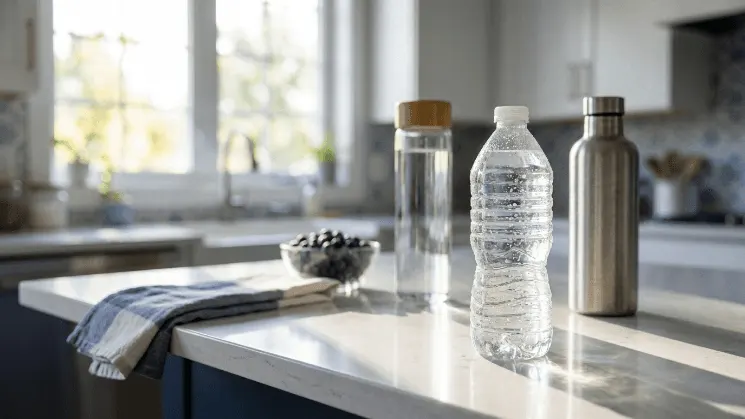
For home, work, or the gym, reusable glass or stainless-steel containers are a practical way to lower routine contact with disposable plastic. Mayo Clinic and NIEHS both point readers toward glass, porcelain, or stainless steel as useful alternatives, especially for food and drinks.
3) Keep plastic away from heat
Heat makes leaching more likely. Mayo Clinic advises against microwaving plastic containers, and NIEHS notes that BPA leaching can depend on temperature. The Endocrine Society also reports that common situations such as storing water bottles in a hot car can increase transfer of bisphenols from plastics.
4) Cut back on heavily packaged foods
Bottled water is only one part of the exposure picture. NIEHS says diet is a major route of BPA exposure, and Mayo Clinic suggests focusing more on fresh whole foods when trying to reduce plastic-associated chemical exposure. That broader shift often matters more than obsessing over one bottle.
5) Be extra cautious during pregnancy and around kids
A more precautionary approach makes sense when hormone systems are still developing. CDC-reviewed literature and NIEHS materials both emphasize that endocrine disruptors may affect reproductive and developmental health, and NIH-funded researchers are actively studying how micro- and nanoplastics move through maternal and fetal tissues.
6) Do not let fear replace common sense
The goal is lower exposure, not perfection. Cutting back on microplastics in bottled water should not turn into all-or-nothing thinking. The healthiest pattern is usually the one that can actually be repeated: fewer disposable bottles on most days, not constant anxiety about every sip.
7) Focus on the big picture of plastic exposure
NIEHS experts recommend more than just avoiding bottled water: use glass food containers, avoid microwaving plastic, and choose more natural fibers when possible. That matters because exposure does not come only from drinking water. It can also come from packaging, textiles, dust, and other everyday sources.
When bottled water still makes sense
This is not an argument that all bottled water is “bad” or that every sip threatens hormonal health. Some people rely on bottled water because of convenience, travel, taste, or concerns about local water quality. The more balanced takeaway is that microplastics in bottled water are real enough to justify practical exposure-reduction habits, especially for people who drink it every day, but the science is not strong enough to claim that an occasional bottle is causing a hormone disorder.
The bottom line on microplastics in bottled water
The truth about microplastics in bottled water sits somewhere between panic and shrugging. The exposure is real. The hormone concern makes biological sense because plastics can contain endocrine-disrupting chemicals and because tiny particles have now been detected in human tissues. But the direct human evidence tying bottled-water exposure to hormone disease is still incomplete. For most people, the smartest approach is simple: drink more from trusted tap sources when possible, use glass or stainless steel more often, and keep plastics away from heat.
Medical Disclaimer: This content is for educational purposes only and does not replace professional medical advice, diagnosis, or treatment. Always consult your physician or a qualified healthcare provider with any questions about a medical condition.
Sources & Further Reading
- PubMed: Microplastics in human blood: Polymer types, concentrations and characterisation using μFTIR
- PubMed: Quantitation and identification of microplastics accumulation in human placental specimens using pyrolysis gas chromatography mass spectrometry
- NIH Research Matters: Plastic particles in bottled water
- NIEHS: Endocrine Disruptors
- NIEHS: Understanding Exposures to Microplastics and Nanoplastics
- CDC Stacks: Endocrine-Disrupting Chemicals & Reproductive Health
- Harvard T.H. Chan School of Public Health: Microplastics a growing challenge to health and the environment