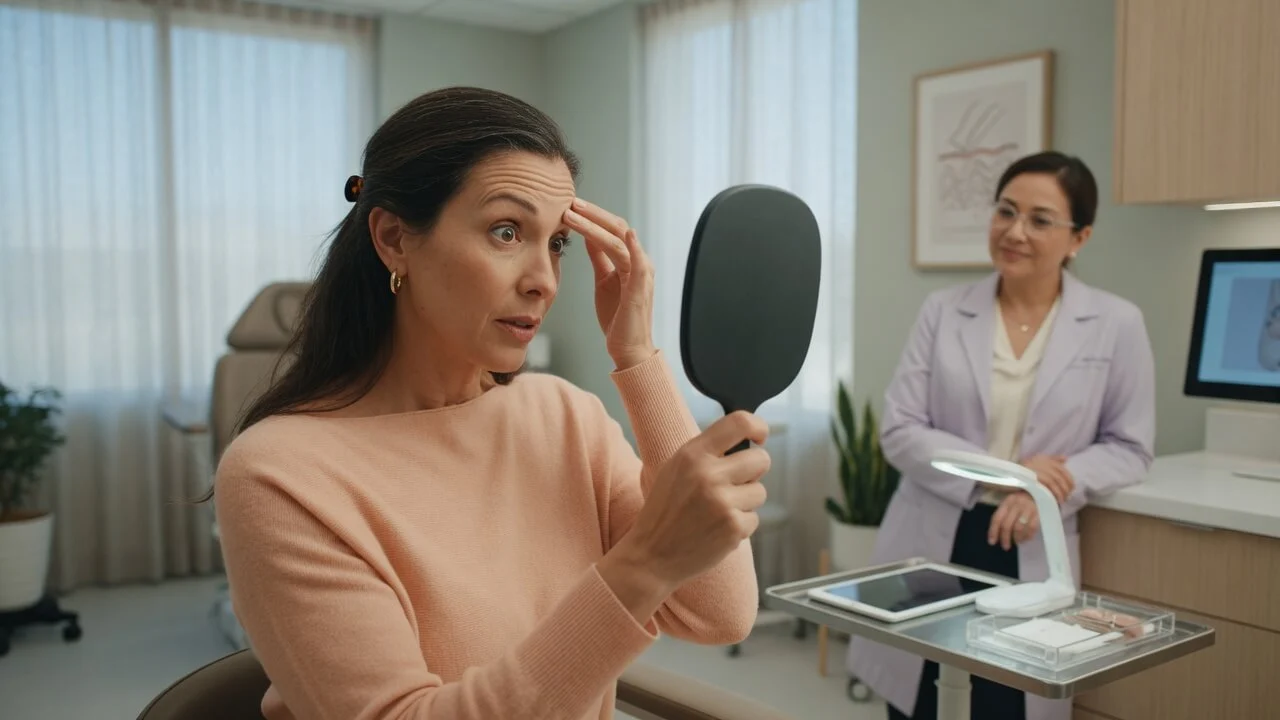
A common concern before getting Botox is simple and understandable: Will it look obvious?
Many people want smoother skin—but not at the cost of losing their natural expressions. The good news is that natural-looking Botox is not only possible, it’s the standard goal in modern aesthetic medicine when done thoughtfully and correctly.
Understanding what makes results look subtle versus “frozen” can make all the difference when considering treatment.
What “Natural-Looking Botox” Really Means
Natural-looking Botox doesn’t mean eliminating every line on the face. Instead, it focuses on softening wrinkles while preserving movement and facial identity.
In clinical terms, Botox works by temporarily relaxing specific muscles responsible for dynamic wrinkles—those that appear with expressions like frowning or squinting. The key is balance. Too little effect may not change much, while too much can reduce movement more than intended.
A natural result typically allows:
- Gentle facial expressions
- Some visible movement in treated areas
- A refreshed, not altered, appearance
This approach aligns with guidance from dermatology and plastic surgery societies, which emphasize individualized treatment based on facial anatomy and muscle activity.
More Helpful Reads You Might Like:
Why Some Botox Results Look Frozen
Not all Botox results look the same. When outcomes appear stiff or unnatural, there are usually specific reasons behind it.
The Role of Dose and Injection Technique
One of the most common causes of a frozen look is excessive dosing or injecting in areas that overly suppress muscle movement.
Each face has different muscle strength and patterns. Using a standard dose for everyone can lead to imbalance. For example, over-relaxing the forehead without considering surrounding muscles may limit natural eyebrow movement.
Why Facial Anatomy Matters More Than You Think
Facial muscles don’t work in isolation—they function as a coordinated system. Relaxing one muscle too much without adjusting others can create unintended effects, such as:
- A heavy or lowered brow
- An overly smooth but expressionless forehead
- Asymmetry between sides of the face
This is why experienced clinicians perform a detailed assessment before treatment, often observing how the face moves during expression—not just at rest.
7 Expert Tips for Natural-Looking Botox Results
Achieving natural-looking Botox is less about luck and more about informed decisions.
1. Choose a Qualified, Experienced Provider
Board-certified dermatologists or plastic surgeons are trained to understand facial anatomy and customize treatment. This is one of the strongest predictors of natural results.
2. Start Conservatively
Beginning with a lower dose and adjusting later can help preserve movement while still improving wrinkles. Many providers follow a “less first, refine later” approach.
3. Avoid One-Size-Fits-All Treatments
Natural-looking Botox requires personalization. What works for one person may not work for another due to differences in muscle strength and facial structure.
4. Treat the Face as a Whole
Focusing on only one area—like the forehead—without considering others may create imbalance. Subtle adjustments across multiple areas often produce more harmonious results.
5. Communicate Your Goals Clearly
Some individuals prefer very smooth skin, while others want to maintain visible expression. Being specific about goals helps guide dosing and technique.
6. Understand That Some Movement Is Normal
A completely immobile face is not the goal of natural-looking Botox. Slight movement is often a sign of a well-balanced treatment.
7. Plan for Follow-Up Adjustments
Results evolve over days to weeks. A follow-up visit allows fine-tuning, which can improve symmetry and natural appearance.
What to Expect After Botox (and What’s Normal)
After treatment, changes don’t happen immediately. Effects typically begin within a few days and continue to develop over about one to two weeks.
During this time, it’s common to notice:
- Gradual softening of lines
- A lighter feeling in treated areas
- Subtle changes in expression
Natural-looking Botox should not feel drastic. Most people describe looking more rested rather than noticeably different.
When Botox Might Not Look Natural
Even when performed correctly, results may vary. Certain patterns can suggest that the outcome is less balanced than intended.
Signs the Results May Be Overdone
Some individuals may notice:
- Difficulty raising the eyebrows
- A “tight” or heavy feeling in the forehead
- Limited facial expression
- Unusual eyebrow shape or asymmetry
These effects are usually temporary, as Botox wears off over time, but they can be frustrating while present.
When to Reassess or Seek a Second Opinion
If results feel significantly off or interfere with normal expression, it may be helpful to consult another qualified provider. In some cases, adjustments or simply allowing time for the effect to fade are appropriate.
The Bottom Line on Natural-Looking Botox
Natural-looking Botox is less about eliminating every wrinkle and more about enhancing appearance while preserving what makes a face unique.
The most reliable way to avoid a frozen look is through:
- Careful provider selection
- Personalized treatment planning
- Conservative dosing
- Ongoing communication
For many people, the best Botox results are the ones no one notices—only that they look refreshed, well-rested, and subtly improved.
Medical Disclaimer
This content is for educational purposes only and does not replace professional medical advice, diagnosis, or treatment. Always consult your physician or a qualified healthcare provider with any questions about a medical condition.
Sources & Further Reading
Botulinum Toxin for Aesthetic Use: A Review of Clinical Effectiveness
https://pubmed.ncbi.nlm.nih.gov/26910696/
A Systematic Review of Botulinum Toxin in Facial Aesthetics
https://www.scielo.br/j/bdj/a/KSGHx6TWrF9GgWgXyQQXC4z/abstract/?lang=pt
American Academy of Dermatology – Botulinum Toxin Overview
https://www.aad.org/public/cosmetic/wrinkles/botulinum-toxin-overview
American Society of Plastic Surgeons – Botulinum Toxin
https://www.plasticsurgery.org/cosmetic-procedures/botulinum-toxin
FDA Prescribing Information for Botox Cosmetic
https://www.accessdata.fda.gov/drugsatfda_docs/label/2018/103000s5306lbl.pdf