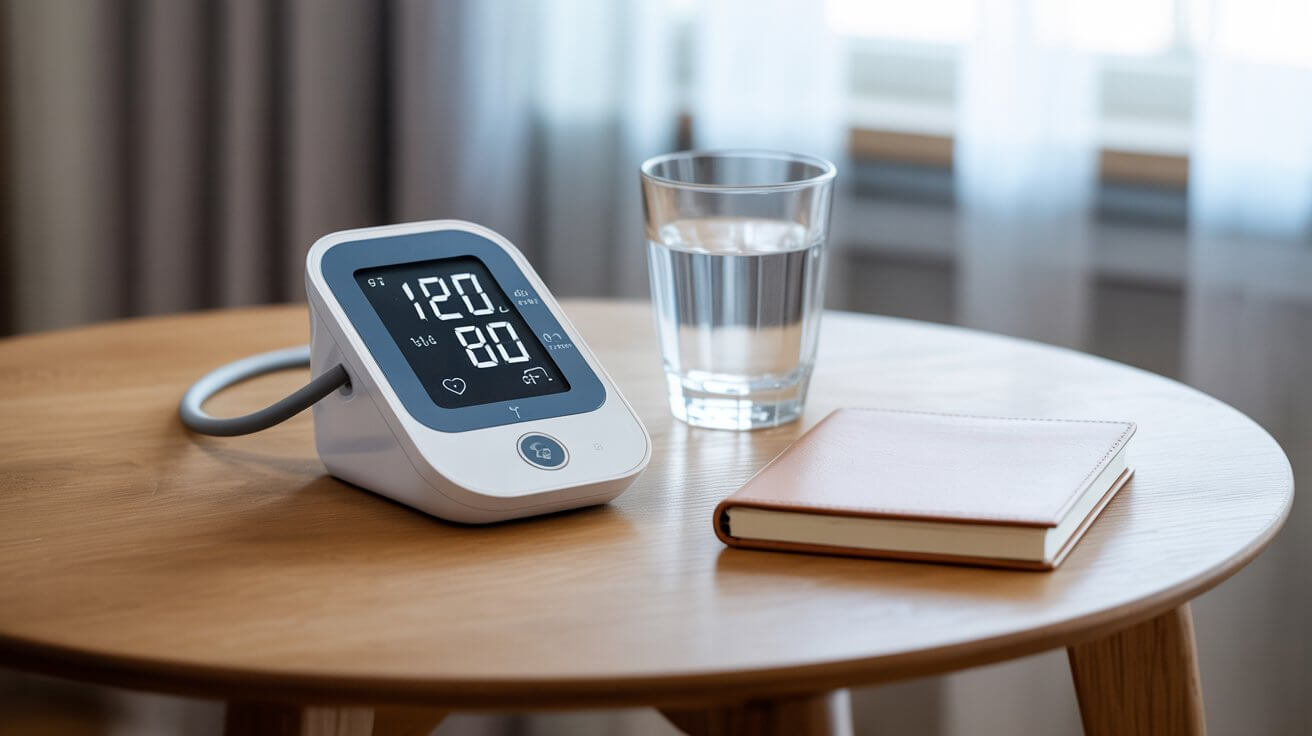
It’s a familiar scene for millions of Americans. You’re at your doctor’s office for a routine check-up, and the blood pressure cuff tightens around your arm. You hold your breath for a moment, hoping for a good number. But time and time again, the reading is elevated. You’ve been diagnosed with hypertension, or high blood pressure, and perhaps you’ve already started medication, tried to cut back on salt, and aimed for more daily walks.
For many, this becomes a lifelong journey of management. But what if, for a significant number of people, there’s an undiagnosed cause of high blood pressure? What if the numbers aren’t just from aging or lifestyle, but are driven by a specific, treatable hormone imbalance that often goes undiagnosed?
Recent insights from the medical community are shining a powerful light on a condition called primary aldosteronism. Once thought to be rare, it’s now understood to be a common and overlooked cause of hypertension. This isn’t just a topic for complex cases anymore; it’s a conversation every person with high blood pressure should be aware of.
More Helpful Reads You Might Like:
What Is Primary Aldosteronism? A Simple Guide to the Hormone Behind Your Numbers
Let’s break it down. Your body has two small glands that sit on top of your kidneys, called the adrenal glands. These glands are tiny powerhouses, producing several essential hormones. One of these hormones is aldosterone.
Aldosterone’s main job is to help regulate your body’s salt and water balance, which in turn affects your blood pressure. It tells your kidneys to hold onto sodium (salt) and get rid of potassium. When everything is working correctly, your body produces just the right amount of aldosterone to keep things stable.
In primary aldosteronism, however, the adrenal glands go into overdrive and produce too much aldosterone, regardless of what the body needs. This can happen for a couple of reasons:
- Most commonly, one or both adrenal glands become overactive (a condition called bilateral adrenal hyperplasia).
- Sometimes, a small, non-cancerous tumor (an adenoma) on one of the adrenal glands is the culprit, churning out excess hormone.
When you have too much aldosterone, your body holds onto excess sodium. Where sodium goes, water follows. This extra water in your bloodstream increases the volume of blood being pumped through your vessels, leading directly to higher blood pressure. At the same time, the body loses too much potassium, which can cause its own set of problems.
Why This Hormone Imbalance and High Blood Pressure Connection Matters More Than We Thought
For decades, medical professionals were taught that primary aldosteronism was a rare cause of hypertension, responsible for perhaps 1% of cases. The search for it was typically reserved for patients with very resistant high blood pressure or those with unusually low potassium levels.
However, groundbreaking research and evolving guidelines from organizations like the Endocrine Society and the American Heart Association are telling a different story. Studies now suggest that primary aldosteronism could be responsible for 10% to 20% of all hypertension cases.
Think about that for a moment. Of the tens of millions of Americans with high blood pressure, millions might have a specific hormonal driver that is currently being missed. They are being treated for general hypertension, but the root cause—the overactive adrenal glands—remains unaddressed. This is significant because when primary aldosteronism is the undiagnosed cause of high blood pressure, the resulting hypertension can be more damaging over time to the heart, blood vessels, and kidneys than other types of high blood pressure.
Could You Be Affected? Understanding Primary Aldosteronism Symptoms (and the Lack Thereof)
Because primary aldosteronism directly causes high blood pressure, its main sign is simply… high blood pressure. However, some clues might suggest this condition could be at play, though many people have no other symptoms.
Some individuals might experience symptoms related to low potassium levels (hypokalemia), such as:
- Muscle weakness or cramping: A feeling of fatigue or unexplained aches in the muscles.
- Excessive thirst and urination: Your body tries to compensate for the electrolyte imbalance.
- Headaches and fatigue: General feelings of being unwell that are easy to dismiss.
The crucial takeaway is this: the absence of these symptoms does not rule out primary aldosteronism. The most reliable indicator is a blood pressure that is difficult to control or the simple presence of hypertension itself. This is why the conversation is shifting toward broader screening for anyone diagnosed with high blood pressure.
How Doctors Screen for It: The Aldosterone-Renin Ratio Test
The good news is that screening for primary aldosteronism is straightforward. It starts with a simple blood test to measure the levels of aldosterone and another hormone called renin. Renin is a hormone from the kidneys that normally tells the adrenal glands to produce aldosterone.
- In a healthy person, if blood pressure is high, renin levels should be low (the body is trying to stop the signal).
- In someone with primary aldosteronism, the adrenal glands are releasing aldosterone on their own. So, doctors will see a high aldosterone level and a low (suppressed) renin level.
This aldosterone-to-renin ratio (ARR) is the key screening tool. If the ratio is high, it’s a strong signal that primary aldosteronism might be present, and further confirmatory tests may be recommended by your doctor or a specialist, like an endocrinologist.
Finding the Right Treatment: Targeting the True Cause of Your Hypertension
Identifying primary aldosteronism is a game-changer because the treatment can be targeted directly at the cause. This is a profound shift from simply managing the symptom (high blood pressure) with general medications.
Medication for Overactive Glands
For overactive glands (bilateral adrenal hyperplasia), the treatment is medication. Specific drugs called mineralocorticoid receptor antagonists (MRAs), such as spironolactone or eplerenone, are used. These drugs work by blocking the effect of aldosterone on the body. For many patients, this not only improves blood pressure control significantly but also protects the heart and kidneys from the hormone’s damaging effects. Often, the number of other blood pressure medications can be reduced.
A Potential Cure for Hormone-Producing Tumors
In cases where a single, small tumor is the cause, there is a potential for a cure. A minimally invasive surgical procedure to remove the adrenal gland with the tumor (adrenalectomy) can completely resolve the problem. After surgery, blood pressure may return to normal, and many patients can stop taking blood pressure medications altogether.
How to Start a New Conversation with Your Doctor
This information is not meant to be alarming, but empowering. It represents a pivotal change in understanding hypertension. It provides a new avenue of hope and a potential explanation for millions who feel frustrated with their blood pressure management.
If you have been diagnosed with high blood pressure—whether it was last week or last decade, whether it’s mild or severe—this is relevant to you. The next time you see your healthcare provider, you can open a new line of dialogue.
Consider asking questions like:
- “I’ve been reading about how a hormone imbalance can sometimes cause high blood pressure. Could we look into that?”
- “Would it be appropriate to screen for primary aldosteronism in my case?”
This simple conversation can be the first step toward uncovering a hidden cause for your hypertension, leading to more effective, personalized treatment and, ultimately, better long-term health. It’s about moving beyond just managing a number and toward understanding and treating the true reason your body is sending this signal.
Frequently Asked Questions (FAQ)
1. Should I get tested for this even if my blood pressure is well-controlled with medication?
That’s an excellent question and something to discuss with your healthcare provider. Even if your current medications are keeping your numbers in a healthy range, identifying primary aldosteronism as the undiagnosed cause of high blood pressure is still important. The excess aldosterone hormone can have damaging effects on the heart, blood vessels, and kidneys that may not be fully addressed by standard blood pressure drugs. A targeted treatment could offer better long-term protection.
2. Is the screening test for primary aldosteronism complicated or expensive?
The initial screening is surprisingly straightforward. It’s a simple blood test, often called the aldosterone-to-renin ratio (ARR) test, which measures the levels of two key hormones. It’s widely available and generally not cost-prohibitive. Some medications can affect the results, so your doctor might adjust your regimen beforehand. Think of it as a simple first step to uncover important information about your hormonal high blood pressure.
3. If I have this condition, does it mean I did something wrong with my diet or lifestyle?
Absolutely not. It’s crucial to understand that primary aldosteronism is a medical condition originating from the adrenal glands, not a result of personal lifestyle choices. While a healthy diet (especially one low in sodium) and regular exercise are vital for managing any form of hypertension, they do not cause or cure this specific treatable cause of hypertension. This diagnosis is about understanding your body’s unique physiology, not about blame.
4. I have some of the symptoms mentioned, like fatigue and muscle cramps. Should I be worried?
While symptoms like fatigue, muscle cramps, or excessive thirst can be associated with low potassium levels seen in some individuals with primary aldosteronism, they are also very common and can be caused by many other things. It’s wise to be aware of them, but it’s not a reason to worry. The most important step is to have a conversation with your doctor. Mention your symptoms and your interest in primary aldosteronism screening. This allows for a complete evaluation in the proper context of your overall health.
Sources & Further Reading
- Vaidya, A., et al. (2021). Evolution of the Primary Aldosteronism Syndrome: Updating the Approach.
https://academic.oup.com/jcem/article/105/12/3771/5899581? - Primary Aldosteronism – Gland Surgery, 2020
Available at:https://gs.amegroups.org/article/view/32657/27989 - Mayo Clinic. (2023 ). Primary Aldosteronism: A Pragmatic Approach to Diagnosis and Management
https://www.mayoclinicproceedings.org/article/S0025-6196(23)00239-2/fulltext - Cleveland Clinic. (2022 ). Primary Aldosteronism.
https://my.clevelandclinic.org/health/diseases/16448-hyperaldosteronism - Harvard Health Publishing. (2022 ). A common, overlooked cause of high blood pressure?
https://www.health.harvard.edu/blog/a-common-overlooked-cause-of-high-blood-pressure-202209292824 - American Heart Association. (2023 ). What is High Blood Pressure? Available at:
https://www.heart.org/en/health-topics/high-blood-pressure/the-facts-about-high-blood-pressure/what-is-high-blood-pressure