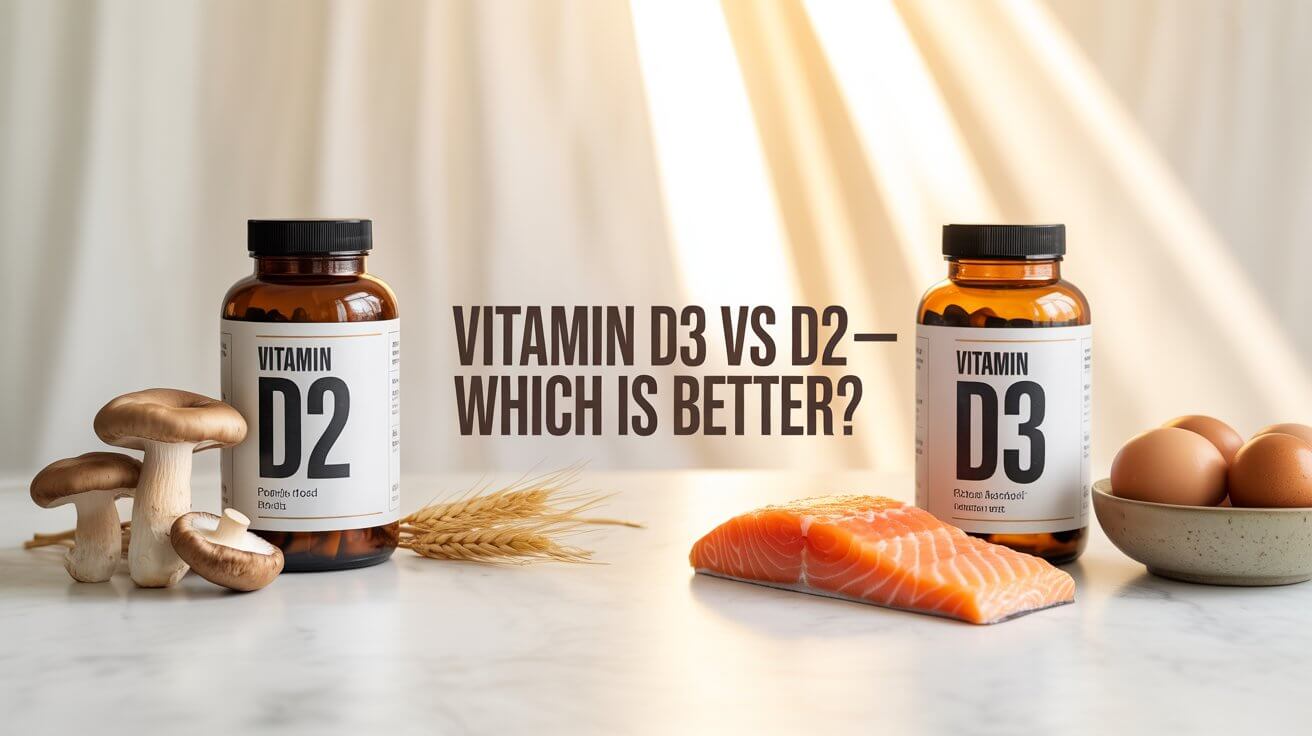
Why Vitamin D Matters for Your Health
As the days grow shorter and sunlight fades, many people start asking a common question: am I getting enough vitamin D? When it’s time to supplement, another question often follows — vitamin D3 vs D2: which is better for your health?
Both forms help your body maintain strong bones and immunity, but research shows they work differently. Let’s explore how vitamin D3 and D2 compare — and how to choose the best one for your needs.
The Many Roles of Vitamin D
Vitamin D acts more like a hormone than a typical vitamin. It helps the body absorb calcium and phosphorus, essential minerals for bone and dental health. But its influence extends far beyond that.
Healthy vitamin D levels are linked to:
- Better immune response
- Improved muscle strength and recovery
- Reduced inflammation
- Mood support and lower risk of seasonal depression
More Helpful Reads You Might Like:
What Happens When Levels Drop Too Low
Vitamin D deficiency is common, especially during winter, among older adults, and in people with darker skin tones. Symptoms may include:
- Fatigue or low energy
- Bone or back pain
- Muscle weakness or cramps
- Low mood
- Frequent colds or infections
Over time, chronic deficiency may increase the risk of osteoporosis, fractures, or other health issues.
Understanding the Difference: Vitamin D2 vs D3
Natural Sources of Each
- Vitamin D2 (ergocalciferol) – found in plant-based sources like mushrooms and yeast exposed to UV light.
- Vitamin D3 (cholecalciferol) – made naturally in human skin when exposed to sunlight and found in animal-based foods such as fatty fish, egg yolks, and fortified milk.
How the Body Converts Them
Both D2 and D3 are converted by the liver and kidneys into calcitriol — the active form used by the body. The key difference lies in efficiency: vitamin D3 converts faster and stays in the body longer.
Why Vitamin D3 Is More Effective
Clinical studies, including one published in the American Journal of Clinical Nutrition, show that vitamin D3 raises blood levels up to 87% more effectively than D2.
In short: D3 is more potent, stable, and longer-lasting.
Who’s at Higher Risk for Vitamin D Deficiency
Certain groups are more likely to have low vitamin D levels:
- Adults over 65
- People with limited sun exposure
- Individuals with darker skin tones
- Those with obesity or fat-absorption issues
- Breastfed infants without supplementation
Choosing the Right Vitamin D Supplement
D3 vs D2 in Supplements
Most over-the-counter supplements now contain vitamin D3, since it’s proven more effective for maintaining blood levels.
D2 is often used in plant-based or prescription products, but it’s less efficient at keeping levels steady.
Recommended Dosages
According to the NIH:
- Adults up to 70 years: 600 IU (15 mcg) daily
- Adults over 70 years: 800 IU (20 mcg) daily
Some individuals may need higher doses temporarily if their levels are low — always confirm with a blood test before increasing your intake.
Safety Tips
Too much vitamin D can cause toxicity, though this is rare. Stick to recommended doses unless advised otherwise by your doctor.
How to Improve Vitamin D Absorption Naturally
Pair Vitamin D with Healthy Fats
Vitamin D is fat-soluble, meaning it absorbs best when taken with dietary fat. Pair your supplement with meals that include avocado, nuts, eggs, or olive oil to enhance absorption.
Get Moderate Sunlight Exposure
Spending 10–20 minutes outdoors, a few times per week, can help your body make vitamin D naturally.
Factors like sunscreen, season, and latitude affect how much your skin can produce, so supplements may still be necessary in winter.
The Bottom Line: Which Is Best for You
Both vitamin D2 and D3 can raise your vitamin D levels — but vitamin D3 is the superior, more bioavailable form.
Combining D3 supplementation with safe sun exposure and balanced nutrition is the most reliable way to maintain healthy levels year-round.
Still, everyone’s needs differ. Talk to your healthcare provider about testing and personalized dosage recommendations.
FAQs About Vitamin D3 vs D2
(Enable FAQ Schema in Rank Math)
1. What is the main difference between vitamin D3 and D2?
D3 comes from animal sources and sunlight, while D2 comes from plants. D3 is more potent and better at raising vitamin D levels.
2. Is vitamin D3 absorbed better than D2?
Yes. D3 stays active longer in your bloodstream and maintains higher vitamin D levels over time.
3. Can vegans take vitamin D3?
Yes — some vegan D3 supplements are now made from lichen, a plant-based source.
4. How much vitamin D should I take daily?
Most adults need 600–800 IU per day, but dosage depends on your current blood levels.
5. What’s the best time to take vitamin D?
Take it with a meal containing fat (like breakfast or lunch) for better absorption.
Medical Disclaimer: This content is for educational purposes only and should not replace medical advice. Always consult your healthcare provider before starting any supplement.