Losing the ability to speak or move is one of the most devastating realities of diseases like ALS. Yet for some patients, a new technology is beginning to reopen a door that once seemed permanently closed.
The Neuralink brain computer interface is making it possible for individuals with severe paralysis to communicate again—using only their thoughts.
This may sound like science fiction, but early human results suggest something far more grounded: a gradual, meaningful shift in how neurological disability is treated.
What Is a Neuralink Brain Computer Interface?
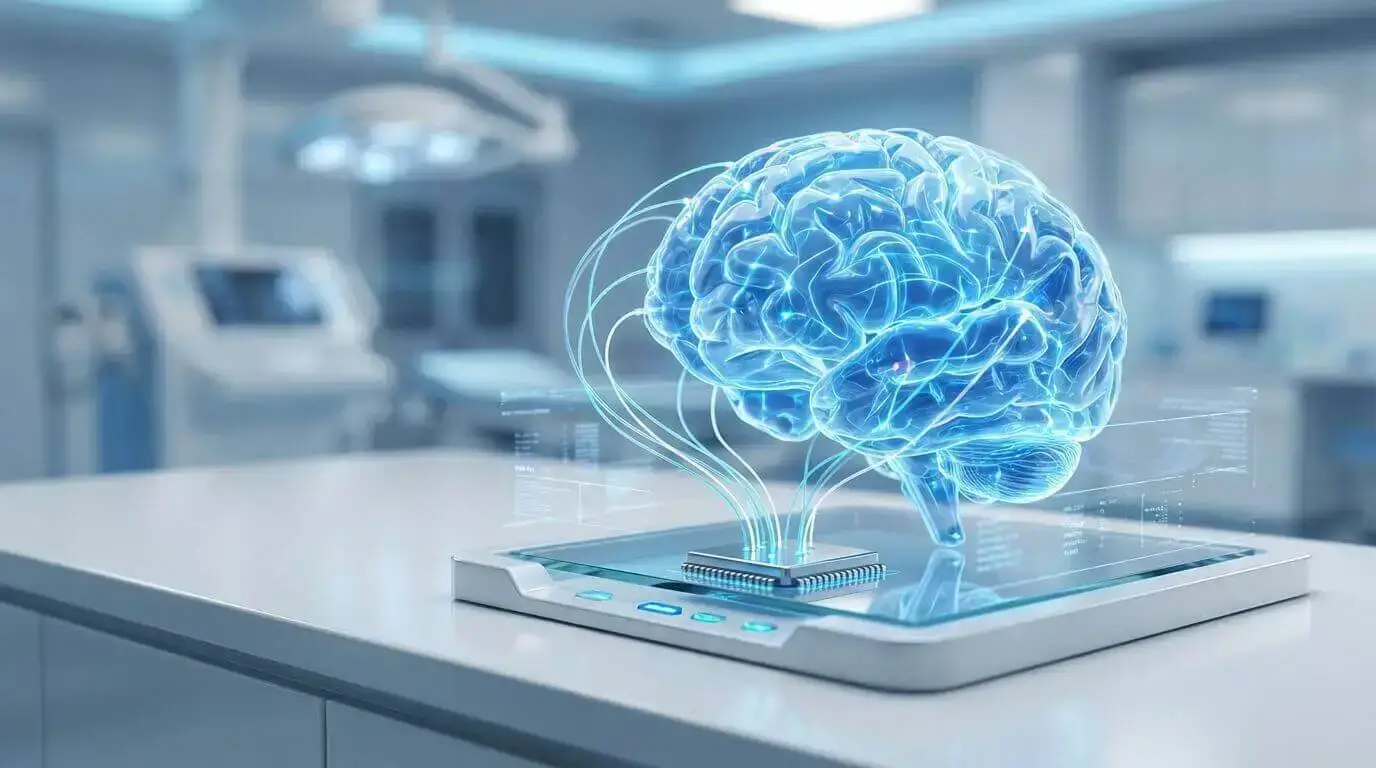
A Neuralink brain computer interface is a small implanted device that connects the brain directly to a computer.
It works by:
- detecting electrical signals from neurons
- translating those signals into digital commands
- allowing control of external devices
Instead of using hands, voice, or movement, a person can:
- move a cursor
- type messages
- interact with software
All through brain activity alone.
This type of technology—called a brain-computer interface (BCI)—has been studied for years. What makes Neuralink different is its fully implantable, wireless system designed for long-term use.
How ALS Patients Are Using Brain Implants Today
What Happened in the First Neuralink Patient
One of the first human participants had ALS, a condition that gradually destroys the ability to move and speak while leaving thinking largely intact.
After receiving the implant, the patient was able to:
- control a computer cursor with thought
- type messages on a screen
- play simple digital games
For someone who had lost voluntary movement, this represents something profound:
👉 restored communication.
Even simple interactions—like typing a sentence—can dramatically improve quality of life.
Why ALS Is a Key Focus for Brain Computer Interfaces
ALS often leads to what is called locked-in syndrome.
In this state:
- the brain remains aware and functional
- but the body can no longer respond
This makes ALS an important target for the Neuralink brain computer interface, because the problem is not thinking—it is the inability to express it.
BCIs aim to bridge exactly that gap.
More Helpful Reads You Might Like:
What Science Says About Brain Computer Interfaces
How the Brain Sends Signals to Technology
The brain constantly generates electrical activity. When a person intends to move, specific neurons fire in patterns.
BCIs capture those signals and convert them into actions.
For example:
- thinking about moving a hand
- becomes a cursor moving on a screen
This translation is not perfect, but it has improved significantly over the past decade.
What Research Shows About Communication Recovery
Studies from major U.S. research centers have shown that:
- people with paralysis can type using brain signals
- robotic limbs can be controlled through implanted electrodes
- communication speed improves with training
Clinical research suggests that these systems can restore basic communication, even in advanced neurological disease.
The Neuralink brain computer interface builds on this foundation by aiming for:
- higher signal resolution
- more stable long-term performance
- easier daily use
Can Neuralink Restore Vision and Hearing?
The Idea Behind Restoring Vision
Elon Musk has stated that Neuralink could eventually restore vision—even in people who are completely blind.
The concept involves:
- bypassing the eyes
- directly stimulating the visual cortex
This is not entirely new. Earlier devices have attempted similar approaches, but results have been limited.
Patients may perceive:
- flashes of light
- simple shapes
Creating detailed, functional vision remains a major scientific challenge.
What Experts Say About Hearing Restoration
The idea of restoring hearing follows a similar path.
Instead of relying on the ear, a device could:
- stimulate brain regions responsible for sound
There is already a related technology—cochlear implants—which stimulate the auditory nerve.
However, direct brain stimulation:
- is more complex
- requires precise mapping of neural signals
At this stage, restoring hearing through a Neuralink brain computer interface remains theoretical.
Risks, Limitations, and Ethical Questions
Despite promising early results, this technology is still experimental.
Medical risks may include:
- infection from brain surgery
- bleeding or inflammation
- device malfunction
Technical challenges remain:
- maintaining signal quality over time
- accurately decoding brain activity
- adapting to changes in neural patterns
Ethical concerns are also evolving:
- who owns brain data
- how privacy is protected
- potential misuse outside medical settings
Experts emphasize that progress must be cautious, transparent, and guided by strict safety standards.
What the Future of Neuralink May Look Like
In the near future, the most realistic applications include:
- restoring communication in ALS and paralysis
- improving independence in daily tasks
- enhancing assistive technologies
Long-term possibilities—still uncertain—include:
- vision restoration
- hearing restoration
- integration with artificial intelligence
While these ideas are compelling, current medical guidance stresses that meaningful progress tends to happen step by step, not all at once.
The Bottom Line
The Neuralink brain computer interface represents a significant step forward in the field of neurotechnology.
For patients with ALS, it offers something deeply important:
👉 a way to reconnect with the world.
At the same time, many of the most ambitious goals—like restoring vision and hearing—are still in early stages of research.
The current reality is both hopeful and grounded:
- communication recovery is becoming possible
- broader applications are still being studied
For individuals and families affected by severe neurological conditions, even small advances can carry enormous meaning.
Medical Disclaimer
Medical Disclaimer: This content is for educational purposes only and does not replace professional medical advice, diagnosis, or treatment. Always consult your physician or a qualified healthcare provider with any questions about a medical condition.