 Written by
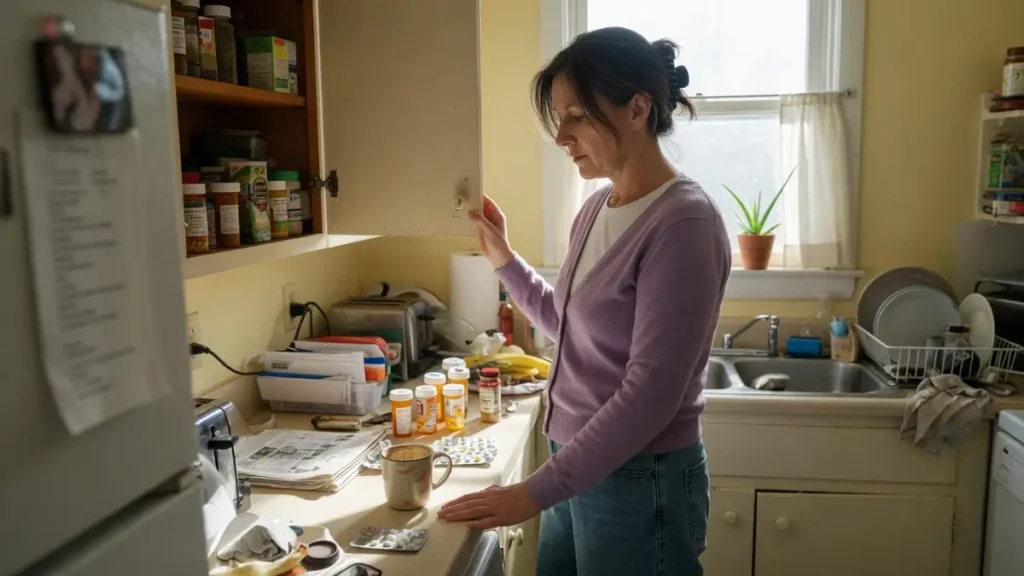
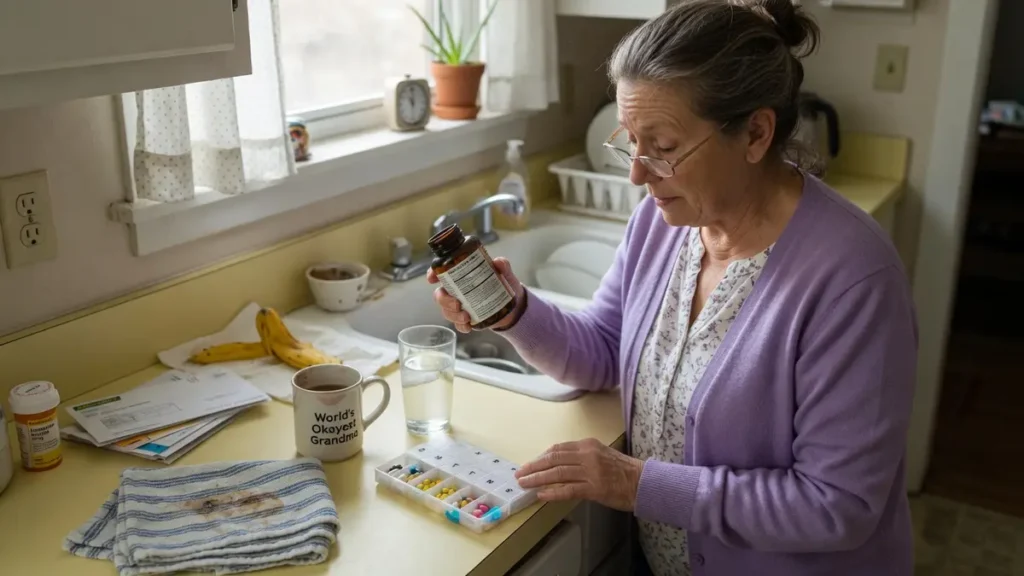
You’re four days into a ten-day prescription for a sinus infection. The pressure behind your eyes is gone, you slept through the night, and you feel like yourself again. Six pills are still sitting in the orange bottle on your kitchen counter. The instructions say to finish the course — but do you actually have to?
In this article
- Where the “always finish the course” rule came from
- So do you have to finish antibiotics your doctor prescribed?
- When shorter courses are actually appropriate
- What to do if you’re tempted to stop early
- When to call your doctor during a course of antibiotics
- What doctors say now about whether you have to finish antibiotics
The advice most adults grew up with was simple: always finish every last pill, no matter how good you feel, or you’ll breed superbugs. That message has been drilled in for decades. But the science behind it has shifted, and the honest answer to do you have to finish antibiotics is more nuanced than the old rule suggested. Here’s what doctors are actually saying now, and why your specific prescription still matters.
Where the “always finish the course” rule came from
The original logic dates back to the early antibiotic era. The thinking went like this: if you stop treatment too early, you leave behind the hardier bacteria — the ones that took longer to kill — and those survivors could multiply, mutate, and become resistant to the drug. Finishing every pill was framed as a public health duty.
It was a reasonable hypothesis at the time. The problem is that it was based more on intuition than on rigorous clinical trials comparing different course lengths. For many common infections, the “standard” durations (7 days, 10 days, 14 days) were chosen somewhat arbitrarily — often because those numbers were convenient, not because studies had shown they were optimal.
What newer research suggests
Over the past decade, a growing body of research has tested shorter antibiotic courses against longer ones for specific infections. The results have been surprising to many clinicians. For conditions like uncomplicated urinary tract infections, community-acquired pneumonia, certain skin infections, and some sinus infections, shorter courses have often performed just as well as longer ones — with fewer side effects and, in some cases, less pressure on bacteria to develop resistance.
The newer thinking is that antibiotic resistance isn’t simply caused by stopping too early. It can also be driven by taking antibiotics longer than necessary, because every extra day of exposure gives bacteria — both the harmful ones and the helpful ones living in your gut — more opportunity to develop or share resistance genes. That’s a meaningful shift from the old framing.
More Helpful Reads You Might Like:
- Napping and Insomnia: When It Helps and When It Backfires
- That Sharp Chest Pain When You Inhale: What’s Actually Going On
- Nauseous After Eating Sometimes? Here’s What’s Likely Going On
So do you have to finish antibiotics your doctor prescribed?
In most cases, yes — but the reasoning is different than it used to be. Your prescription length isn’t a magic number plucked from thin air. It reflects your doctor’s judgment about the type of infection, the bacteria likely involved, your medical history, and current guidelines for that specific condition. Stopping early on your own removes that clinical judgment from the equation.
There are infections where a longer, uninterrupted course genuinely matters. Strep throat is one example — incomplete treatment has been linked to complications like rheumatic fever, which can damage the heart. Tuberculosis treatment can run for months, and stopping early is a well-documented driver of drug-resistant TB. Bone infections, certain heart valve infections, and some sexually transmitted infections also require full courses for reasons that have nothing to do with how you feel on day four.
For those conditions, finishing antibiotics early isn’t a gray area. It’s a real risk.
Why feeling better doesn’t always mean the infection is gone
Symptoms often fade before bacteria are fully cleared. Antibiotics start knocking down the bacterial population quickly, which is why you feel better — but a smaller surviving population can rebound if treatment stops too soon. That rebound can mean a relapse that’s harder to treat the second time, sometimes with a different antibiotic.
This is part of why stopping antibiotics when feeling better has traditionally been discouraged. The relief is real, but it isn’t always proof of cure.
When shorter courses are actually appropriate
Here’s where the evolving evidence gets practical. Clinical guidelines are increasingly moving toward shorter courses for specific infections, when prescribed that way from the start. A few examples of where research has supported shorter treatment:
- Uncomplicated urinary tract infections in otherwise healthy adults, sometimes as short as 3 to 5 days
- Community-acquired pneumonia in adults who improve quickly, often 5 days instead of the older 7- to 10-day standard
- Acute bacterial sinusitis, where 5 to 7 days is often enough
- Some uncomplicated skin and soft tissue infections
The key detail: these shorter courses are decided by your doctor up front, based on guidelines and your situation. They are not the same as deciding on your own to stop a 10-day prescription on day five. Antibiotic stewardship recommendations — the formal guidance hospitals and clinics use to prescribe more carefully — emphasize choosing the right drug and the right duration from the beginning, not letting patients improvise mid-course.
The honest gray area
In practice, doctors sometimes prescribe longer courses than the latest evidence strictly requires, often out of caution or habit. That’s a real tension in the field. But the solution isn’t for patients to second-guess prescriptions at home. The solution is to have a conversation with your prescriber — ideally before you start the medication — about how long you actually need to take it and what to do if you feel completely better partway through.
What to do if you’re tempted to stop early
Before tossing the rest of the bottle, a few practical steps are worth taking. Call the office or message your doctor through the patient portal. Many clinicians will tell you honestly whether your specific course has flexibility built in. Some will say yes, stop now. Others will explain why finishing matters in your case. Either way, you get an answer based on your actual situation rather than a guess.
If side effects are the reason you want to stop — nausea, diarrhea, a rash, yeast infection, persistent stomach pain — that’s a separate and important conversation. Some side effects warrant switching antibiotics rather than simply quitting. A rash that’s spreading, swelling of the face or throat, difficulty breathing, or severe watery diarrhea (especially if it’s bloody) needs medical attention quickly. C. difficile infection, a serious complication of antibiotic use, can show up during or after treatment and isn’t something to manage on your own.
How long to take antibiotics, in plain terms
The current best answer is: as long as your doctor prescribed, unless your doctor tells you otherwise. If that prescription feels long to you, ask why. Ask whether shorter courses are an option for your condition. Ask what symptoms would justify a check-in before finishing. Those questions are reasonable and increasingly welcomed by clinicians who are paying attention to antibiotic stewardship.
What you shouldn’t do is save leftover antibiotics “for next time,” share them with a family member, or use a partial bottle from a previous illness to treat a new one. Those habits drive resistance far more reliably than the old fear of stopping a course early.
When to call your doctor during a course of antibiotics
Reach out to your prescriber if you experience any of the following while taking antibiotics:
- Symptoms aren’t improving after two to three days
- Symptoms get worse instead of better
- You develop a new fever after initially improving
- You have severe or persistent diarrhea
- You notice a rash, hives, or any sign of an allergic reaction
- You’re considering stopping early for any reason
That last point matters. A short phone call beats a guess every time.
What doctors say now about whether you have to finish antibiotics
The blanket rule has softened, but the practical advice for patients has not changed dramatically. Take antibiotics exactly as prescribed. If the prescription seems longer than it needs to be, ask. If side effects are a problem, ask. If you feel completely better halfway through, ask. The link between antibiotic resistance and incomplete courses is real for some infections and overstated for others — and your doctor is the right person to sort out which category yours falls into. Doing that conversation justice is more useful than either blindly finishing every pill or stopping the moment you feel fine.
Medical Disclaimer: This content is for educational purposes only and does not replace professional medical advice, diagnosis, or treatment. Always consult your physician or a qualified healthcare provider with any questions about a medical condition.
Sources & Further Reading
How we sourced this article: we rely on peer-reviewed studies, clinical guidelines and public-health agencies (CDC, NIH, AHA, WHO), check every link before publishing, and update articles when the evidence changes. Read our editorial approach.
- PubMed: The Antibiotic Course Has Had Its Day (Llewelyn et al., BMJ 2017)
- PubMed: Shortened Courses of Antibiotics for Bacterial Infections — Systematic Review of RCTs
- Annals of Internal Medicine / ACP: Appropriate Use of Short-Course Antibiotics in Common Infections — Best Practice Advice From the American College of Physicians
- CDC: Antibiotic Do’s and Don’ts — Healthy Habits for Antibiotic Use
- Mayo Clinic: Antibiotics — Are You Misusing Them?