 Written by
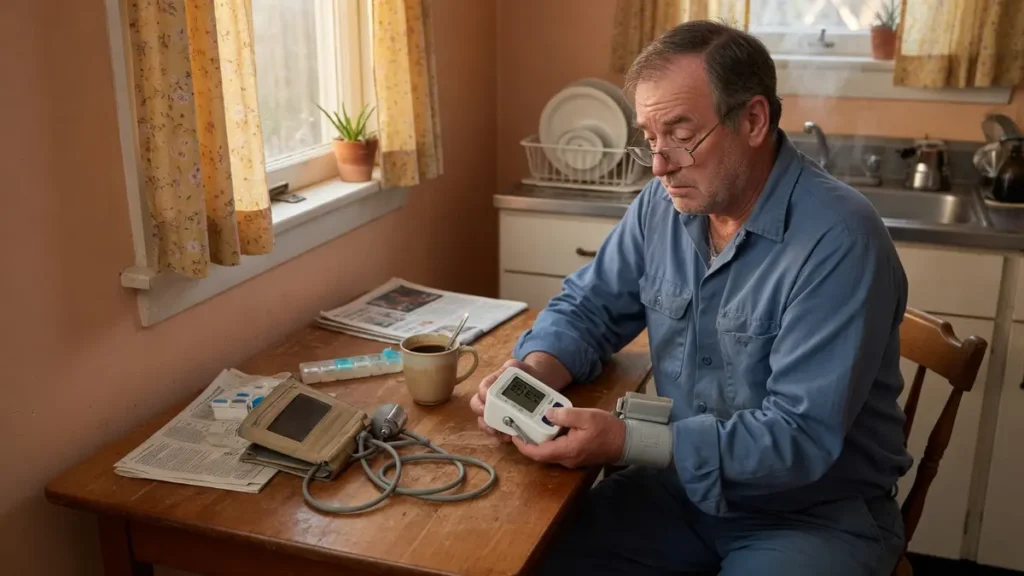
You buy a home monitor, follow the instructions, sit quietly, and the number that pops up looks alarming. So you check again. And again. Maybe you start second-guessing whether you have a real problem — or whether your device is just wrong. Here’s a possibility that gets overlooked more than it should: the cuff wrapped around your arm might not fit you.
In this article
Cuff fit is one of the most common and most fixable reasons home readings drift away from the truth. Getting the blood pressure cuff size right isn’t a minor detail. It can shift your numbers by 10, 20, even 30 points in some cases, which is enough to turn a normal reading into a scary one or hide a genuine problem behind falsely reassuring numbers.
Why cuff size changes the number so much
A blood pressure cuff works by inflating a bladder inside the fabric until it squeezes your artery closed, then slowly releasing while the machine listens for the pressure at which blood starts flowing again. That whole process depends on the cuff distributing pressure evenly around your upper arm.
When the cuff is too small for your arm, the bladder can’t wrap far enough around to press evenly. The machine has to overinflate to compress the artery, and it registers that extra effort as higher pressure. A cuff that’s too small tends to read falsely high. Research in adults with larger arms has consistently found this pattern, and the overestimation can be substantial.
The reverse happens too, though it gets less attention. A cuff that’s too big for a slender arm can read falsely low, making numbers look better than they are. So this cuts both ways. The wrong blood pressure cuff size doesn’t just add noise — it can nudge you toward the wrong conclusion about your own health.
More Helpful Reads You Might Like:
- Why You Feel Chest Tightness When Stressed (And What It Means)
- When Is Surgery Needed for Endometriosis? 5 Signs Doctors Look For
- 7 Uterine Fibroid Treatment Options—With and Without Surgery
How to measure your arm for a blood pressure cuff
The single most useful thing you can do is measure your arm circumference. It takes about a minute and settles the question far better than eyeballing it.
The measurement, step by step
- Bare your upper arm — don’t measure over a sleeve, even a thin one.
- Let your arm hang relaxed at your side, or rest it on a table.
- Find the midpoint of your upper arm, halfway between the tip of your shoulder and the tip of your elbow.
- Wrap a flexible cloth or tape measure snugly around that midpoint, keeping it level and not digging into the skin.
- Note the number in centimeters, since most cuff labels use centimeters.
If you don’t have a soft tape measure, a strip of string or paper wrapped around the arm and then held against a ruler works fine. The goal is a real number, not a guess. Many people are surprised by what they find — arms that look average often measure larger than expected, especially with more muscle or body weight.
Reading a blood pressure cuff sizes chart
Cuffs are sold by the arm circumference they’re designed to fit, and that range is usually printed right on the cuff or its packaging. General categories used in a typical blood pressure cuff sizes chart look roughly like this:
- Small adult: about 22 to 26 cm
- Standard adult: about 27 to 34 cm
- Large adult: about 35 to 44 cm
- Extra-large or thigh cuff: roughly 45 cm and up
These ranges vary slightly between manufacturers, which is exactly why you check your device’s own printed range rather than assuming. Worth knowing: most standard home monitors ship with a standard adult cuff, and that’s genuinely too small for a meaningful share of adults. If your measurement lands near the top of the standard range or above it, a large cuff is often the safer choice.
Signs your blood pressure cuff is too small — or too big
Even without a tape measure handy, the cuff itself gives you clues once it’s on your arm.
A cuff that’s too small often can’t reach far enough to fasten comfortably, or it fastens but pulls tight the moment it inflates. Many cuffs have a printed range line and an arrow or “index” marker — when you wrap it, the end should land within the marked range. If the end falls short of that range, the cuff is too small for you. You might also notice the fit feels like a tourniquet, or the reading swings wildly between attempts.
A cuff that’s too big tends to slide, bunch, or feel loose even when fastened, and the end overshoots past the marked range. Loose cuffs can slip during inflation and produce readings that are erratic or falsely low.
The index line matters more than comfort here. A cuff can feel fine and still be sitting outside its intended range. Check where that end lands every time, especially with a new device.
How the wrong fit throws off home monitor accuracy
People often assume home blood pressure monitor accuracy is mostly about the machine itself — the electronics, the brand, the price. In practice, the cuff and how you use it matter at least as much. A validated, well-reviewed monitor paired with a cuff that doesn’t fit will still give you unreliable numbers.
The frustrating part is that a wrong reading doesn’t announce itself. The device shows you a clean, confident number regardless of whether the cuff fits. There’s no error message for “this cuff is two sizes too small.” That’s why a lot of people track readings for months, adjust their worry or even their medication conversations around them, and never suspect the fit.
A few habits protect your numbers beyond cuff size alone. Sit with your back supported and feet flat, rest the arm at heart level, and stay quiet for about five minutes before measuring. But none of that rescues a poorly sized cuff. Fit comes first.
When to check with your doctor or pharmacist
If your home readings and the readings taken at your doctor’s office keep disagreeing by a wide margin, bring your monitor and cuff to your next visit. Many clinics and pharmacies will happily check your device against theirs and confirm your cuff fits. That single comparison can save you weeks of confusion.
Consider reaching out to a healthcare provider sooner if:
- Your arm circumference falls outside the range your current cuff supports and you’re unsure which size to order.
- Home readings are consistently very high or very low and don’t match how you feel or what’s been measured elsewhere.
- You have a very large arm, a cone-shaped upper arm, or another factor that makes standard cuffs fit poorly — a different cuff style or a wrist device may be discussed.
Don’t start, stop, or change any blood pressure medication based on home numbers alone, particularly if you suspect the cuff has been off. Bring the readings to your clinician and let them interpret the pattern.
One safety note: a cuff that inflates painfully tight or leaves your hand numb and tingling every time may simply be too small, but persistent numbness is worth mentioning to your provider rather than pushing through.
What the right blood pressure cuff size actually gets you
Matching the cuff to your arm is genuinely one of the cheapest, most reliable upgrades you can make to home monitoring. Measure your upper arm once, compare it to your device’s printed range, and order the size that fits — small, standard, large, or extra-large. If you’re between sizes or your arm sits near a boundary, the larger cuff is usually the more forgiving choice. Get that right, and the numbers you’re tracking finally start reflecting what’s really going on.
Medical Disclaimer: This content is for educational purposes only and does not replace professional medical advice, diagnosis, or treatment. Always consult your physician or a qualified healthcare provider with any questions about a medical condition.
Sources & Further Reading
How we sourced this article: we rely on peer-reviewed studies, clinical guidelines and public-health agencies (CDC, NIH, AHA, WHO), check every link before publishing, and update articles when the evidence changes. Read our editorial approach.
- PubMed: Effects of Cuff Size on the Accuracy of Blood Pressure Readings: The Cuff(SZ) Randomized Crossover Trial
- PMC (NIH): Effects of Cuff Size on the Accuracy of Blood Pressure Readings: The Cuff(SZ) Randomized Crossover Trial – Full Text
- American Heart Association: When it comes to accurate blood pressure readings, cuff size matters
- AHA Journals (Hypertension): Measurement of Blood Pressure in Humans: A Scientific Statement From the American Heart Association
- Mayo Clinic: Blood pressure cuff: Does size matter?
- PubMed: Cuff Size Variation Across Manufacturers of Home Blood Pressure Devices: A Current Patient Dilemma