
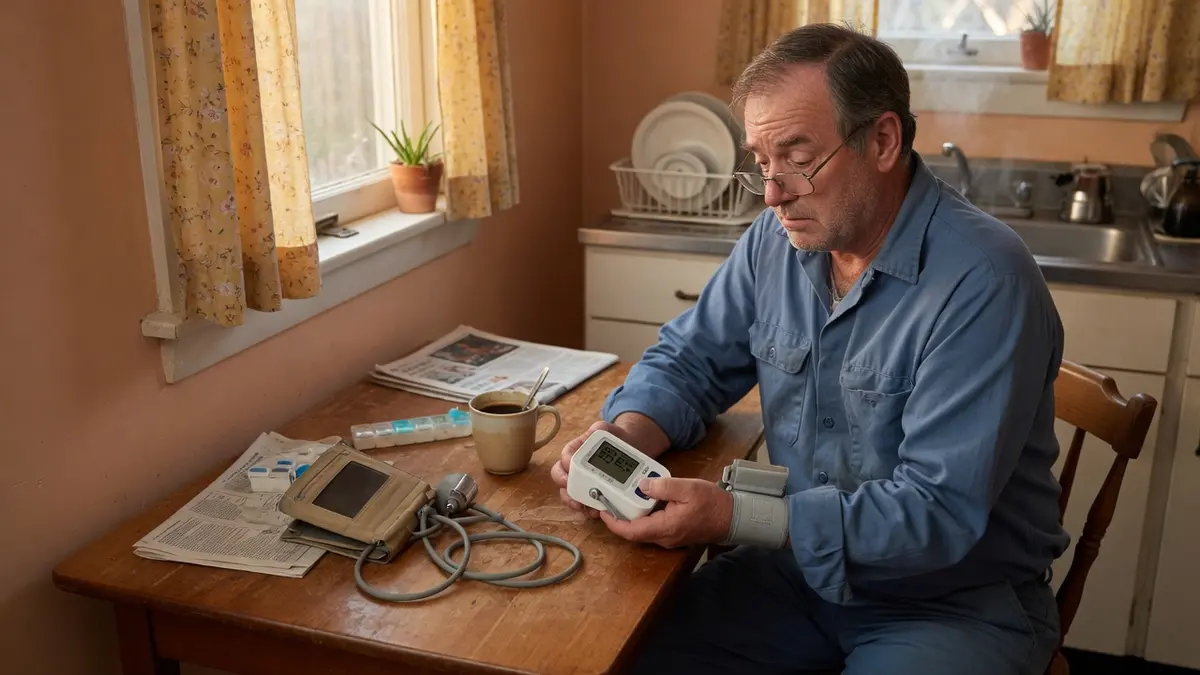
You’re standing in the pharmacy aisle, holding two boxes. One has a cuff that wraps around your upper arm. The other slips onto your wrist like a chunky watch and costs about the same. The wrist one looks easier — no fumbling, no tugging your sleeve up — and the box promises clinical accuracy. So which one actually tells you the truth about your numbers?
The short version of the upper arm vs wrist blood pressure monitor debate is that upper arm cuffs are generally more accurate and are what most clinicians recommend. But that’s not the whole story, and for some people a wrist monitor is genuinely the better choice. Let’s get into why.
Why upper arm cuffs are the standard
Blood pressure is measured by detecting the pulse in an artery as a cuff inflates and deflates. The upper arm holds the brachial artery, which sits relatively close to the surface and runs at roughly the same level as your heart when you sit normally. That matters more than it sounds.
Clinical guidelines and the validation standards used by major health organizations are built around upper arm measurement. When researchers compare home devices against the readings doctors take in a clinic, upper arm blood pressure cuff accuracy tends to come out ahead. The artery is larger, the cuff covers it well, and there’s less room for positioning error.
That’s the practical reason your physician probably has an upper arm device in mind when they say “check it at home.” The numbers from an upper arm cuff line up more closely with the readings used to make decisions about medication and treatment.
More Helpful Reads You Might Like:
- Healthy Foods That Still Spike Your Blood Sugar (And Why It Matters)
- Do Healthy Adults Need Heart Screening? What Really Matters
- LDL Cholesterol Targets: What the Latest Guidelines Really Recommend
So are wrist blood pressure monitors accurate at all?
Yes — but with an asterisk. The wrist contains the radial artery, which is smaller and sits closer to bone and tendons. Wrist blood pressure monitor accuracy depends heavily on two things people often get wrong: position and stillness.
The wrist has to be held at exactly heart level for the reading to be valid. Hold it too low, like resting it in your lap, and gravity pushes the number up. Hold it too high and the number drops. The difference can be significant — enough to make a normal reading look high or a high reading look fine. Modern wrist devices often include a positioning sensor or a guide that beeps when you’ve got it right, and those features genuinely help. Still, the margin for error is wider than with an upper arm cuff.
Research comparing the two has been mixed. Some well-positioned wrist monitors track closely with arm readings in healthy adults. Others drift, especially in people with certain conditions. The honest answer is that a wrist monitor can be accurate, but it demands more from the person using it.
Who tends to get less reliable wrist readings
Wrist monitors are more likely to be off in some groups, including:
- People with stiffened or narrowed arteries, which is often associated with older age or long-standing high blood pressure
- People with diabetes, where blood vessel changes can affect peripheral readings
- People with irregular heart rhythms, such as atrial fibrillation
- People with poor circulation in the hands or cold extremities at the time of measurement
If any of these apply, an upper arm device is usually the safer bet for readings you can trust.
When a wrist monitor is actually the better choice
Here’s the thing — accuracy on paper doesn’t matter if you can’t or won’t use the device. And there are real situations where a wrist monitor wins.
If you have a very large upper arm, a standard arm cuff that’s too small will read falsely high, and the right-sized large cuff can be expensive or uncomfortable. A wrist monitor sidesteps that problem entirely. The same goes for people who find arm cuffs painful, who have lymphedema or a surgical history that makes arm compression a bad idea, or who have limited dexterity and struggle to position an arm cuff one-handed.
A wrist monitor you’ll actually use twice a day is more useful than an arm cuff sitting in a drawer because it’s a hassle. Consistency over time tells your doctor more than a single perfect reading.
How to get an accurate reading from either type
The device matters less than how you use it. The same habits improve results whether you’re on the arm or the wrist:
- Sit quietly for five minutes first, back supported, feet flat on the floor, legs uncrossed.
- Avoid caffeine, exercise, and smoking for at least 30 minutes beforehand.
- Rest your arm on a table so the cuff — arm or wrist — sits at heart level.
- Don’t talk during the measurement. Talking can raise your number by several points.
- Take two or three readings a minute apart and note them all, since the first is often the highest.
- Measure at the same times each day, such as morning and evening.
One step people skip: bring your home monitor to a clinic appointment once and check it against the office reading. This tells you whether your device is reading true for your body. It’s the most direct way to answer which blood pressure monitor is most accurate for you specifically, rather than in general.
What to look for when buying
For the best blood pressure monitor for home use, look for a device that has been independently validated for accuracy — reputable brands list this on the packaging or website. An automatic, oscillometric model (the kind that inflates and reads on its own) is easier to use correctly than a manual one. A correctly sized cuff is non-negotiable for arm devices; measure your upper arm circumference and match it to the cuff range. Memory storage and the ability to average readings are genuinely useful extras, not just marketing.
When to seek medical care
A home monitor is a tracking tool, not a diagnostic one. Share your logs with your physician rather than adjusting anything on your own.
Seek prompt medical attention if you get a very high reading — generally a top number of 180 or higher, or a bottom number of 120 or higher — especially alongside symptoms like chest pain, shortness of breath, severe headache, vision changes, weakness, or trouble speaking. Those can signal an emergency. On the other end, readings that run unusually low along with dizziness, fainting, or confusion also warrant a call to your doctor.
If your home numbers consistently don’t match what you see at the clinic, don’t assume your device is broken — bring it in and have it checked side by side. Sometimes the home reading is the accurate one, and that information changes how your care is managed.
Upper arm vs wrist blood pressure monitor: which should you actually buy?
For most people, an upper arm cuff is the more dependable choice and the one that aligns with how blood pressure is measured in medical settings. Reach for a wrist monitor when an arm cuff doesn’t fit, hurts, or simply won’t get used — and when you’re willing to be careful about positioning every single time. Whichever you choose, validate it against a clinic reading and use it the same way each day. A monitor that’s slightly less precise but used correctly and consistently beats a more accurate one used sloppily.
Medical Disclaimer: This content is for educational purposes only and does not replace professional medical advice, diagnosis, or treatment. Always consult your physician or a qualified healthcare provider with any questions about a medical condition.
Sources & Further Reading
- American Heart Association: Home Blood Pressure Monitoring
- AHA/AMA: Self-Measured Blood Pressure Monitoring at Home — A Joint Policy Statement (Circulation, 2020)
- Mayo Clinic: Wrist Blood Pressure Monitors — Are They Accurate?
- PubMed: Accuracy and Range of Uncertainty of Oscillometric Blood Pressure Monitors — Upper Arm and Wrist
- PMC: Patient Preferences for Ambulatory Blood Pressure Monitoring Devices — Wrist-Type or Arm-Type?
- Cleveland Clinic: Do Wrist Blood Pressure Monitors Work?