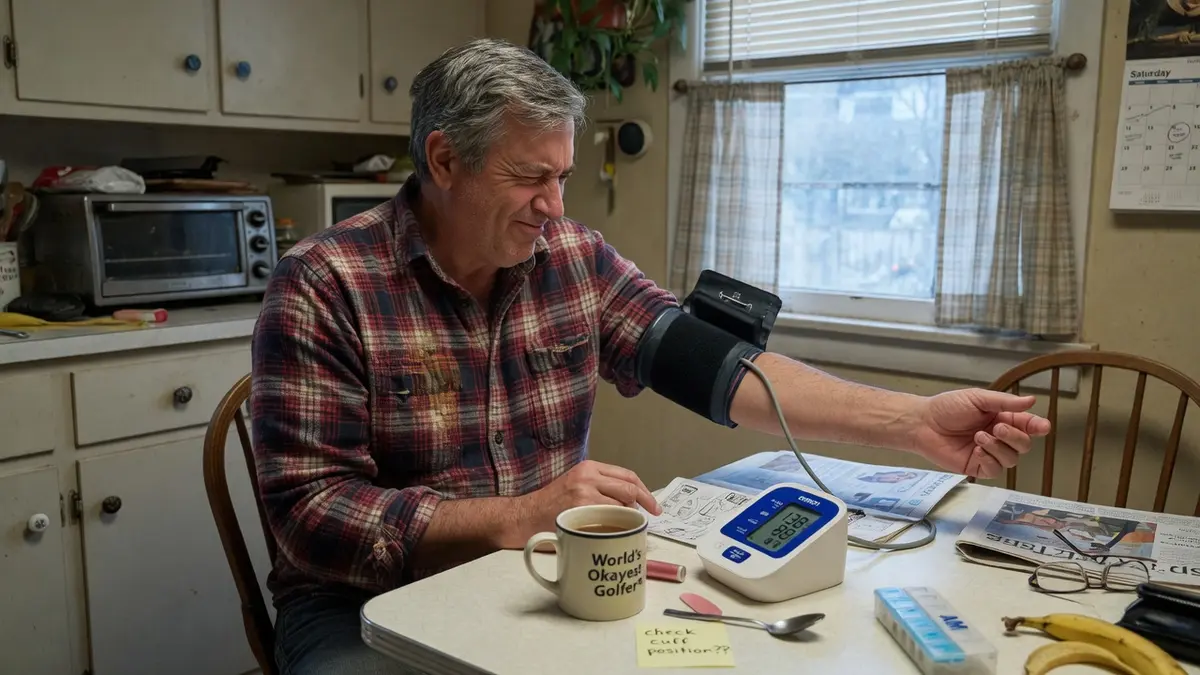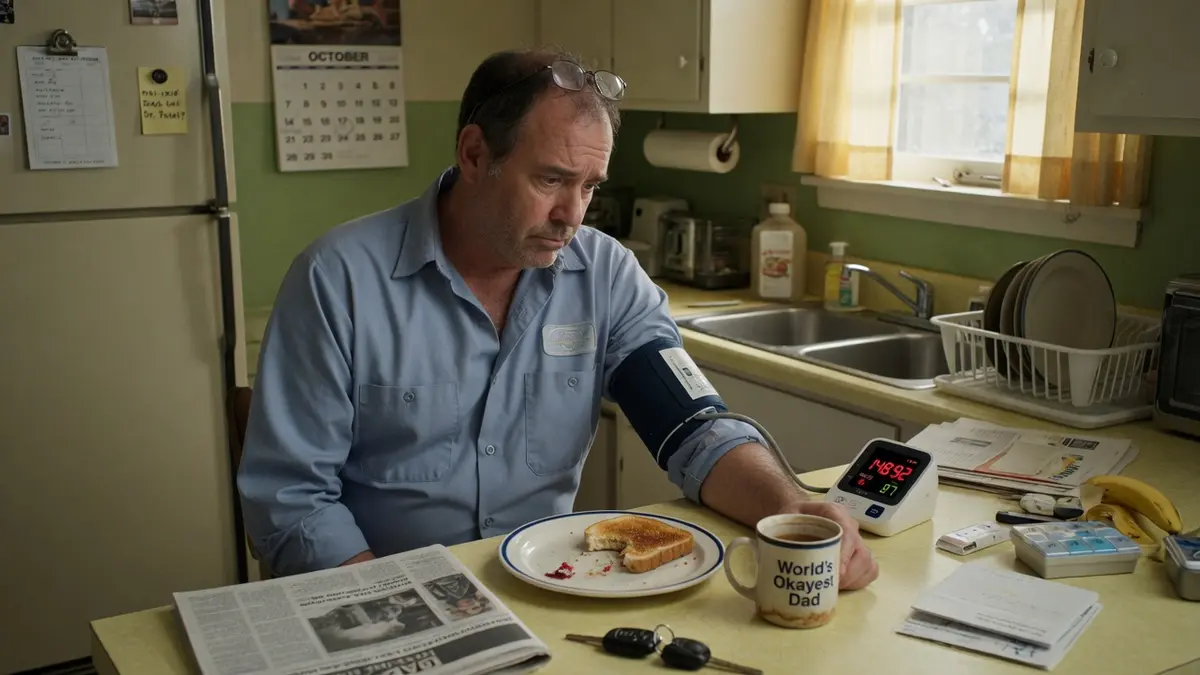
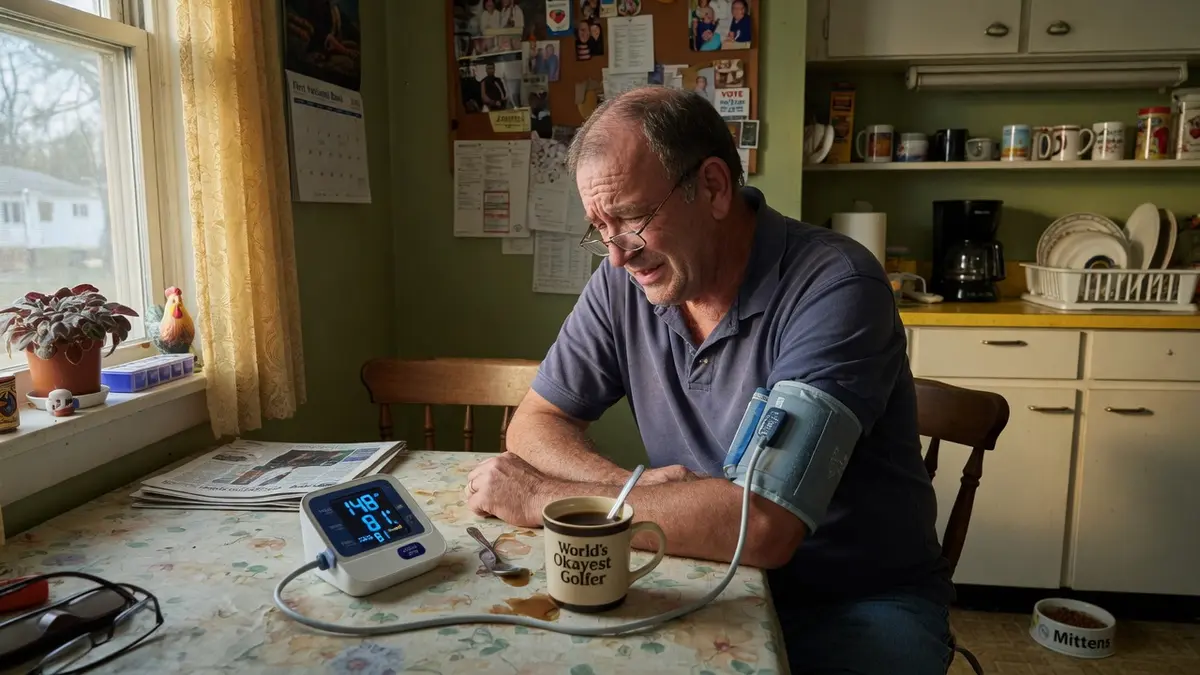
You sit down, wrap the cuff around your arm, hit the button, and the number that pops up is 15 points higher than what your doctor got last week. So you take it again. Now it’s lower. You take it a third time, and it’s somewhere in between. Which one is real?
Knowing how to use a blood pressure monitor at home is less about owning a fancy device and more about controlling the dozens of little variables that nudge your numbers up or down. Home monitors are genuinely accurate when used well. The problem is that most of us were never taught the technique, and the technique matters more than people expect. A crossed leg, a full bladder, or talking during the reading can each move the number by several points. Stack a few of those together and your reading is off by 10, 15, sometimes 20 points.
The good news is that fixing this doesn’t require new equipment. It requires changing what you do in the five minutes before you press the button.
How to use a blood pressure monitor at home the right way
Most reliable home readings come down to position, timing, and stillness. Get those three right and you’ve eliminated the majority of errors.
Start by sitting in a chair with back support — not the edge of a bed, not a stool. Your feet should be flat on the floor, legs uncrossed. Crossing your legs at the knee can raise your reading by a few points, and it’s one of the most common things people do without thinking.
Rest for about five minutes before you measure. Quietly. No scrolling, no conversation, no rushing in from the car and slapping the cuff on. Your blood pressure responds to activity and stress in real time, so a reading taken the moment you sit down often reflects the last thing you did, not your baseline.
When you’re ready, support your arm on a table so the cuff sits at roughly the level of your heart. This is bigger than it sounds. If your arm dangles at your side or rests in your lap, the reading can climb by up to 10 points. If your arm is propped too high, it can read low. Heart level is the target.
Sit quietly during the measurement and don’t talk. Talking — even answering a quick question — can push the number up meaningfully. Breathe normally and let the machine do its work.
Take more than one reading
Clinical guidelines generally recommend taking two or three readings, about a minute apart, and recording the average rather than a single number. The first reading is often the highest, and a single snapshot can be misleading. If your first number looks alarming, don’t panic and don’t stop — take the next one or two and look at the pattern.
More Helpful Reads You Might Like:
- Why Your Weight Loss Stopped (And How to Break the Plateau)
- 7 Anti-Inflammatory Foods That May Help Reduce Migraine Attacks
- Ocular Rosacea: 7 Key Symptoms and How to Treat Them Effectively
The blood pressure monitor mistakes that quietly skew your numbers
Some errors are obvious once you know them. Others feel harmless but add up. Here are the ones that most often make a home blood pressure reading wrong:
- A full bladder. A bladder that needs emptying can raise your reading by several points. Use the bathroom first.
- Caffeine, nicotine, or exercise beforehand. Each of these can elevate your numbers for 30 minutes or more. Wait at least half an hour after coffee, a cigarette, or a workout.
- Measuring over clothing. Put the cuff on bare skin. A thick sleeve or a rolled-up shirt bunched above the cuff can interfere with the reading.
- The wrong cuff size. This is a big one. A cuff that’s too small reads artificially high; one that’s too large can read low. If the cuff barely fits or wraps around with lots of room to spare, you likely need a different size.
- Talking or watching TV. Mental engagement and conversation both nudge the number upward.
- An unsupported back or feet. Both can raise readings slightly. Small effects, but they compound.
None of these are dramatic on their own. The trouble is that real life tends to combine them. Someone rushes in, hasn’t used the bathroom, sits on the couch with crossed legs, and chats while the cuff inflates. That’s four errors in one reading, and it’s why the number looks nothing like the one at the clinic.
Why is my blood pressure different every time I take it?
Some variation is completely normal and expected. Blood pressure isn’t a fixed value — it shifts with your breathing, your posture, the time of day, your stress level, even the temperature of the room. A swing of a few points between back-to-back readings is biology, not a broken device.
Larger swings usually point to technique. If one reading is 128 and the next is 145, something changed: maybe you talked, shifted your arm, or didn’t rest long enough. That’s exactly why averaging multiple readings under the same conditions gives you a truer picture than any single number.
Worth knowing: blood pressure is typically a bit higher in the morning and tends to dip later in the day. Measuring at wildly different times will naturally produce different numbers, which is why consistency matters so much.
How to get an accurate blood pressure reading at home, consistently
Accuracy isn’t a one-time event. It’s a routine. The readings that actually help your doctor are the ones taken the same way, at the same times, day after day.
A practical approach many clinicians suggest: measure twice a day, once in the morning before medication and breakfast, and once in the evening. Take two readings each session and record them all. Do this for several days to a week before an appointment, and bring the log — or the device, if it stores readings — with you.
Pay attention to home blood pressure cuff placement every single time. The bottom edge of the cuff should sit about an inch above the bend of your elbow, and the cuff should be snug but not painful — you should be able to slip a fingertip underneath. Most cuffs have a marker or an artery line that should line up with the inside of your arm, over the brachial artery. Getting this consistent removes a surprising amount of noise from your numbers.
It also helps to validate your monitor against your doctor’s. Bring your device to an appointment and take a reading on your machine right after the clinic takes one. They won’t match perfectly, but they should be in the same neighborhood. If they’re consistently far apart, your cuff size or your device may be the issue.
When to seek medical care
A home monitor is a tracking tool, not a diagnostic one. Use it to spot patterns, not to make medical decisions on your own. That said, certain readings warrant prompt attention.
If you get a reading of 180/120 or higher, rest for a few minutes and measure again. If it stays that high — especially with symptoms like chest pain, shortness of breath, severe headache, vision changes, weakness, or trouble speaking — seek emergency care right away. Those symptoms paired with a very high reading can signal a medical emergency.
Short of that, contact your physician if your readings are consistently elevated over several days, if they swing dramatically despite good technique, or if your home numbers don’t match what your doctor sees. Don’t adjust or stop any medication based on home readings without talking to your provider first.
And if your numbers look perfect but you feel unwell, trust the symptoms. A normal blood pressure reading doesn’t rule out a problem.
The honest answer to most home monitoring frustration is that the device is usually fine — it’s the routine around it that needs tightening. Once you learn how to use a blood pressure monitor at home with consistent position, timing, and cuff placement, the wild swings tend to settle, and the numbers finally start telling you something useful.
Medical Disclaimer: This content is for educational purposes only and does not replace professional medical advice, diagnosis, or treatment. Always consult your physician or a qualified healthcare provider with any questions about a medical condition.
Sources & Further Reading
- American Heart Association: Monitoring Your Blood Pressure at Home
- Mayo Clinic: Get the Most Out of Home Blood Pressure Monitoring
- PubMed: Home Blood Pressure Monitoring — Best Practices and Clinical Use
- AHA Journals: Self-Measured Blood Pressure Monitoring at Home — A Joint Policy Statement From the AHA and AMA
- PMC / NIH: Effects of Cuff Size on the Accuracy of Blood Pressure Readings — The Cuff(SZ) Randomized Crossover Trial
- CDC: Blood Pressure Measurement Biases in Clinical Settings