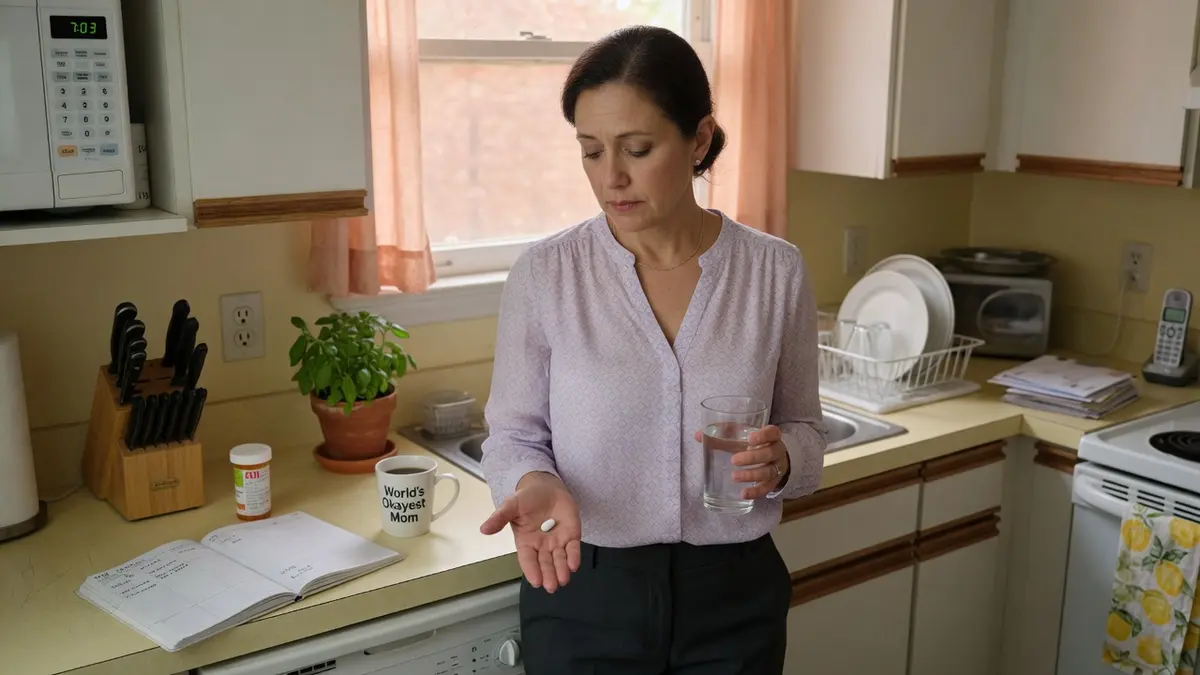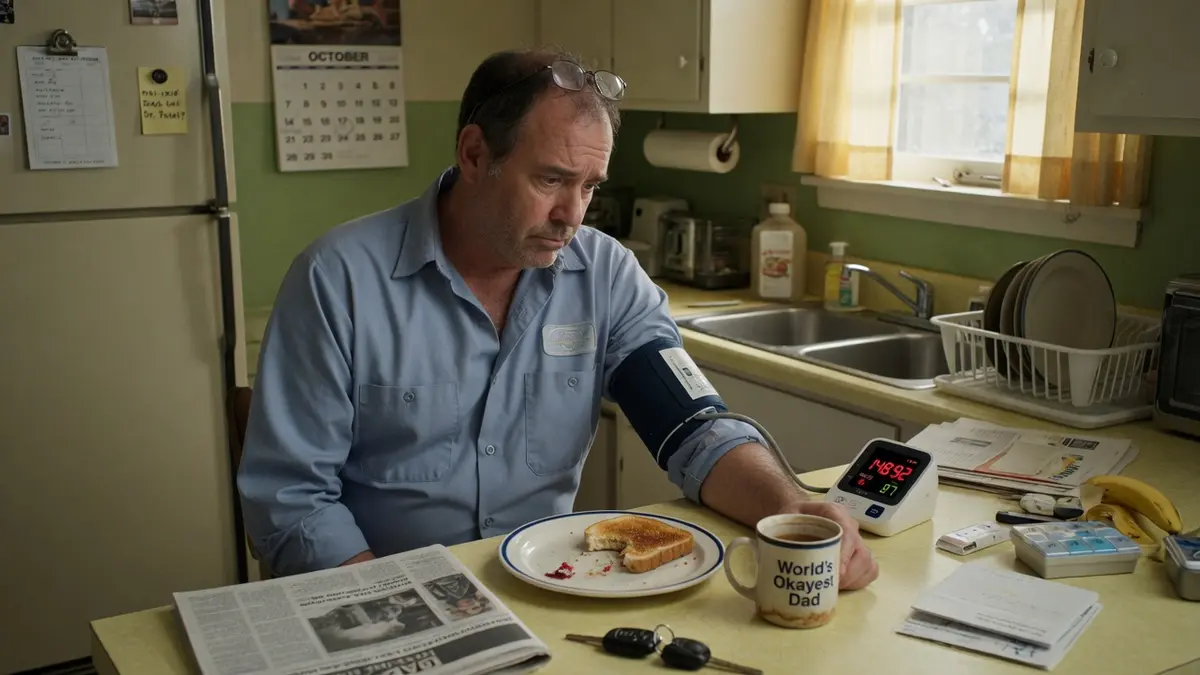

The scene is a familiar one for anyone over 40. You’re in a cozy, dimly lit restaurant, and the menu seems to be written in an indecipherable code. You push it farther away, then pull it closer, squint your eyes, and finally give in, turning on your phone’s flashlight, suddenly feeling twice your age. Or perhaps it’s the daily struggle to read a text message, where your arms never seem quite long enough to find that sweet spot of focus.
If this sounds familiar, you’re not alone. You’re experiencing presbyopia, the medical term for age-related farsightedness. It’s a natural and inevitable part of aging that affects nearly everyone. Globally, it’s estimated that almost two billion people deal with this difficulty in seeing things up close [1].
For decades, the solutions have been the same: a pair of reading glasses always at hand (or, more often, lost somewhere in the house), multifocal contact lenses, or for some, surgical procedures. But what if there were a way to hit the rewind button on your vision, even for just a few hours? What if a simple drop in your eye could restore the clarity to read, work, and live without the constant reliance on glasses?
Get ready, because this new era in presbyopia treatment is no longer a distant promise. It has arrived. Innovative eye drops are here, promising to restore near vision for hours at a time, and they are poised to change the game for millions.
More Helpful Reads You Might Like:
Unlocking Presbyopia: Why Do Our Arms Seem to Get Shorter?
To understand the marvel behind these new treatments, we first need to explore why our arms seem to “shrink” over time. The secret lies within a small yet powerful structure inside our eye: the crystalline lens.
Think of the lens as the autofocus feature on a high-tech camera. When we’re young, this lens is soft and flexible. To focus on something nearby, a tiny circular muscle surrounding it, the ciliary muscle, contracts. This action relieves tension on the lens, allowing it to curve and increase its focusing power, bringing a sharp image onto the retina [2].
However, as the years go by, the lens undergoes a natural aging process. It gradually loses its elasticity and becomes more rigid, much like a rubber band that dries out over time. Starting around age 40, even when the ciliary muscle does its job and contracts with full force, the hardened lens can no longer curve enough. The result? Close-up images, like the letters in a book or the screen of a phone, appear blurry and out of focus.
This loss of flexibility is what leads to the classic symptoms of presbyopia: the tendency to hold reading material farther away, blurred vision at a normal reading distance, and eyestrain or headaches after doing close-up work.
The New Frontier: How Can an Eye Drop Restore Your Near Vision?
If the problem is a hardened lens, how can a simple drop in the eye possibly solve it? The answer lies in an ingenious approach that, instead of trying to reverse the lens’s aging process, uses the eye’s own natural mechanisms to enhance focus.
Most of these revolutionary eye drops work based on a principle of physics known as the “pinhole effect.” They contain active ingredients that cause the pupil (the black circle in the center of the eye) to constrict, reducing its diameter. By creating a smaller opening for light to enter, the eye drop increases the depth of focus. This means that light rays from both distant and near objects are more focused when they reach the retina, resulting in a sharper image without the lens needing to do as much work [3].
It’s an elegant solution that bypasses the problem of lens rigidity by using the pupil as a dynamic focusing tool.
Meet the Game-Changers: The Eye Drops Redefining Vision Care
The field of ophthalmology is buzzing with the emergence of these new presbyopia eye drops. While several are in development, two front-runners stand out, one of which has just been approved and is ready to hit the market.
The major headline-maker is VIZZ™ (aceclidine ophthalmic solution) 1.44%, which received approval from the U.S. Food and Drug Administration (FDA) in July 2025, marking a historic moment in presbyopia treatment [4]. Another promising approach currently under investigation is a combination formula of pilocarpine and diclofenac, which has also shown impressive results in recent studies [5].
To help clarify the landscape, here’s a look at what we know about these emerging options:
| Feature | VIZZ™ (Aceclidine) | Combination (Pilocarpine + Diclofenac) |
| Active Ingredient | Aceclidine | Pilocarpine + Diclofenac |
| Primary Mechanism | Pinhole Effect (Pupil-selective miotic) | Pinhole Effect + Ciliary Muscle Action |
| Duration of Effect | Up to 10 hours | Up to 2 years (in ongoing studies) |
| Onset of Action | Fast (within 30 minutes) | Fast |
| Current Status | FDA Approved in the U.S. | In clinical studies |
What makes VIZZ™ particularly groundbreaking is its highly selective mechanism of action. It predominantly acts on the pupil, constricting it to create the pinhole effect, but with minimal stimulation of the ciliary muscle. This selectivity is a significant advantage, as it helps avoid a common side effect of other miotic eye drops: a “myopic shift,” which can cause temporary difficulty in seeing distant objects clearly. With VIZZ, the promise is sharper near vision without sacrificing distance clarity.
The Proof in the Science: What Do Clinical Studies Reveal?
The approval of a new medication like VIZZ™ doesn’t happen overnight. It is the result of years of rigorous research and clinical trials proving both its effectiveness and safety. The FDA’s green light was based on the results from three large Phase 3 studies, known as CLARITY 1, 2, and 3, which involved hundreds of participants [4].
The findings were remarkably consistent and positive. VIZZ™ was shown to significantly improve near vision, with the effect starting in about 30 minutes and, most impressively, lasting for up to 10 hours with a single daily drop.
But what does this mean in practice? The studies use a standard measurement tool called the Jaeger eye chart to assess near vision. Participants using VIZZ™ were able to read, on average, three additional lines on this chart. To translate that to the real world, it’s the difference between struggling to read the large print of a headline and being able to comfortably read the content of an email on a smartphone.
Regarding safety, the profile for VIZZ™ also proved to be very favorable. Across more than 30,000 treatment days in the trials, no serious treatment-related adverse events were observed. The most common side effects were mild installation site irritation, a temporary sensation of dimmer vision (due to the smaller pupil), and headache, with the majority of these effects being mild and transient [4].
Is This Treatment Right for Me? The Ideal Candidate Profile
The prospect of ditching reading glasses, even for 10 hours a day, is exciting. But are these eye drops suitable for everyone? The ideal candidate for this type of treatment is generally someone with mild to moderate presbyopia who feels frustrated by their dependence on reading glasses for daily activities like using a smartphone, reading a menu, checking prices at the grocery store, or working on a computer.
However, it is crucial to understand that this is not a one-size-fits-all solution. Individuals who require perfect near vision for precision work over long periods, or those with certain pre-existing eye conditions, may not be the best candidates. Furthermore, because the eye drop reduces pupil size, it may affect vision in very dark environments, which is an important consideration for those who drive at night.
This is why the most important message is this: self-medication is not an option. Only an ophthalmologist can conduct a comprehensive evaluation of your eye health, confirm a diagnosis of presbyopia, and determine if this innovative treatment is the safest and most effective choice for your specific situation.
Conclusion: A Sharper Future is Now Within Sight
Presbyopia has long been treated as an inevitable consequence of aging, a problem to be managed with external aids. Today, we stand at the threshold of a new era. The arrival of pharmacological treatments like VIZZ™ represents a paradigm shift, offering a powerful tool that works with your eye’s physiology to restore visual function.
This innovation means more freedom, more convenience, and less frustration in daily life. It means being able to glance at a photo on your phone, read a book to your child, or simply check a label without first having to hunt for your glasses.
The landscape of presbyopia treatment is evolving rapidly. If you’re experiencing difficulty with near vision, it’s worth discussing these emerging options with your eye care provider. During your next appointment, ask your ophthalmologist about the potential benefits and risks of pharmacological treatments for presbyopia. They can help determine whether these new approaches might be appropriate for your specific situation and visual needs.
Medical Disclaimer: This content is for educational purposes only and does not replace professional medical advice, diagnosis, or treatment. Always consult your physician or a qualified healthcare provider with any questions about a medical condition.
Frequently Asked Questions (FAQ)
How long do the effects of presbyopia eye drops last?
The duration of effect can vary depending on the specific product. For instance, VIZZ™ (aceclidine) has been shown in clinical trials to improve near vision for up to 10 hours with a single daily dose. Other formulations may have different durations. It’s a significant improvement that offers freedom from reading glasses for most of the waking day, but the effect is temporary and the drops need to be applied regularly as prescribed.
Are there any significant side effects I should be worried about?
Most side effects reported in clinical trials for new presbyopia eye drops have been mild and temporary. The most common ones include some initial irritation or redness at the installation site, a temporary feeling of dim vision (especially in low light, due to the smaller pupil size), and occasional headaches. Serious adverse events have been rare in studies. However, individual reactions can vary, and it is essential to discuss your full health history with your ophthalmologist before starting treatment.
Can I stop using my reading glasses completely with these eye drops?
For many people with mild to moderate presbyopia, these eye drops may significantly reduce or even eliminate the need for reading glasses for many daily tasks, such as using a phone or reading a menu. However, they may not be a complete replacement for everyone or for every situation. For activities requiring very fine, prolonged near vision or in very dim lighting, some individuals might still find glasses helpful. The goal is to provide greater freedom, not necessarily a permanent cure.
How do I know if I am a good candidate for these new eye drops?
The only way to know for sure is through a comprehensive eye exam with an ophthalmologist. A good candidate typically has mild to moderate presbyopia and is in good overall eye health. Your doctor will evaluate the severity of your presbyopia, check for any other conditions (like severe dry eye or glaucoma), and discuss your lifestyle and visual needs to determine if a pharmacological treatment like presbyopia eye drops is the right choice for you.
Sources & Further Reading
1.Fricke, T. R., Tahhan, N., Resnikoff, S., et al. (2018). Global Prevalence of Presbyopia and Vision Impairment from Uncorrected Presbyopia. Ophthalmology, 125(10), 1492-1499. https://pubmed.ncbi.nlm.nih.gov/29753495/
2.Mayo Clinic. (2021, November 20). Presbyopia – Symptoms and causes. https://www.mayoclinic.org/diseases-conditions/presbyopia/symptoms-causes/syc-20363328
3.Grzybowski, A., Markeviciute, A., & Zemaitiene, R. (2022). Pharmacological Treatment in Presbyopia. Journal of Clinical Medicine, 11(5), 1385. https://www.ncbi.nlm.nih.gov/pmc/articles/PMC8910925/
4.LENZ Therapeutics. (2025, July 31). LENZ Therapeutics Announces US FDA Approval of VIZZ™ for the Treatment of Presbyopia. https://ir.lenz-tx.com/news-events/press-releases/detail/39/lenz-therapeutics-announces-us-fda-approval-of-vizz-for-the-treatment-of-presbyopia
5.Medical News Today. (2025, September 19). Aging: Daily eyedrops could restore vision loss from presbyopia. https://www.medicalnewstoday.com/articles/near-vision-loss-aging-may-be-remedied-new-eye-drops-presbyopia
6.National Eye Institute (NEI). Presbyopia. https://www.nei.nih.gov/learn-about-eye-health/eye-conditions-and-diseases/presbyopia
7.American Academy of Ophthalmology (AAO). (2022, November 2). What Is Presbyopia? https://www.aao.org/eye-health/diseases/what-is-presbyopia