
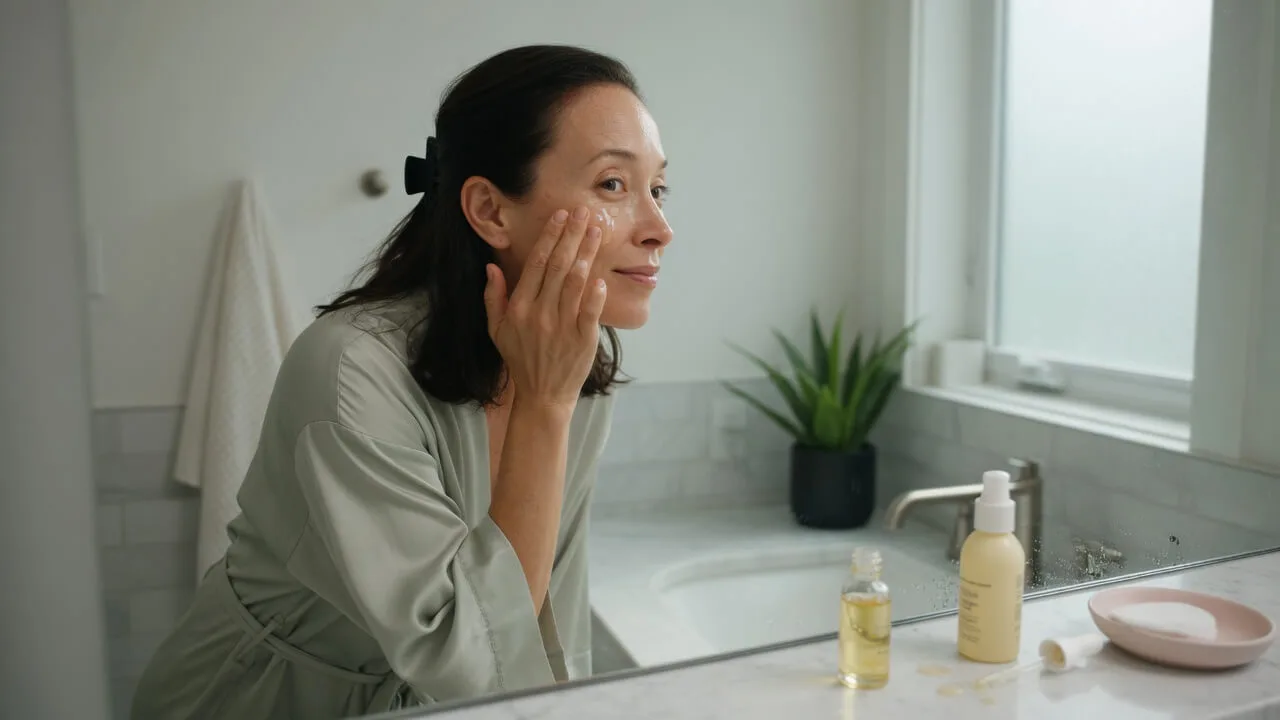
The search for younger-looking skin often starts with a simple question: which products actually work?
Walk into any store or scroll online, and the options can feel overwhelming—creams promising to erase wrinkles, serums claiming instant glow, and endless “anti-aging” labels. But dermatologists tend to focus on something much simpler: a small group of proven ingredients that consistently improve how skin looks and behaves over time.
These dermatologist-recommended skincare products are not about quick fixes. They are about supporting the skin’s structure, protecting it from damage, and helping it renew itself more effectively.
Why Some Skincare Products Actually Make a Difference
Skin aging is influenced by two main processes:
- Intrinsic aging (natural changes over time)
- Extrinsic aging (mainly sun exposure and environmental factors)
According to the American Academy of Dermatology (AAD), ultraviolet (UV) exposure is the leading external cause of visible skin aging, contributing to wrinkles, dark spots, and loss of firmness.
That is why the most effective dermatologist-recommended skincare products tend to focus on:
- Protecting against UV damage
- Stimulating collagen production
- Improving skin turnover
- Supporting the skin barrier
More Helpful Reads You Might Like:
5 Dermatologist-Recommended Skincare Products for Younger-Looking Skin
1. Broad-Spectrum Sunscreen (SPF 30 or Higher)
Among all dermatologist-recommended skincare products, sunscreen consistently ranks as the most important.
Daily sun exposure—even on cloudy days—can gradually break down collagen and elastin, the fibers that keep skin firm and smooth.
Regular use of sunscreen may help:
- Reduce visible wrinkles over time
- Prevent uneven pigmentation
- Protect against further skin damage
The AAD recommends using a broad-spectrum sunscreen with SPF 30 or higher every day, applied to all exposed areas.
Even the most advanced anti-aging skincare routine becomes less effective without this step.
2. Retinoids (Retinol or Prescription Retinoids)
Retinoids are widely considered the gold standard in anti-aging skincare.
Derived from vitamin A, these compounds work at a cellular level by:
- Increasing skin cell turnover
- Stimulating collagen production
- Smoothing fine lines
Clinical studies have shown that consistent use of retinoids may improve:
- Skin texture
- Fine wrinkles
- Overall tone
However, some individuals may experience dryness or irritation, especially at the beginning. Gradual introduction and proper moisturization can help improve tolerance.
3. Vitamin C Serum
Vitamin C is one of the most studied antioxidants in dermatology.
It helps protect the skin from oxidative stress caused by:
- Sun exposure
- Pollution
- Normal metabolic processes
In an anti-aging skincare routine, vitamin C may:
- Brighten the skin
- Support collagen formation
- Reduce the appearance of dark spots
It is typically applied in the morning and often paired with sunscreen for enhanced protection.
4. Hydrating Moisturizers with Ceramides or Hyaluronic Acid
Hydration plays a bigger role in skin appearance than many people expect.
As skin loses moisture over time, it can appear:
- Dull
- Rough
- More lined
Moisturizers containing ceramides and hyaluronic acid are common in dermatologist-recommended skincare products because they:
- Help restore the skin barrier
- Retain water within the skin
- Improve smoothness and elasticity
While these products do not reverse aging, they can significantly enhance how the skin looks and feels on a daily basis.
5. Chemical Exfoliants (AHAs and BHAs)
Chemical exfoliants help remove dead skin cells that accumulate on the surface.
Common types include:
- Alpha hydroxy acids (glycolic acid, lactic acid)
- Beta hydroxy acids (salicylic acid)
When used appropriately, they may:
- Improve skin texture
- Enhance brightness
- Support more even tone
Overuse, however, can lead to irritation—so frequency and skin type should guide their use.
How to Build an Effective Anti-Aging Skincare Routine
A consistent routine using dermatologist-recommended skincare products often looks like this:
Morning:
- Vitamin C serum
- Moisturizer
- Sunscreen
Evening:
- Gentle cleanser
- Retinoid
- Moisturizer
Occasionally:
- Chemical exfoliant (1–3 times per week, depending on tolerance)
Consistency tends to matter more than complexity. Even a simple routine, followed regularly, can produce noticeable improvements over time.
When Results Take Longer Than Expected
It is common for people to expect rapid results from skincare products. However, skin renewal is a gradual process.
Most dermatologist-recommended skincare products require:
- Several weeks to show early changes
- Several months for more visible improvements
Individual factors such as age, skin type, and lifestyle habits can influence outcomes.
If irritation, persistent redness, or worsening skin changes occur, evaluation by a healthcare professional may be helpful.
The Bottom Line
The concept of “younger-looking skin” is less about finding a miracle product and more about using the right ingredients consistently.
Among all dermatologist-recommended skincare products, a few stand out for their strong scientific support:
- Sunscreen helps prevent further damage
- Retinoids support collagen and renewal
- Vitamin C protects and brightens
- Moisturizers improve skin resilience
- Exfoliants refine texture
Together, these form the foundation of an effective, evidence-based anti-aging skincare routine.
Medical Disclaimer
This content is for educational purposes only and does not replace professional medical advice, diagnosis, or treatment. Always consult your physician or a qualified healthcare provider with any questions about a medical condition.
Sources & Further Reading
Effects of Sunscreen on Skin Aging
https://pubmed.ncbi.nlm.nih.gov/27749441/
Topical Retinoids in Aging Skin
https://pubmed.ncbi.nlm.nih.gov/22206079/
Mayo Clinic — Wrinkles: Diagnosis and Treatment
https://www.mayoclinic.org/diseases-conditions/wrinkles/diagnosis-treatment/drc-20354933
NIH — Skin Aging and Oxidative Stress
https://www.ncbi.nlm.nih.gov/pmc/articles/PMC5514576/
American Academy of Dermatology — Anti-Aging Skin Care
https://www.aad.org/public/everyday-care/skin-care-basics/anti-aging