
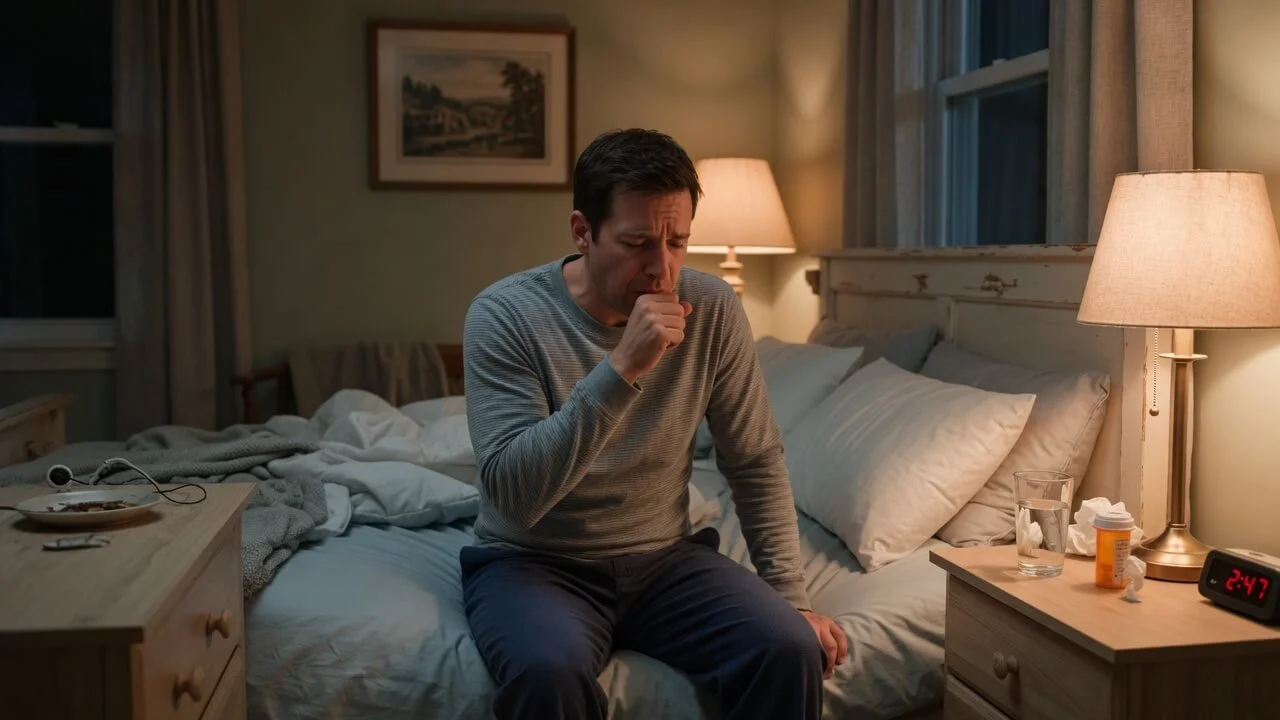
Coughing during the day can be annoying. But when it gets worse at night—just as the body is trying to rest—it can feel frustrating, disruptive, and sometimes even concerning.
Many people find themselves asking: why do I cough more at night? The answer is often not a single cause, but a combination of body position, airway sensitivity, and underlying conditions that become more noticeable after lying down.
Understanding what changes at night is the first step toward relief.
Why Coughing Often Gets Worse at Night
The body behaves differently during sleep. Once lying flat, gravity no longer helps keep mucus, stomach acid, or airway irritants in place.
Instead, several things may happen:
- Mucus can drip toward the throat
- Stomach acid may move upward more easily
- Airways may become more reactive
- Environmental triggers in the bedroom may become more concentrated
These shifts help explain why nighttime cough causes are so common—even in people who feel fine during the day.
The Most Common Nighttime Cough Causes
Postnasal Drip and Throat Irritation
One of the most frequent answers to why do I cough more at night is postnasal drip.
This happens when mucus from the nose or sinuses slowly drains down the back of the throat. During the day, swallowing and upright posture reduce its impact. At night, however, that mucus tends to pool and irritate sensitive tissues.
Common clues include:
- A tickling sensation in the throat
- Frequent throat clearing
- A cough that worsens when lying down
Allergies, sinus infections, or even mild colds can trigger this pattern.
Acid Reflux (GERD) While Lying Down
Another major contributor to nighttime cough is acid reflux, also known as GERD.
When lying flat, stomach acid can travel upward into the esophagus and even reach the throat or airways. This can irritate the lining and trigger a cough reflex—even without classic heartburn.
This type of GERD cough at night may be suspected when:
- The cough is dry and persistent
- Symptoms worsen after meals
- There is a sour taste or throat irritation
- The cough improves when sleeping with the head elevated
Clinical guidelines from the American College of Chest Physicians recognize reflux as a common cause of chronic cough.
Asthma and Airway Sensitivity at Night
Asthma symptoms often follow a circadian rhythm, meaning they naturally worsen at certain times—especially overnight.
Inflammation in the airways can increase at night, making them narrower and more reactive. For some individuals, coughing may be the main symptom, a form known as cough-variant asthma.
Signs that asthma may be involved include:
- Wheezing or chest tightness
- Shortness of breath
- A cough that wakes someone from sleep
If the question why do I cough more at night comes with breathing symptoms, asthma becomes an important possibility.
Dry Air, Allergens, and Bedroom Triggers
The sleep environment plays a bigger role than many people realize.
Common nighttime cough triggers include:
- Dust mites in bedding
- Pet dander
- Mold
- Dry indoor air
These irritants can inflame the airways or dry out the throat, making coughing more likely.
Even subtle exposure—like an old pillow or low humidity—can be enough in sensitive individuals.
Lingering Effects After a Cold or Infection
After a respiratory infection, the airways may remain sensitive for weeks.
This is sometimes called a postinfectious cough. While the infection itself has resolved, the cough reflex remains “on edge,” reacting more easily to minor triggers—especially at night.
This explains why some people notice a lingering cough that seems worse in quiet, still environments like the bedroom.
More Helpful Reads You Might Like:
Signs Your Nighttime Cough May Need Medical Attention
Not every nighttime cough is harmless. While many causes are mild and temporary, some patterns deserve closer attention.
Consider medical evaluation if:
- The cough lasts more than 8 weeks
- It is worsening instead of improving
- There is coughing up blood
- It is associated with weight loss or fever
- Shortness of breath or chest pain is present
- Sleep is consistently disrupted
Guidance from the American Academy of Family Physicians and CDC highlights these as important red flags.
How to Stop Coughing at Night: Practical Strategies
Relief often comes from addressing the underlying cause—and sometimes from simple adjustments.
Simple Changes That Can Make a Big Difference
For those wondering how to stop coughing at night, these strategies may help:
Elevate the head during sleep
Using extra pillows or an adjustable bed may reduce both postnasal drip and reflux.
Stay well hydrated
Fluids help thin mucus, making it less irritating to the throat.
Use a humidifier if the air is dry
Moist air can soothe irritated airways, especially in colder months.
Limit late meals
Avoid eating 2–3 hours before bedtime to reduce reflux risk.
Wash bedding regularly
Reducing dust mites and allergens can significantly improve symptoms.
Avoid known irritants
Smoke, strong fragrances, or pet exposure may worsen nighttime symptoms.
When Treatment Should Be Personalized
If symptoms persist, treatment should target the specific cause.
Examples include:
- Antihistamines or nasal sprays for allergies
- Acid-reducing medications for GERD
- Inhalers for asthma
- Evaluation for sleep-related conditions like obstructive sleep apnea
There is no single solution for why do I cough more at night. The right approach depends on the underlying trigger.
The Bottom Line
Nighttime coughing is common—and often has a logical explanation.
For many people asking why do I cough more at night, the answer lies in how the body changes during sleep. Postnasal drip, reflux, asthma, and environmental triggers all tend to become more noticeable when lying down.
In many cases, small adjustments can bring meaningful relief. But when symptoms persist or raise concern, a more thorough evaluation is the safest path forward.
Understanding the cause transforms nighttime coughing from a frustrating mystery into a manageable condition.
Medical Disclaimer
This content is for educational purposes only and does not replace professional medical advice, diagnosis, or treatment. Always consult your physician or a qualified healthcare provider with any questions about a medical condition.
Sources & Further Reading
Chronic Cough: Evaluation and Management
https://www.aafp.org/pubs/afp/issues/2024/0800/chronic-cough.html
Chronic Cough Due to Gastroesophageal Reflux in Adults
https://journal.chestnet.org/article/S0012-3692(16)58893-X/fulltext
Mayo Clinic — Chronic cough
https://www.mayoclinic.org/diseases-conditions/chronic-cough/symptoms-causes/syc-20351575
Obstructive Sleep Apnea and Chronic Cough (PubMed)
https://pubmed.ncbi.nlm.nih.gov/38692749/
Cough Hypersensitivity Syndrome (PubMed)
https://pubmed.ncbi.nlm.nih.gov/35773287/