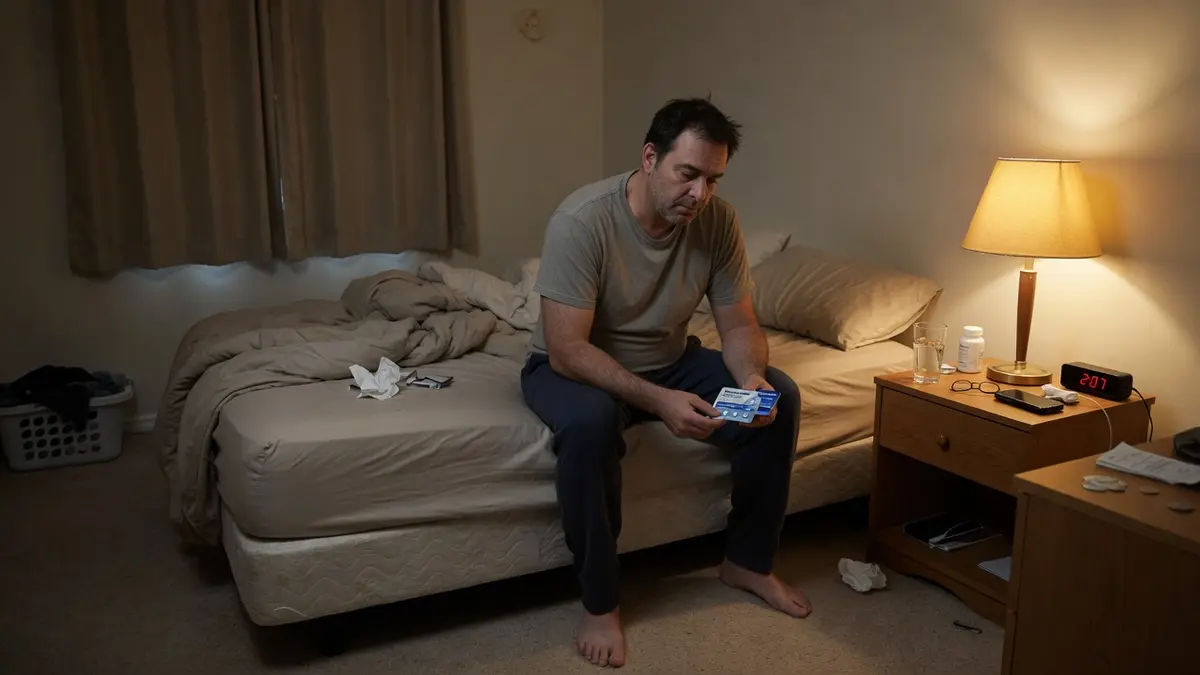

You climb into bed, settle onto your side, and within twenty minutes there’s a deep ache wrapping around your shoulder. Roll the other way and it eases. Roll back, and it’s worse. By morning, you’re stiff. By 10 a.m., you’ve nearly forgotten about it — until the next night, when the whole cycle starts again.
This pattern is one of the most common complaints orthopedic clinics see, and it confuses people for good reason. If something hurts at night, shouldn’t it hurt all the time? Not necessarily. Shoulder pain at night that fades during the day usually has a specific set of explanations, and most of them are mechanical rather than mysterious.
Why nighttime makes shoulder pain louder
During the day, the shoulder is busy. Blood flow is high, muscles are warm, and the joint moves through dozens of small positions every hour. Movement itself acts as a kind of pump, clearing inflammatory fluid out of the joint capsule and keeping tissues from stiffening. There’s also distraction — work, conversation, errands. The brain has plenty of competing input, so a low-grade ache gets filtered out.
At night, all of that changes. The shoulder stops moving. Inflammatory chemicals — substances like prostaglandins and cytokines that build up around irritated tissue — pool in the joint instead of being flushed away. Cortisol, the body’s natural anti-inflammatory hormone, drops to its lowest levels in the early morning hours. And once the lights go off, there’s nothing else to pay attention to. A dull ache that registered as a 2 out of 10 at noon can feel like a 6 at 2 a.m.
Then there’s gravity. When you’re upright, the weight of the arm gently pulls the shoulder joint downward, which actually opens up space under the bony arch on top of the shoulder (the acromion). Lying down removes that traction. Tendons and the small fluid-filled sac called the bursa get compressed against bone, especially if you’re on your side.
Why does my shoulder hurt when I sleep on it?
Side sleeping is the single biggest mechanical contributor to nighttime shoulder pain. When you lie on the affected side, body weight presses the shoulder joint into the mattress, narrowing the space where the rotator cuff tendons run. If those tendons are already inflamed or frayed, that compression triggers pain. Sleeping on the opposite side isn’t always safer either — the painful arm can fall forward across the body, stretching the back of the shoulder capsule in a way that’s just as irritating.
More Helpful Reads You Might Like:
- Why Acid Reflux Gets Worse at Night—and What Actually Helps
- Why Do I Cough More at Night? Understanding the Real Causes
- What Happens to Your Body When You Sleep 5–6 Hours for a Week
The conditions most often behind it
Several specific shoulder problems are notorious for being worse at night. Knowing the usual suspects can help you describe symptoms more clearly to a clinician.
Rotator cuff tendinopathy or tears
The rotator cuff is a group of four small muscles and their tendons that stabilize the shoulder. When one of those tendons — most often the supraspinatus, which runs across the top of the shoulder — becomes inflamed, thickened, or partially torn, it gets pinched in the narrow space under the acromion. Rotator cuff pain at night is classic: a deep ache that’s hard to localize, sometimes radiating down the outside of the upper arm, and consistently worse when lying on that side. Reaching overhead during the day might be uncomfortable but tolerable; lying flat can be brutal.
Subacromial bursitis
The bursa is a slippery cushion between the rotator cuff and the acromion. When it gets inflamed, the symptoms overlap heavily with rotator cuff problems. Pressure from lying on it is a frequent trigger.
Frozen shoulder (adhesive capsulitis)
This condition involves the joint capsule itself thickening and tightening. Night pain is one of the hallmarks, particularly in the early “freezing” phase, and it’s often severe enough to wake people repeatedly. Frozen shoulder is more common in people between 40 and 60, in women, and in those with diabetes or thyroid disorders.
Osteoarthritis of the shoulder
Wear-and-tear arthritis in the glenohumeral or acromioclavicular joint tends to cause stiffness and aching that worsens with inactivity. After several hours of stillness in bed, the joint stiffens, and any rollover triggers pain.
Calcific tendinitis
Calcium deposits can form inside rotator cuff tendons, and when they’re in an active inflammatory phase, the pain can be intense — sometimes described as one of the worst musculoskeletal pains there is. It’s often dramatically worse at night.
Referred pain from the neck
Worth knowing: not all shoulder pain comes from the shoulder. A pinched nerve in the cervical spine can send pain into the shoulder and upper arm, and sleeping positions that bend the neck awkwardly can flare it up.
Sleeping position and shoulder pain: practical adjustments
Before assuming something is structurally wrong, it’s worth experimenting with how you sleep. A surprising number of people get meaningful relief from position changes alone.
- Try sleeping on your back with a pillow under the affected arm, supporting it at roughly the height of your torso. This keeps the shoulder in a neutral position instead of letting it fall backward or forward.
- If you sleep on your unaffected side, hug a pillow with the painful arm. This stops it from drooping across your body and stretching the back of the shoulder.
- Avoid sleeping with your arm overhead or tucked under the pillow. Both positions compress structures inside the joint.
- A slightly firmer pillow under the head can keep the neck more neutral, which matters if any of the pain is actually referred from the cervical spine.
Other things that help some people: a warm shower before bed to loosen the joint, gentle pendulum exercises (letting the arm hang and swing in small circles) for a couple of minutes before lying down, and an over-the-counter anti-inflammatory like ibuprofen or naproxen taken with food about an hour before sleep — assuming there’s no medical reason to avoid them. Ice for 15 minutes before bed can also calm down an inflamed bursa or tendon.
What doesn’t tend to help: sleeping in a recliner long-term (it can stiffen the joint further), heating pads left on all night (skin burn risk and rebound inflammation), or stretching aggressively right before bed.
When to see a doctor about nighttime shoulder pain
Most shoulder pain that’s worse at night isn’t an emergency, but some patterns deserve a professional evaluation rather than another week of trial and error. Consider scheduling an appointment if:
- The pain has lasted more than two to four weeks despite position changes and basic self-care.
- You’re losing sleep most nights of the week.
- You can’t lift your arm overhead, reach behind your back, or feel sudden weakness.
- The pain followed a fall, lifting injury, or other specific event.
- There’s significant swelling, redness, or warmth around the joint.
- The shoulder feels unstable or like it’s catching or locking.
Seek same-day care for shoulder pain that comes with chest pressure, shortness of breath, sweating, or jaw or arm pain — cardiac pain can occasionally present as shoulder discomfort, particularly on the left side. New shoulder pain after significant trauma also warrants prompt evaluation to rule out a fracture or full-thickness tendon tear.
A clinician can usually narrow down the cause with a physical exam alone. Imaging, when needed, typically starts with X-rays and may include ultrasound or MRI depending on what the exam suggests. Treatment ranges from physical therapy — which is genuinely effective for most rotator cuff and bursitis problems — to corticosteroid injections, and rarely, surgery.
What persistent shoulder pain at night is really telling you
The honest answer is that a shoulder which hurts at night but feels fine during the day is rarely “nothing.” It’s usually an early or moderate stage of an irritated structure — a tendon, a bursa, a capsule — that hasn’t yet become bad enough to interfere with daytime activity. That’s actually good news. Caught at this stage, most causes of shoulder pain at night respond well to a few weeks of targeted physical therapy, sleep position changes, and short-term anti-inflammatory use. Ignored for months, the same problems can stiffen into something harder to reverse.
If a week or two of better sleeping positions and basic care doesn’t shift things, that’s the signal to get it looked at rather than wait for it to start hurting during the day too.
Medical Disclaimer: This content is for educational purposes only and does not replace professional medical advice, diagnosis, or treatment. Always consult your physician or a qualified healthcare provider with any questions about a medical condition.
Sources & Further Reading
- PubMed: Nocturnal pain in patients with rotator cuff related shoulder pain: A prospective study
- PubMed: Sleep position and shoulder pain
- NIH / PMC: The correlation between shoulder pathologies and sleep disorders
- NIH / PMC: Sleep disturbances in rotator cuff pathology: insights into mechanisms and clinical implications
- AAOS OrthoInfo: Shoulder Impingement / Rotator Cuff Tendinitis
- Johns Hopkins Medicine: Rotator Cuff Tendinitis