 Written by
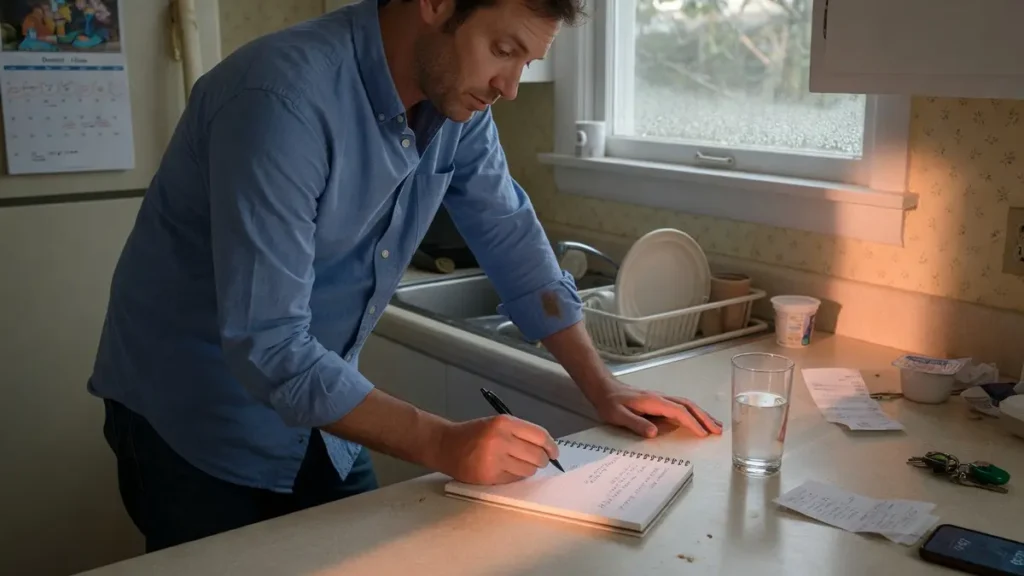
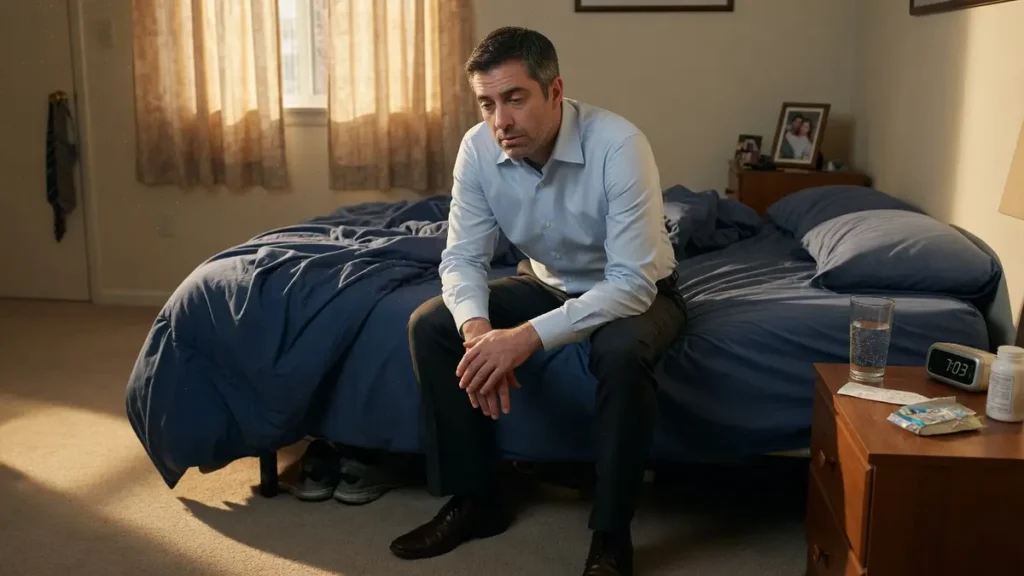
You’re standing in line at the grocery store, scrolling your phone, and suddenly your chest tightens. Your heart picks up. There’s a low buzz of dread, like you forgot to turn off the stove — except you didn’t. Nothing happened. Nothing is wrong. And yet your body is acting like something is very, very wrong.
In this article
Feeling anxious for no reason is one of the most disorienting experiences a person can have, partly because the lack of a clear cause makes the anxiety itself feel suspicious. If there’s no trigger, why is your nervous system behaving like there is? The honest answer is that there usually is a trigger — it’s just not always obvious, and it’s often physical rather than psychological.
What “anxiety without a trigger” actually means
Anxiety is the body’s threat-response system doing its job. The amygdala — a small almond-shaped structure deep in the brain that handles fear processing — doesn’t wait for a logical reason before sounding the alarm. It reacts to internal signals (heart rate, breathing, hormones, blood sugar) just as readily as it reacts to external ones (a bear, a bill, a bad email).
So when people describe sudden anxiety for no reason, what’s often happening is that an internal signal has set off the alarm, and the thinking part of the brain is left scrambling to figure out why. The mind tends to invent a reason after the fact, which is why you may suddenly start worrying about something specific — your health, your job, a relationship — even though the physical sensation came first.
Common physical signs that come with unexplained anxiety
- A racing or pounding heart
- Shallow or tight breathing
- Stomach upset, nausea, or a sudden need for the bathroom
- Tingling in the hands, face, or chest
- Lightheadedness or a feeling of unreality
- Muscle tension, especially in the jaw, shoulders, or chest
- A vague sense of dread without a clear focus
More Helpful Reads You Might Like:
- Why Do I Feel Anxious for No Reason? 7 Hidden Causes Explained
- How to Protect Your Mental Health at Work Without Burning Out
- Vitamin B12 Deficiency: 7 Early Signs You Shouldn’t Ignore
Why your body might be raising the alarm
The reasons random anxiety attacks happen are surprisingly mechanical. Many of them have nothing to do with your thoughts and everything to do with your physiology.
Caffeine, even hours later
Caffeine has a half-life of roughly five to six hours in most adults, meaning half of your morning coffee is still circulating in the afternoon. In sensitive people, even moderate doses can mimic the early signs of a panic attack — fast heart rate, jitteriness, a tight chest. The body reads those signals as danger, and anxiety follows.
Blood sugar swings
Skipping meals or eating a high-sugar breakfast can cause blood glucose to drop a few hours later. When that happens, the body releases adrenaline and cortisol to bring sugar levels back up. Those are the same stress hormones released during fear. The result can feel identical to anxiety without a trigger.
Poor or interrupted sleep
Even a single night of fragmented sleep can raise next-day anxiety levels measurably. Sleep is when the brain processes emotional input and regulates the stress response. Short or restless sleep leaves the nervous system more reactive, so small inputs feel like big ones.
Hormonal shifts
Estrogen, progesterone, and thyroid hormones all influence mood and the body’s threat response. Premenstrual changes, perimenopause, postpartum hormone shifts, and thyroid dysfunction can all produce unexplained anxiety symptoms that seem to come from nowhere. Thyroid issues in particular — especially an overactive thyroid — can closely mimic generalized anxiety.
Alcohol the night before
Alcohol disrupts sleep architecture and depletes GABA, a calming neurotransmitter, leading to a rebound state often called “hangxiety.” It can show up the next morning or even the next afternoon, and it has nothing to do with what’s actually happening in your life that day.
Medications and supplements
Decongestants, certain asthma inhalers, stimulant ADHD medications, some antidepressants during the first weeks, steroid medications, and even high-dose B vitamins or pre-workout supplements can produce anxiety as a side effect. If symptoms started within a few weeks of a new prescription or supplement, that’s worth mentioning to a clinician.
Underlying medical conditions
Several physical conditions can show up first as anxiety. These include hyperthyroidism, irregular heart rhythms, low blood sugar, vitamin B12 or D deficiency, anemia, sleep apnea, and certain inner ear disorders that affect balance. This is part of why a primary care visit is reasonable when anxiety appears suddenly and persistently in someone who has never struggled with it before.
The psychological piece people overlook
Sometimes anxiety without a trigger isn’t really without a trigger — the trigger has just been pushed below conscious awareness. Chronic low-grade stress, unresolved grief, a job that’s slowly eroding your bandwidth, or a relationship that requires constant emotional management can all create a baseline of activation that occasionally spikes without warning.
There’s also the phenomenon of anticipatory anxiety, where the body learns to fire warning signals in environments where it once felt unsafe. A grocery store, a freeway exit, or a quiet moment alone can become unconscious cues. The brain isn’t being illogical — it’s pattern-matching.
And for people with a history of trauma, the nervous system can stay in a partially activated state for years, producing waves of anxiety that genuinely have no current trigger but plenty of stored ones.
What actually helps in the moment
When the wave hits, the goal isn’t to talk yourself out of it. That rarely works, because the alarm is coming from a part of the brain that doesn’t respond well to logic. What does work is sending the body a counter-signal.
Slow exhales help most. Breathing out longer than you breathe in — say, four seconds in, six to eight seconds out — activates the vagus nerve and gradually lowers heart rate. Cold water on the face or hands triggers a similar calming reflex. Walking, even for five minutes, gives the stress hormones somewhere to go.
Naming what’s happening also helps: “This is a surge of adrenaline. It will peak in a few minutes and then come down.” That’s not denial — it’s accurate. Most panic surges peak within 10 minutes and resolve within 20 to 30.
Habits that lower the baseline
- Eat protein within an hour of waking to stabilize morning blood sugar
- Cap caffeine before noon, or experiment with cutting back by half
- Aim for a consistent sleep window, even on weekends
- Move your body most days — even 20 minutes of walking lowers anxiety reactivity
- Limit alcohol, especially in the evening
- Get outside in morning light for at least 10 minutes
None of these will fix anxiety overnight. But people who address the physical inputs often find that the random anxiety attacks become less frequent and less intense over a few weeks.
When feeling anxious for no reason needs medical attention
Some symptoms shouldn’t be filed under anxiety until other causes have been ruled out. Seek prompt medical care if anxiety is accompanied by chest pain that radiates, shortness of breath that doesn’t ease with rest, fainting, a heart rate that stays elevated for hours, or sudden severe symptoms in someone over 40 with no history of anxiety. These can overlap with cardiac, thyroid, or neurological conditions that deserve evaluation.
It’s also reasonable to see a clinician if anxiety is interfering with sleep, work, relationships, or daily function; if it’s lasted more than a few weeks; if it started after a new medication; or if there are thoughts of self-harm. A primary care visit can screen for physical contributors, and a mental health professional can offer therapies like cognitive behavioral therapy, which has strong evidence for reducing both the frequency and intensity of anxiety episodes.
Why am I anxious all of a sudden? Often it’s a mix — a poor night of sleep, a second cup of coffee, a missed meal, and a nervous system that’s already running warm. The body isn’t betraying you. It’s reporting. Listening to what it’s reporting, rather than fighting it, tends to be the first useful step.
Medical Disclaimer: This content is for educational purposes only and does not replace professional medical advice, diagnosis, or treatment. Always consult your physician or a qualified healthcare provider with any questions about a medical condition.
Sources & Further Reading
How we sourced this article: we rely on peer-reviewed studies, clinical guidelines and public-health agencies (CDC, NIH, AHA, WHO), check every link before publishing, and update articles when the evidence changes. Read our editorial approach.
- National Institute of Mental Health: Generalized Anxiety Disorder – What You Need to Know
- Mayo Clinic: Anxiety Disorders – Symptoms and Causes
- PubMed: Effects of Acute Sleep Deprivation on State Anxiety Levels – A Systematic Review and Meta-Analysis
- NIH/PMC: Anxiety in Patients with Hyperthyroidism
- NIH/PMC: The Gut-Brain Axis and the Microbiome in Anxiety Disorders, PTSD and OCD
- Mayo Clinic: Hypoglycemia – Symptoms and Causes