
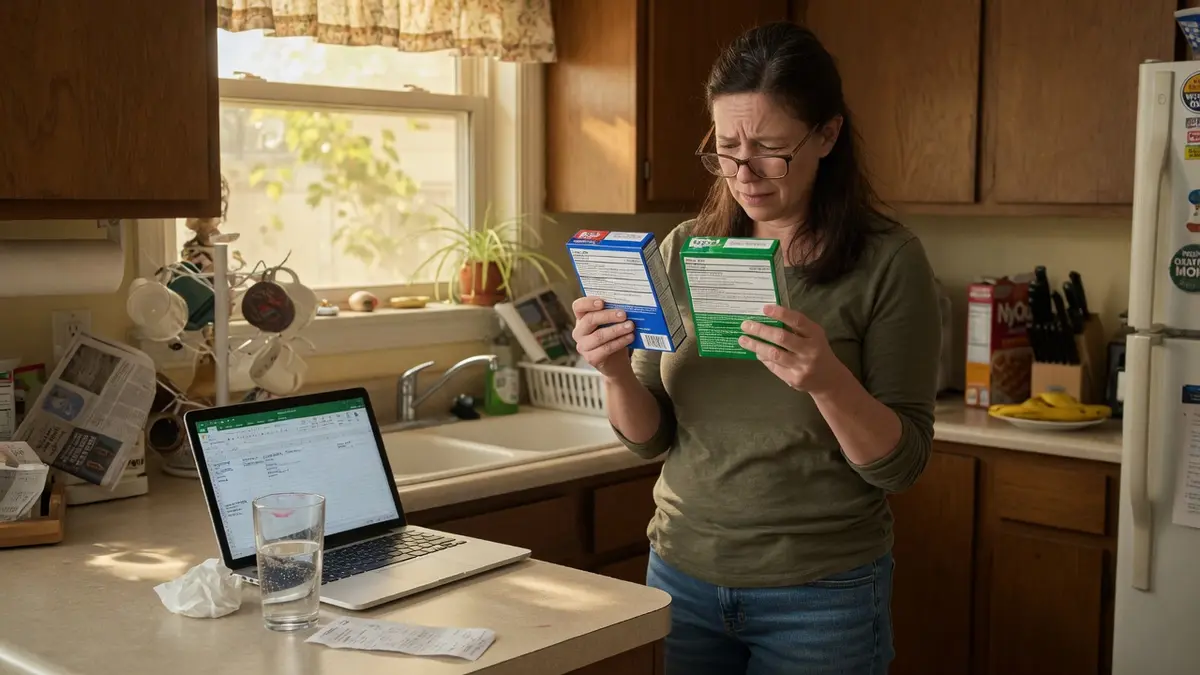
Picture a rough night with the flu. You take a nighttime cold medicine to help you sleep, then wake up at 3 a.m. with a pounding headache and reach for two regular pain relievers. By morning, the body aches are back, so you take another dose of cold medicine with breakfast. Three separate products, one bad night — and a real chance you just took far more acetaminophen than you meant to.
That’s how taking too much acetaminophen accidentally usually happens. Not through one big mistake, but through small, reasonable-seeming doses that stack up because the same ingredient is hiding in several different products. Acetaminophen is one of the most widely used drugs in the country, and it’s genuinely safe when used as directed. The trouble starts when “as directed” gets complicated by combination products that don’t make their contents obvious.
Why double dosing acetaminophen is easier than it sounds
Acetaminophen is the active ingredient in Tylenol, but it shows up in hundreds of other over-the-counter and prescription products. It’s in many cold and flu remedies, sinus medications, nighttime sleep aids paired with pain relief, menstrual cramp formulas, and some prescription painkillers that combine it with opioids.
Here’s the thing that trips people up: on a label, it isn’t always called “acetaminophen” in big letters. It might be abbreviated as “APAP” on a prescription bottle. In combination cold medicines, it’s listed in the small-print active ingredients box, not the bold product name on the front. So someone can take a daytime cold capsule, a separate fever reducer, and a prescription pain medication without realizing all three contain the same thing.
Acetaminophen in cold medicine is especially easy to overlook because you’re usually focused on the symptom you’re treating — the cough, the congestion, the sore throat — not the pain-and-fever ingredient riding along inside.
More Helpful Reads You Might Like:
- Why Do I Feel Pain Without Injury? Understanding the Hidden Causes
- 7 Anti-Inflammatory Foods That May Help Reduce Migraine Attacks
How much acetaminophen is safe in a day
For most healthy adults, clinical guidelines generally place the maximum at 4,000 milligrams (4 grams) of acetaminophen per day from all sources combined. Many manufacturers and physicians suggest staying at or below 3,000 mg as a more conservative cushion, especially for regular use over several days.
To put that in perspective, a regular-strength tablet is often 325 mg and an extra-strength tablet is often 500 mg. A single dose of a combination cold medicine can contain 325 to 650 mg on its own. It doesn’t take many overlapping products to climb toward that daily ceiling faster than you’d expect.
Some people need to stay well under the standard limit. Those who drink alcohol regularly, have liver disease, are malnourished, or take certain other medications may be more vulnerable to liver injury at lower amounts. If any of that applies, the safe number is a conversation worth having with a pharmacist or physician rather than a figure to guess at.
A quick way to do the math
Before your next dose, add up everything you’ve taken in the past 24 hours that contains acetaminophen. Count the milligrams per dose, multiply by how many doses you took, and total it across every product. If you’re approaching the daily limit — or you simply can’t tell — that’s the moment to pause rather than take more.
Checking medicine labels for acetaminophen before you swallow
The single most useful habit is reading the “Drug Facts” panel on every OTC product, not just the front of the box. Acetaminophen will be listed in the active ingredients section near the top, with the amount per dose right beside it. On prescription bottles, look for “acetaminophen” or “APAP” in the drug name, and ask the pharmacist directly if you’re unsure.
A few practical checks worth building into your routine:
- Read the active ingredients on cold, flu, sinus, and sleep products — that’s where acetaminophen hides most often.
- Look for “APAP” on prescription labels, especially with opioid combination painkillers.
- Avoid taking two acetaminophen-containing products at the same time unless a clinician has told you it’s fine.
- Keep track of timing, since doses are usually spaced every four to six hours, and don’t “catch up” with extra pills if a dose feels like it isn’t working.
- When in doubt about a product, ask the pharmacist — that’s exactly what they’re there for, and it takes two minutes.
Worth knowing: liquid medications for children and adults can have very different concentrations, so measuring with the dosing device that came with the product matters. A kitchen spoon isn’t a reliable measure, and switching between formulations is a common source of dosing errors.
Why the liver is the part that pays
The reason acetaminophen has a ceiling at all comes down to how the body processes it. The liver breaks it down, and in that process it produces a small amount of a toxic byproduct that the body normally neutralizes without trouble. At safe doses, this happens quietly in the background.
When intake climbs too high, the body’s ability to neutralize that byproduct can get overwhelmed, and the liver can be injured. This is why the danger is cumulative and tied to the total amount over time, not just a single large pill. Acetaminophen overdose is one of the more common causes of acute liver injury in the U.S., and a meaningful share of those cases are unintentional — exactly the kind of slow accumulation described earlier.
Acetaminophen overdose symptoms to recognize
One of the trickier things about acetaminophen is that early overdose often doesn’t feel dramatic. In the first hours, there may be no symptoms at all, or only vague ones. That can create false reassurance, because someone feels fine and assumes nothing’s wrong even as the liver is under strain.
Symptoms that may appear can include:
- Nausea, vomiting, or loss of appetite
- Pain or tenderness in the upper right side of the abdomen, where the liver sits
- Unusual tiredness, sweating, or a generally unwell feeling
- Later signs such as yellowing of the skin or eyes (jaundice), confusion, or dark urine
Because the more serious signs can show up a day or more after the overdose, timing matters a great deal. Don’t wait to feel terrible before getting help.
When to seek medical care
If you suspect you’ve taken too much acetaminophen — even if you feel fine — contact Poison Control or a medical professional right away. In the U.S., Poison Control can be reached at 1-800-222-1222, and they can walk you through what to do based on the amount and timing. For severe symptoms like confusion, persistent vomiting, or signs of jaundice, seek emergency care.
There’s a real reason for the urgency here. An effective treatment exists, and it works best when started early. Acting quickly when you’re unsure is far better than waiting to see what happens, because the window where treatment is most helpful can pass before symptoms become obvious.
Don’t try to manage a suspected overdose at home by simply stopping the medication and hoping for the best. A quick call to Poison Control can tell you whether you’re in safe territory or need to be seen, and that call is free and confidential.
What checking before your next dose really prevents
Taking too much acetaminophen accidentally is one of the most preventable medication problems out there, and it almost always comes down to a few seconds of label reading and a little mental math. Keep one acetaminophen-containing product in rotation rather than several, know the milligrams in each dose, respect the daily limit, and ask a pharmacist whenever a product’s ingredients aren’t clear. Those small habits are what stand between a normal flu week and an avoidable trip to the emergency room.
Medical Disclaimer: This content is for educational purposes only and does not replace professional medical advice, diagnosis, or treatment. Always consult your physician or a qualified healthcare provider with any questions about a medical condition.
Sources & Further Reading
- FDA: Don’t Overuse Acetaminophen
- FDA: Prescription Drug Products Containing Acetaminophen; Actions to Reduce Liver Injury From Unintentional Overdose
- NIH StatPearls: Acetaminophen Toxicity
- PubMed: Risk of Unintentional Overdose with Non-Prescription Acetaminophen Products
- Mayo Clinic: Acetaminophen (Oral Route, Rectal Route) – Description and Cautions