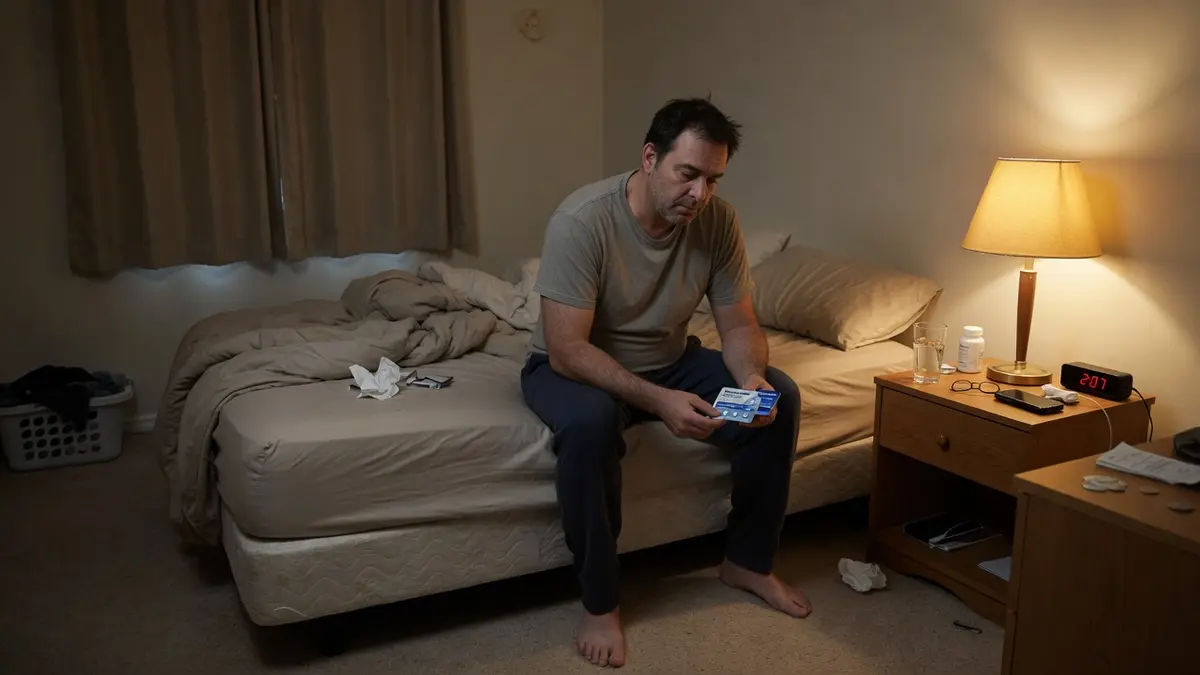

You fall asleep fine. Then it’s 3 a.m., you’re wide awake, your sheets are damp, and your brain has decided this is the perfect time to replay a conversation from 2014. By morning you’ve slept maybe four broken hours, and you’re staring down a full day on fumes. This is one of the most common — and most exhausting — complaints women bring to the exam room during this stage of life.
Menopause and sleep problems are tightly linked, and not just because of stress or aging. There are real, measurable biological reasons your sleep falls apart, and understanding them matters because it changes what actually works. Spoiler: it’s usually more than a melatonin gummy.
Why menopause and sleep problems go hand in hand
Several things are happening at once, which is part of why this is so frustrating. It’s rarely a single cause.
Estrogen and progesterone are dropping — and both affect sleep directly. Progesterone has a mild calming, sleep-promoting effect. As it declines, that natural sedation fades. Estrogen helps regulate body temperature and supports the brain’s use of serotonin, which feeds into your sleep-wake cycle. When estrogen becomes erratic and then low, your sleep architecture (the normal pattern of light, deep, and REM sleep) gets disrupted.
Hot flashes at night are a major culprit. Night sweats are hot flashes that happen while you sleep, and they’re often what jolts you awake at 3 a.m. The surge of heat, the racing heart, the sweat, then the chill afterward — your body cycles through all of it, and even brief flashes can fragment sleep so badly that you wake feeling unrefreshed even if you technically spent eight hours in bed.
Mood and anxiety shift too. Falling hormones are associated with higher rates of anxiety and low mood during this transition, and anxiety and insomnia feed each other. You lie awake worrying, which makes sleep harder, which gives you more to worry about.
Worth knowing: sleep during perimenopause — the years of hormonal fluctuation before periods stop completely — is often when things first go sideways. Many women assume the trouble starts at menopause itself, but the rollercoaster of perimenopause can be even bumpier because hormone levels swing unpredictably rather than simply settling low.
More Helpful Reads You Might Like:
- Wired but Tired: Why Exhaustion Doesn’t Always Lead to Sleep
- Endometriosis Diet: 7 Foods That May Reduce Pain and Inflammation
- Why Acid Reflux Gets Worse at Night—and What Actually Helps
The melatonin problem (and what to try instead)
Melatonin gets recommended constantly, and the honest answer is that it’s not very effective for menopause insomnia in most people. Melatonin helps shift the timing of sleep — it’s genuinely useful for jet lag or for people whose body clock runs late. But it doesn’t do much for the kind of fragmented, hot-flash-driven waking that defines menopausal sleep trouble. If it’s helped you, great, keep using it. If it hasn’t, that’s not a personal failing. It’s just the wrong tool for this particular job.
Here’s what the evidence actually points toward.
Cognitive behavioral therapy for insomnia (CBT-I)
This is the treatment sleep specialists reach for first, and for good reason — research suggests it works as well as sleep medication for chronic insomnia, with effects that last longer. CBT-I is a structured, short-term program that retrains your relationship with sleep: adjusting time spent in bed, breaking the anxious wired-but-tired cycle, and changing the thoughts that keep you up. Studies in menopausal women specifically have found it improves both sleep and the distress around it, even when hot flashes continue. You can access it through a therapist, and there are also well-studied app-based and online programs.
Hormone therapy
For women whose sleep is being wrecked primarily by hot flashes and night sweats, hormone therapy for sleep can be genuinely effective — not because it’s a sleeping pill, but because it treats the thing waking you up. When the night sweats settle, sleep often follows. Estrogen, sometimes combined with progesterone (which has its own mild sedating effect and is often taken at bedtime), is the most effective treatment available for hot flashes.
That said, hormone therapy isn’t right for everyone. It carries risks that depend on your age, how long it’s been since your last period, and your personal and family history of things like breast cancer, blood clots, and heart disease. This is a real conversation to have with your doctor, weighing your specific situation — not a decision to make off a blog post.
Non-hormonal medications
Some women can’t or don’t want to take hormones. Certain low-dose antidepressants (SSRIs and SNRIs) reduce hot flashes for some people, and a newer class of medication that targets the brain pathway behind hot flashes has been approved specifically for them. Gabapentin, taken at night, can ease night sweats and has a sedating effect that some find helpful. These all require a prescription and a discussion about side effects.
Lifestyle changes that genuinely move the needle
These won’t fix severe symptoms on their own, but they make a real difference, especially stacked together.
- Keep your bedroom cold. Aim for around 65°F. A cool room, breathable cotton or moisture-wicking sleepwear, and layered bedding you can throw off mid-flash all reduce how much a night sweat wakes you.
- Watch alcohol, especially in the evening. Wine feels relaxing, but alcohol fragments sleep in the second half of the night and can trigger hot flashes. This is one of the most common reversible causes.
- Be strategic about caffeine. Sensitivity often increases with age. Cutting off caffeine by early afternoon is a reasonable experiment.
- Move your body during the day. Regular exercise is associated with better sleep, though intense workouts too close to bedtime can backfire for some people.
- Protect a wind-down window. Screens, work email, and bright light right up until lights-out keep your brain in daytime mode. A predictable, dim, calm hour before bed helps signal that the day is over.
You’ll notice supplements aren’t featured here. Many menopause sleep remedies marketed online — black cohosh, soy isoflavones, valerian, various “hormone balancing” blends — have mixed or weak evidence, and the supplement market isn’t tightly regulated, so what’s on the label isn’t always what’s in the bottle. Some are reasonable to try, but talk to your doctor or pharmacist first, particularly if you take other medications.
When to see a doctor
Some sleep disruption is expected during this transition. But certain things deserve a professional look rather than another month of toughing it out:
- Insomnia that lasts more than a few weeks and affects your daytime functioning, mood, or safety (like drowsy driving)
- Loud snoring, gasping, or breathing pauses noticed by a partner — obstructive sleep apnea becomes more common after menopause and is frequently missed in women
- Persistent low mood, loss of interest, or anxiety that isn’t easing
- Restless, crawling sensations in your legs at night that improve when you move
- Hot flashes severe enough that you’re miserable during the day, not just at night
A clinician can sort out whether you’re dealing with straightforward menopause insomnia or something layered on top of it, like sleep apnea or a thyroid issue, that needs its own treatment.
So what actually helps menopause and sleep problems?
The most effective approach is usually a combination: treating the hot flashes that wake you (with hormone therapy or a non-hormonal alternative if appropriate), retraining your sleep with CBT-I, and tightening up the environmental and lifestyle factors that quietly sabotage rest. Melatonin sits low on that list for a reason. If you’ve been blaming yourself for not being able to white-knuckle your way to better sleep, ease up — this is biology, and there are real, evidence-based tools to work with. Start by tracking your nights for a week or two, then bring that picture to your doctor so you can build a plan around what’s actually waking you.
Medical Disclaimer: This content is for educational purposes only and does not replace professional medical advice, diagnosis, or treatment. Always consult your physician or a qualified healthcare provider with any questions about a medical condition.
Sources & Further Reading
- National Institute on Aging: Sleep Problems and Menopause: What Can I Do?
- PubMed (PMC): The Effectiveness of Cognitive Behavioral Therapy on Insomnia Severity Among Menopausal Women: A Scoping Review
- PubMed: Efficacy of Menopausal Hormone Therapy on Sleep Quality: Systematic Review and Meta-Analysis
- The Menopause Society: Cognitive-Behavioral Therapy Shows Promise Managing Menopausal Insomnia and Hot Flashes
- PubMed (PMC): Insomnia in Postmenopausal Women: How to Approach and Treat It?