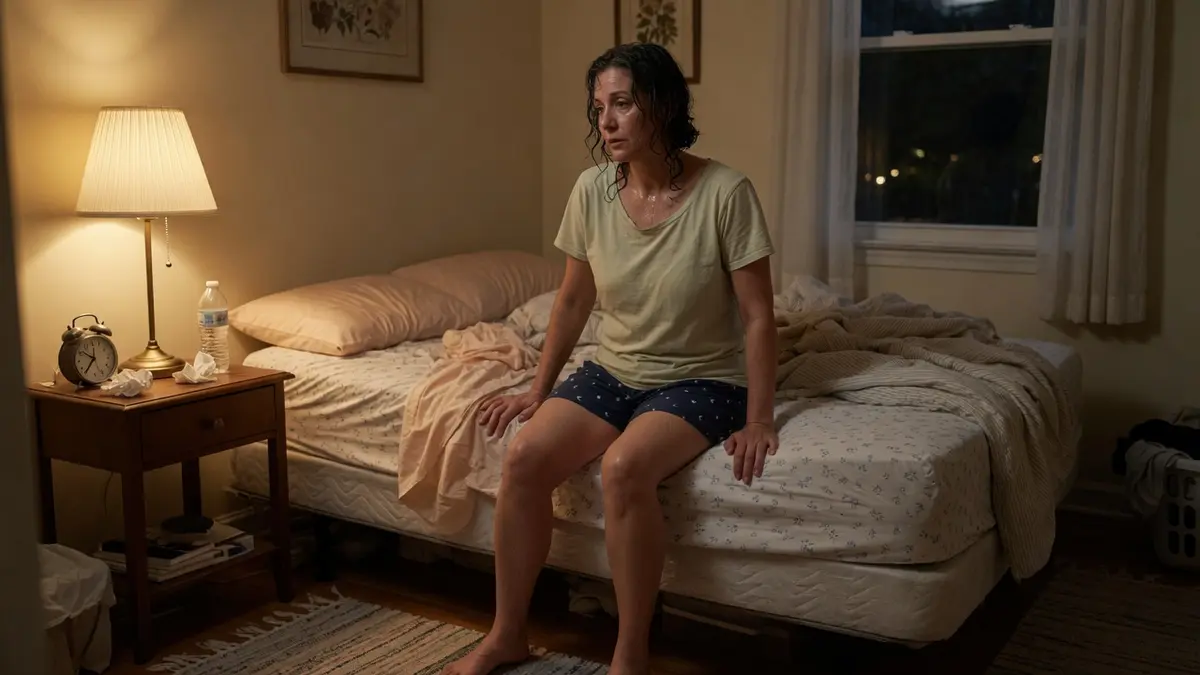
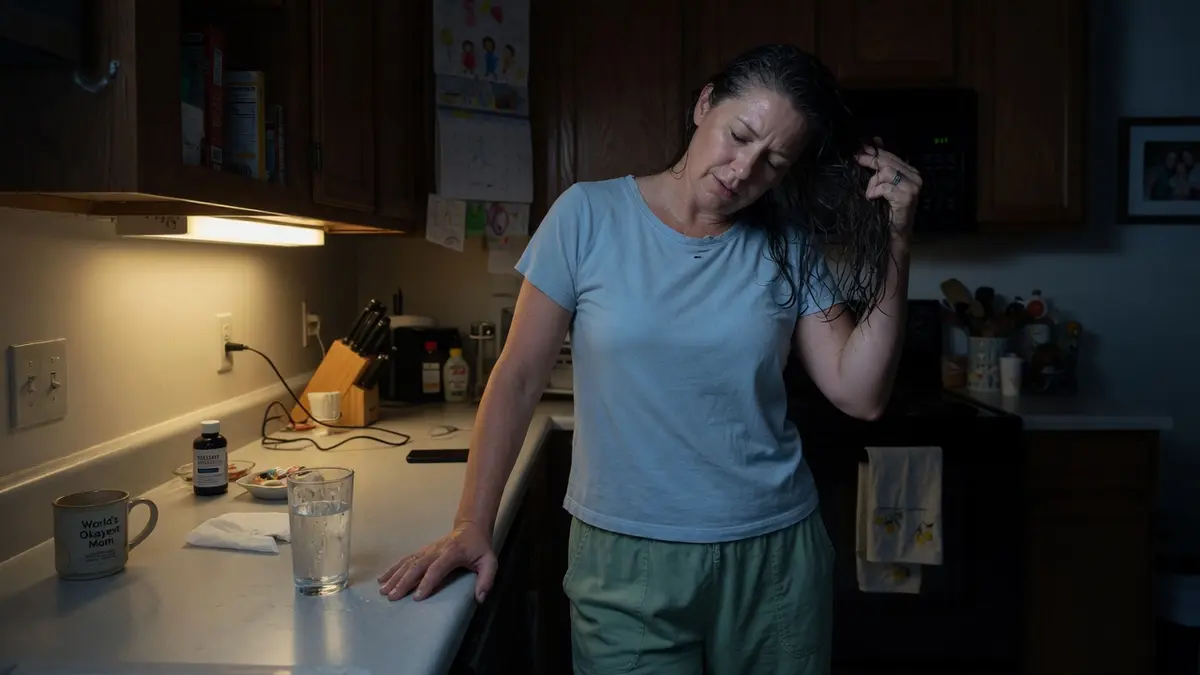
You’re sitting in a meeting, perfectly fine, and then the heat rolls up your chest and neck like someone opened an oven door. Your face flushes. You feel the sweat starting. Thirty seconds later it passes, but now you’re damp and distracted and wondering if anyone noticed. For a lot of women, this happens a dozen times a day and several times a night, wrecking sleep along the way.
Hormone therapy is the most effective treatment for this, but plenty of women can’t take it or don’t want to. A history of breast cancer, blood clots, certain heart conditions, or simply a personal preference all put hormones off the table. The good news is that figuring out how to stop hot flashes without hormones isn’t a lost cause. There are genuine, evidence-backed options. The trick is separating what actually works from what gets marketed heavily and does very little.
What’s actually happening during a hot flash
A hot flash isn’t your body overheating. It’s a glitch in temperature regulation. As estrogen levels drop during menopause, the brain’s internal thermostat, located in a region called the hypothalamus, becomes more sensitive. It starts treating a normal body temperature as too hot, so it triggers a cooling response: blood vessels near the skin widen, you flush, and you sweat. That whole cascade is your body trying to dump heat it didn’t actually need to lose.
This matters because the most effective non-hormonal treatments work directly on that brain pathway, not on estrogen. Understanding the mechanism helps explain why some approaches have real research behind them and others are basically hope in a capsule.
More Helpful Reads You Might Like:
- 7 Uterine Fibroid Treatment Options—With and Without Surgery
- 5 Science-Backed Ways Hormonal Changes Affect Mood and Energy
- The Truth About Microplastics in Bottled Water: Protecting Your Hormonal Health
Prescription options for hot flashes that don’t involve hormones
This is where the strongest evidence lives. Several non-hormonal prescription medications have been studied specifically for hot flashes, and a few are FDA-approved for it.
Newer targeted medications
A drug class called NK3 receptor antagonists works directly on the overheating signal in the hypothalamus. Fezolinetant is the first one approved in the U.S. specifically for moderate to severe hot flashes. In trials, it reduced both how often hot flashes happened and how intense they were, often within a few weeks. It requires some liver monitoring with blood tests, so it isn’t right for everyone, but it represents a real shift because it targets the root mechanism rather than borrowing a drug from another category.
Antidepressants used at low doses
Certain SSRIs and SNRIs, the same medications used for depression and anxiety, reduce hot flashes even in women who aren’t depressed. Paroxetine at a low dose is FDA-approved specifically for hot flashes. Venlafaxine, escitalopram, and a few others have good supporting evidence too. The doses used for hot flashes are often lower than those used for mood, and many women notice fewer episodes within a week or two. Side effects can include nausea or changes in libido, and one important caveat: paroxetine and fluoxetine can interfere with tamoxifen, which matters a great deal for breast cancer survivors. Your prescriber needs to know your full medication list.
Other prescription choices
- Gabapentin — originally a seizure and nerve-pain medication, it can reduce hot flashes and may be especially useful for night sweats because it tends to cause drowsiness.
- Oxybutynin — typically used for overactive bladder, it has shown meaningful reductions in hot flash frequency in studies, though dry mouth is a common trade-off.
- Clonidine — a blood pressure medication with modest effects. It’s used less often now because newer options work better with fewer side effects like dizziness.
None of these are one-size-fits-all. The right pick often depends on your other health conditions, what side effects you can tolerate, and what else you’re taking. That’s a conversation worth having with your doctor rather than guessing.
Lifestyle changes that genuinely move the needle
Lifestyle advice for hot flashes gets a bad rap because it’s often delivered as a dismissive shrug. But some of it does help, and it costs nothing.
Layering your clothing so you can shed a layer fast, keeping your bedroom cool, and using breathable fabrics won’t stop the brain signal, but they shorten how miserable each episode feels. Cooling the room at night and using a fan can meaningfully improve sleep, which is often the part of menopause that breaks people down.
Identifying and avoiding personal triggers helps some women. Common ones include alcohol, caffeine, spicy food, and hot drinks. Not everyone has triggers, and you don’t need to give up your morning coffee on principle. Pay attention for a couple of weeks and see if a pattern shows up before you cut anything.
Carrying extra weight is associated with more frequent and severe hot flashes, and research suggests that weight loss in women who have overweight can reduce symptoms. Smoking is also linked to worse hot flashes, so quitting helps on this front in addition to everything else.
Mind-body approaches with real data
Cognitive behavioral therapy, a structured form of talk therapy, doesn’t reduce how often hot flashes happen, but it consistently reduces how bothersome they feel and improves sleep. That distinction matters. The flashes may not vanish, but they stop running your day. Clinical hypnosis has also shown reductions in hot flash frequency in several studies and is one of the better-supported mind-body options. Paced breathing, on the other hand, has weaker and more inconsistent evidence than it’s often given credit for.
Natural remedies for hot flashes that work, and the ones that don’t
The honest answer here is that the supplement aisle is mostly disappointing, and the marketing rarely matches the data.
Black cohosh is the most popular herbal remedy, and the evidence is genuinely mixed. Some studies show a small benefit, others show nothing beyond placebo. The placebo effect for hot flashes is large, sometimes 30% or more, which is exactly why so many things seem to work in casual use. There are also rare reports of liver problems, so it’s not risk-free.
Soy isoflavones and red clover have been studied extensively with underwhelming and inconsistent results. Certain soy-derived compounds may help some women modestly, but the effect is unpredictable. Because these act on estrogen receptors, women with hormone-sensitive cancers should clear them with their oncologist first rather than assuming “natural” means “safe for me.”
Evening primrose oil, vitamin E, dong quai, and maca don’t have convincing evidence behind them for hot flashes, despite being widely sold for exactly this purpose.
One more caution: supplements aren’t tightly regulated, so what’s on the label isn’t always what’s in the bottle. If you want to try something in this category, tell your doctor, especially if you take other medications, because interactions are real even with plant-based products.
When to seek medical care
Hot flashes themselves aren’t dangerous, but a few situations deserve a doctor’s attention. Reach out if your symptoms are severe enough to disrupt sleep, work, or daily life, since that’s exactly when treatment is worth pursuing. Get evaluated if hot flashes start before age 40, if they come with drenching night sweats plus unexplained weight loss, or if you notice a racing heartbeat, because flushing and sweating can occasionally point to thyroid problems or other conditions rather than menopause. And if you’ve tried an approach for a couple of months without relief, that’s a reason to go back and adjust, not to give up.
How to actually stop hot flashes without hormones, step by step
Figuring out how to stop hot flashes without hormones usually isn’t about finding one magic fix. It’s about stacking what works. Start with the cheap, low-risk changes, cool environment, sensible layering, watching for triggers, and consider CBT or hypnosis if the bother factor is high. If symptoms are still interfering with your life, talk to your doctor about prescription options, whether that’s a low-dose antidepressant, gabapentin, or one of the newer targeted medications. Skip the supplements with thin evidence unless you’ve discussed them and accept that the payoff may be small.
The combination that works for your neighbor may not be yours, and it can take a little trial and error to land on the right mix. That’s frustrating, but it’s also normal, and there are more effective non-hormonal tools available now than there were even a few years ago.
Medical Disclaimer: This content is for educational purposes only and does not replace professional medical advice, diagnosis, or treatment. Always consult your physician or a qualified healthcare provider with any questions about a medical condition.
Sources & Further Reading
- PubMed: The 2023 Nonhormone Therapy Position Statement of The North American Menopause Society
- Mayo Clinic: Hot Flashes – Diagnosis & Treatment
- FDA: Approves Novel Drug to Treat Moderate to Severe Hot Flashes Caused by Menopause (Fezolinetant/Veozah)
- FDA Drug Safety Communication: Veozah (Fezolinetant) – Rare Serious Liver Injury Warning
- PMC (NIH): Nonhormonal Management of Hot Flashes for Women on Risk Reduction Therapy