
 Written by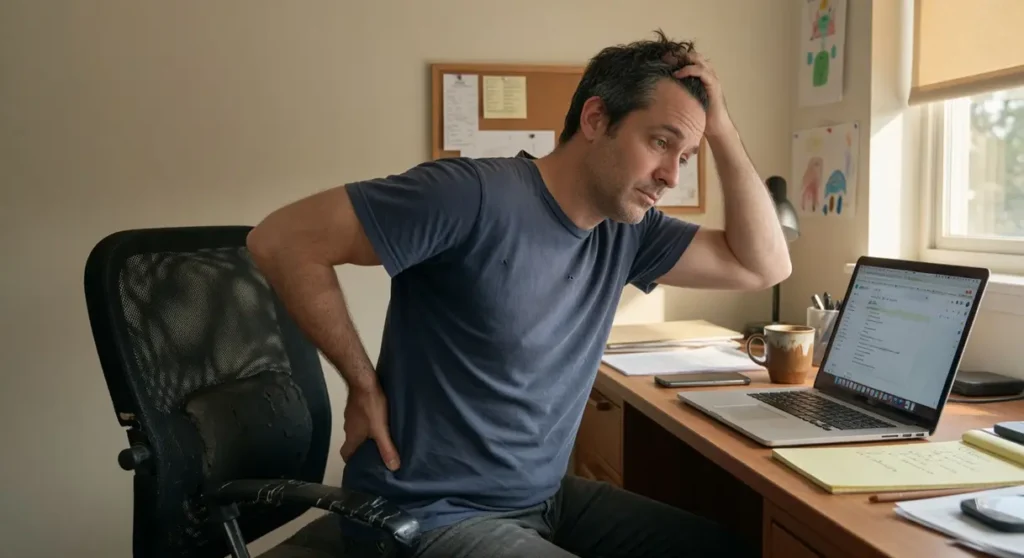
By 3 p.m., the lower back starts to ache. You shift in your chair, cross and uncross your legs, maybe stand for a minute, then sink back down — and the dull throb returns within twenty minutes. Somewhere in a desk drawer or an Amazon cart, there’s a memory-foam cushion promising to fix all of it for $29.99. So do lumbar support cushions work, or are they just another piece of ergonomic theater?
In this article
- What a lumbar cushion is actually trying to do
- Does lumbar support help lower back pain? What studies show
- Who tends to benefit the most
- Choosing the best lumbar cushion for an office chair
- Lumbar support cushion benefits beyond pain relief
- When to see a clinician instead of shopping for a cushion
- So do lumbar support cushions work for back pain or not
The honest answer is: sometimes, for some people, in specific situations. That’s less satisfying than a yes or no, but it’s closer to what the research actually shows.
What a lumbar cushion is actually trying to do
The lower back has a natural inward curve called the lumbar lordosis. When you stand, that curve is preserved easily. When you sit — especially in a slumped position on a flat-backed chair — the pelvis tilts backward and the lumbar curve flattens or even reverses. That flattening puts more pressure on the discs and the small joints in the back, and it stretches the supporting ligaments in ways they aren’t built to tolerate for eight hours straight.
A lumbar support cushion (sometimes called a lumbar support pillow for back pain) fills the gap between the small of the back and the chair, nudging the pelvis forward and helping that natural curve stay where it belongs. That’s the entire mechanical idea. Whether it helps depends on whether your pain is connected to that posture problem in the first place.
The difference between support and correction
A cushion doesn’t correct posture the way a brace might. It makes a better posture easier to hold by giving the spine something to rest against. People often confuse the two. If someone slumps forward with the cushion behind them, it’s doing essentially nothing.
More Helpful Reads You Might Like:
- Weighted Blankets for Anxiety and Sleep: What the Research Actually Says
- Best Supplements for Mental Focus: What Actually Works?
- 7 Evidence-Based Zinc Benefits—And Who May Need Supplements
Does lumbar support help lower back pain? What studies show
The research is genuinely mixed, and anyone who tells you otherwise is selling something. Studies looking at lumbar supports in office workers and drivers have found modest reductions in self-reported pain and discomfort, particularly over long sitting sessions. Other trials have found no significant difference compared with standard seating. Reviews of the evidence tend to land on the same cautious conclusion: lumbar supports may help reduce discomfort during prolonged sitting, but they’re not a treatment for chronic back pain on their own.
A few patterns show up consistently in the better-quality research:
- Benefits are most noticeable in people who sit for more than four to six hours a day.
- People with mechanical low back pain — the kind that worsens with sitting and improves with standing or walking — tend to report the most relief.
- People with radiating nerve pain, disc herniations with leg symptoms, or inflammatory back conditions often don’t get the same benefit, and a poorly placed cushion can sometimes make things worse.
- The cushion’s effect tends to fade if the user also doesn’t move regularly throughout the day.
So when someone asks do lumbar support cushions work, the more useful question is: work for what, and for whom?
Who tends to benefit the most
The clearest candidates are desk workers, long-haul drivers, and people recovering from minor muscular back strain who need to sit through a workday. If sitting in a standard office chair for an hour reliably triggers a dull ache in the lower back that eases when standing, a well-positioned cushion is reasonable to try.
People who already have a high-quality ergonomic chair with adjustable lumbar support built in usually don’t need an add-on cushion. Stacking support on top of support tends to push the back too far forward, which creates a new set of problems.
Pregnancy is another situation where a lumbar pillow can genuinely earn its keep, especially in the second and third trimesters when the shifting center of gravity pulls the lower back into an exaggerated curve.
When a cushion probably won’t help
If back pain is constant, wakes you at night, radiates down a leg past the knee, comes with numbness or weakness, or follows an injury, a cushion isn’t the answer — and waiting on one to fix it can delay a diagnosis that matters. The same goes for pain accompanied by fever, unexplained weight loss, or loss of bowel or bladder control. Those need medical evaluation, not a foam wedge.
Choosing the best lumbar cushion for an office chair
Most cushions fall into a few broad categories: contoured memory foam, inflatable air bladders, mesh frames, and simple rolled supports. None is clearly superior in the research. What matters more is fit, placement, and whether you’ll actually use it.
A few practical things to look for:
- Height of the support. The thickest part of the cushion should sit at the small of the back, roughly at belt level — not against the mid-back or shoulder blades.
- Firmness. Firm enough to hold its shape under pressure, soft enough to be tolerable for hours. Memory foam that compresses flat by lunchtime isn’t doing its job.
- Depth. A cushion that’s too thick will push the upper back forward and force a slouched neck position. Two to four inches of projection is a reasonable range for most people.
- Attachment straps. Cushions that stay put are cushions that get used. Ones that constantly slide down get abandoned within a week.
- Breathability. Mesh or ventilated covers matter more than people expect, especially in warm offices or cars.
Price doesn’t track closely with effectiveness. A $25 cushion with the right shape can outperform a $120 one with the wrong fit.
How to use it so it actually does something
Sit all the way back in the chair so the cushion is pressed between the lower back and the seatback. Feet flat on the floor, hips slightly higher than knees, screen at eye level. The cushion is supposed to make good posture feel like the default — not act as a prop for a slouch.
And get up. Every 30 to 45 minutes, ideally. The single most consistent finding across back pain research is that prolonged static sitting — supported or not — is hard on the spine. A cushion buys time. It doesn’t replace movement.
Lumbar support cushion benefits beyond pain relief
Beyond comfort, regular cushion users often report less mid-afternoon fatigue and fewer position shifts during long meetings. Some find that breathing feels easier when the chest isn’t collapsed forward into a slump. These aren’t dramatic effects, but they’re real, and they’re part of why a well-chosen cushion can be worth the small investment even when pain isn’t the main issue.
Are lumbar pillows worth it? For a desk worker with intermittent low back discomfort, probably yes — with realistic expectations. For someone hoping a cushion will resolve chronic or worsening pain, it’s the wrong tool.
When to see a clinician instead of shopping for a cushion
Back pain warrants a medical visit when it:
- Lasts more than a few weeks without improvement
- Radiates into the buttock, leg, or foot
- Comes with numbness, tingling, or weakness
- Follows a fall, accident, or lifting injury
- Is accompanied by fever, chills, or unexplained weight loss
- Affects bladder or bowel control — this is an emergency
A primary care clinician or physical therapist can sort out whether the pain is muscular, joint-related, disc-related, or something less common. Often the right answer is a combination of targeted exercise, movement habits, and yes, sometimes a cushion.
So do lumbar support cushions work for back pain or not
For mild to moderate discomfort tied to long hours of sitting, a properly fitted lumbar cushion can take the edge off and make better posture easier to hold. It’s a small, low-risk tool that helps some people meaningfully and others not at all. It won’t fix a disc problem, undo years of deconditioning, or substitute for getting up and moving. Treat it as one piece of a larger setup — chair, screen height, breaks, exercise — rather than a standalone solution, and the odds of it being worth the money go up considerably.
Medical Disclaimer: This content is for educational purposes only and does not replace professional medical advice, diagnosis, or treatment. Always consult your physician or a qualified healthcare provider with any questions about a medical condition.
Sources & Further Reading
How we sourced this article: we rely on peer-reviewed studies, clinical guidelines and public-health agencies (CDC, NIH, AHA, WHO), check every link before publishing, and update articles when the evidence changes. Read our editorial approach.
- PMC / Cochrane: Lumbar supports for prevention and treatment of low back pain
- PubMed: Non-rigid lumbar supports for the management of non-specific low back pain: A literature review and meta-analysis
- PubMed: The effect of a lumbar support pillow on lumbar posture and comfort during a prolonged seated task
- PMC: Differences in lumbar spine intradiscal pressure between standing and sitting postures: a comprehensive literature review
- Mayo Clinic: Back pain — Diagnosis and treatment
- CDC / NIOSH: About Ergonomics and Work-Related Musculoskeletal Disorders