 Written by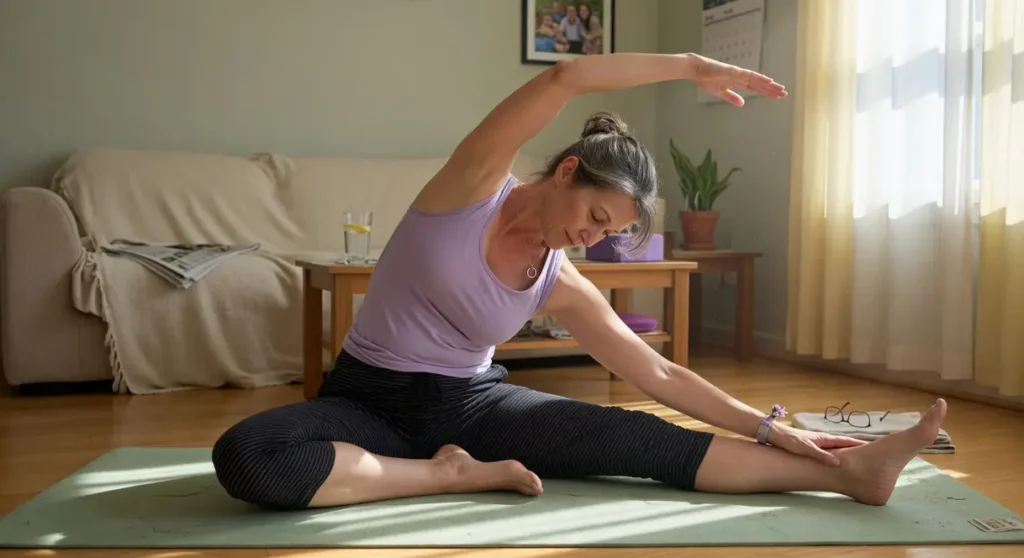
Somewhere around the mid-fifties, people start noticing small things. A wrist that hurts longer than it should after a minor fall. A height measurement at the doctor’s office that’s a half-inch shorter than last time. A friend who fractured a hip stepping off a curb. None of it feels dramatic in the moment, but it points to something that’s been quietly happening for years: bones change with age, and after 50, those changes speed up.
In this article
Understanding why bones get weaker after 50 isn’t about scaring anyone into thinking a fracture is around the corner. It’s about knowing what’s actually going on inside the skeleton so the choices you make — about food, movement, and when to ask for a bone density scan — are based on biology rather than guesswork.
Bones are living tissue, and the balance shifts with age
Bone isn’t the inert, chalky material it looks like in a museum. It’s living tissue that’s constantly being broken down and rebuilt, a process called remodeling. Two main cell types handle the job: osteoclasts, which dissolve old bone, and osteoblasts, which lay down new bone in its place. In your twenties and thirties, the building slightly outpaces the breakdown, and bone mass peaks somewhere around age 30.
After that, the math flips. Breakdown begins to outpace rebuilding, slowly at first. By the time most adults reach 50, the gap widens. Osteoblasts become less efficient, the signals that tell them to build new bone weaken, and the scaffolding inside each bone — the tiny lattice that gives it strength — starts to thin. The bone looks the same from the outside. Inside, it’s more porous.
The menopause factor
For women, the slope gets steeper around menopause. Estrogen helps restrain osteoclast activity, essentially keeping the breakdown crew in check. When estrogen drops during the menopausal transition, that brake comes off. Bone loss after menopause can reach 1–2% per year in the first five to seven years, sometimes more. That’s why women in their early sixties often have noticeably lower bone density than they did in their late forties, even if nothing else about their health has changed.
Men aren’t exempt. Testosterone supports bone in similar ways, and it declines more gradually with age. Men tend to lose bone more slowly and start with denser bones, but by the seventies and eighties, fracture risk climbs for them too.
Calcium absorption quietly drops
The gut also changes. After 50, the small intestine becomes less efficient at absorbing calcium from food, partly because of lower active vitamin D levels and partly because of changes in the intestinal lining itself. Stomach acid, which helps free calcium from food, often drops too — especially in people taking long-term acid-reducing medications. So even when calcium intake looks adequate on paper, less of it actually makes it into the bloodstream and onward to the bones.
More Helpful Reads You Might Like:
- 7 Evidence-Based Zinc Benefits—And Who May Need Supplements
- How to Prevent Kidney Stones: 7 Proven Strategies That Work
- Wired but Tired: Why Exhaustion Doesn’t Always Lead to Sleep
Osteopenia vs osteoporosis: where the line sits
Doctors describe bone density using a number called a T-score, measured by a DEXA scan. A T-score between -1.0 and -2.5 is called osteopenia — lower than peak bone mass but not yet in the danger zone. A T-score of -2.5 or lower is osteoporosis, which carries a meaningfully higher fracture risk.
The osteopenia vs osteoporosis distinction matters because the approach is different. Osteopenia is often managed with lifestyle changes, nutrition, and monitoring. Osteoporosis usually warrants a conversation about medication, especially if there’s already been a fracture or other risk factors are stacked. Neither diagnosis means a fracture is inevitable. It means the cushion of reserve has shrunk.
What actually slows bone loss after 50
The honest answer is that no single habit reverses age-related bone loss, but several together can meaningfully slow it. The evidence is strongest for a combination of nutrition, loading the skeleton through movement, and removing things that accelerate loss.
Calcium and vitamin D for bones — without overdoing it
Most adults over 50 need about 1,000–1,200 mg of calcium per day, ideally from food. Dairy is the obvious source, but canned salmon and sardines with bones, tofu set with calcium sulfate, fortified plant milks, kale, and bok choy all contribute. Spreading intake across meals matters because the gut can only absorb about 500 mg at a time.
Vitamin D helps the gut absorb calcium and supports the bone-building side of remodeling. Many adults over 50 don’t get enough from sunlight and food alone, and a blood test can clarify where things stand. Supplementation is often in the 800–2,000 IU range, but high-dose calcium and vitamin D for bones isn’t better — very high calcium supplementation has been linked to kidney stones and possibly cardiovascular concerns, and very high vitamin D doesn’t add benefit.
Protein gets less attention than it should. About half the volume of bone is protein, and older adults who eat too little protein lose bone and muscle faster. Aiming for roughly 0.5 grams of protein per pound of body weight per day, spread across meals, supports both.
Weight bearing exercises for bone density
Bone responds to mechanical stress. When muscles pull on bone and when bone takes the impact of body weight against gravity, osteoblasts get the signal to build. Walking helps, but it’s a fairly modest stimulus for someone who’s already a regular walker. Adding intensity matters.
Useful weight bearing exercises for bone density include:
- Brisk walking with intervals, hiking, or stair climbing
- Strength training two to three times a week, focusing on larger muscle groups — squats, deadlifts, rows, presses — with weights heavy enough to feel challenging by the last few repetitions
- Jumping or hopping movements (when joints tolerate them), even brief sessions a few times a week
- Balance work like single-leg stands, tai chi, or yoga, which doesn’t build bone directly but reduces falls, which is where most fractures actually happen
Swimming and cycling are excellent for cardiovascular health but don’t load the skeleton the same way, so they don’t do much for bone density on their own.
The lifestyle factors that quietly accelerate loss
Smoking is rough on bone — it interferes with osteoblast function and reduces estrogen activity. Heavy alcohol use, generally more than two drinks a day, suppresses bone formation. Very low body weight is a risk factor too; bones need a certain amount of mechanical load to stay strong, and extreme dieting in midlife can backfire.
Some medications also matter. Long-term oral corticosteroids, certain seizure medications, some breast cancer treatments, and long-term proton pump inhibitors have all been associated with faster bone loss. None of this means stopping a needed medication, but it’s a reasonable thing to bring up at a check-up.
When to talk to a doctor
A baseline DEXA scan is generally recommended for women at 65 and men at 70, earlier if there are risk factors like a family history of osteoporosis, a previous fracture from a minor fall, long-term steroid use, early menopause, or a thin frame. Worth bringing up sooner rather than later if any of these apply.
Specific reasons to make an appointment include a fracture from a fall that shouldn’t have caused one, a noticeable loss of height (more than about an inch from peak adult height), new upper-back rounding, or persistent back pain without an obvious cause. These can be signs that a small vertebral fracture has already happened.
How to prevent bone loss naturally and why that phrase has limits
The phrase prevent bone loss naturally gets used a lot, and it’s worth being honest about what it can and can’t do. Nutrition, strength training, balance work, adequate vitamin D, not smoking, moderate alcohol — these genuinely slow the rate of bone loss and reduce fracture risk. They don’t fully prevent the age-related changes that happen to everyone’s skeleton, and they aren’t always enough on their own once osteoporosis is established. For some people, medication added to lifestyle measures cuts fracture risk in a way lifestyle alone can’t match.
What to know about why bones get weaker after 50 and what to do next
The reason why bones get weaker after 50 comes down to a shift in the balance between bone breakdown and bone building, accelerated by hormonal changes, reduced calcium absorption, and the slow drift of less efficient remodeling. The reason that matters practically is that the same biology responds to input: enough protein, enough calcium and vitamin D, regular loading of the skeleton with strength and impact work, and attention to medications and habits that quietly chip away at bone. A DEXA scan at the right age makes the picture concrete rather than theoretical, and if the numbers warrant it, there are effective treatments beyond lifestyle alone.
Medical Disclaimer: This content is for educational purposes only and does not replace professional medical advice, diagnosis, or treatment. Always consult your physician or a qualified healthcare provider with any questions about a medical condition.
Sources & Further Reading
How we sourced this article: we rely on peer-reviewed studies, clinical guidelines and public-health agencies (CDC, NIH, AHA, WHO), check every link before publishing, and update articles when the evidence changes. Read our editorial approach.