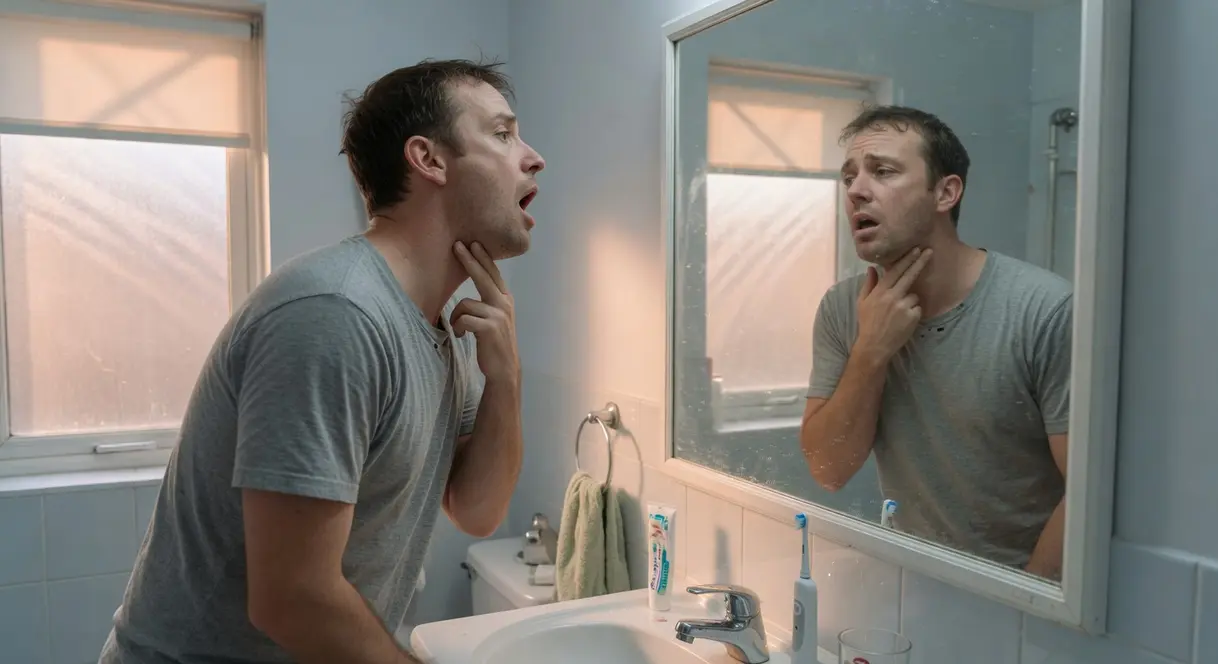
You wake up, swallow, and wince. The back of your throat feels like sandpaper, and your first thought is the one millions of people have every winter: is this strep, or just another miserable cold that will pass on its own? The distinction matters more than it seems. Strep throat is a bacterial infection that often needs antibiotics. Most sore throats aren’t strep — they’re viral, and antibiotics won’t help at all.
Figuring out how to tell if a sore throat is strep at home isn’t an exact science, but there are surprisingly reliable patterns. A handful of symptoms — and a handful of symptoms that are notably absent — can give you a strong sense of which direction you’re headed before you ever call a doctor.
What strep throat actually is
Strep throat is caused by a specific bacterium called Streptococcus pyogenes, also known as group A strep. It’s contagious, spreads through respiratory droplets, and tends to circulate most heavily among school-age kids between late fall and early spring. Adults can absolutely get it, especially parents and teachers, but it’s less common after age 30.
The reason strep gets so much attention isn’t the sore throat itself — it’s the small risk of complications if it’s left untreated, including rheumatic fever, which can affect the heart. That’s why doctors take it seriously even when the throat pain seems manageable.
Strep throat vs sore throat: the symptom patterns that matter
Most sore throats come from viruses — the common cold, influenza, COVID-19, mononucleosis, and a long list of others. Viral sore throats and strep throat can feel almost identical in the first few hours, but they usually diverge fast.
Symptoms that lean toward strep
- Sudden onset of throat pain, sometimes severe enough that swallowing water hurts
- Fever, often 101°F or higher
- White or yellow patches on the tonsils, or bright red tonsils that look swollen
- Tender, swollen lymph nodes in the front of the neck (you can usually feel them as small, painful lumps just under the jaw)
- Tiny red spots on the roof of the mouth (called petechiae)
- Headache, stomachache, or nausea — especially in kids
- Loss of appetite
Symptoms that lean away from strep
- Runny nose
- Cough
- Hoarseness or a raspy voice
- Red, watery eyes
- Mouth ulcers
- Diarrhea
Here’s the rule of thumb clinicians actually use: the more cold-like symptoms you have — cough, runny nose, hoarseness — the less likely it is to be strep. Strep tends to be a focused throat infection. A virus tends to make a mess of your whole upper respiratory tract.
More Helpful Reads You Might Like:
- Can Prediabetes Reverse Itself? The Honest Answer
- Air Purifiers for Allergies and Asthma: What the Research Actually Shows
- Shoulder Hurts When You Reach Up or Behind? Here’s Why
The Centor criteria: how doctors quickly estimate the odds
Physicians often use a simple scoring system called the Centor criteria (modified for age) to estimate strep likelihood before testing. You can run through it yourself in about ten seconds. Give yourself one point for each of the following:
- Fever over 100.4°F
- No cough
- Swollen, tender lymph nodes in the front of the neck
- White patches or significant swelling on the tonsils
- Age 3 to 14 (add a point); age 15 to 44 (no change); age 45 or older (subtract a point)
A score of 0 or 1 means strep is unlikely — somewhere in the range of 1 to 10 percent. A score of 4 or 5 pushes the probability up to roughly 50 percent, which sounds high but also means strep is still wrong as often as it’s right based on symptoms alone. That’s the honest limitation of self-assessment: even doctors using validated criteria can’t reliably diagnose strep without a test.
What about home strep tests?
Rapid strep tests sold for home use have become more widely available, and they work on the same principle as the ones used in clinics — a throat swab that detects group A strep antigens. Home strep test accuracy varies by brand and, more importantly, by how well the swab is performed. A good swab means firmly rubbing both tonsils and the back of the throat, which is uncomfortable and easy to do too gently.
In clinical settings, rapid strep tests catch roughly 70 to 90 percent of true strep cases. A positive result is generally reliable. A negative result is trickier — because the test can miss real infections, current pediatric guidelines recommend a follow-up throat culture in children when the rapid test is negative but symptoms still strongly suggest strep. At home, that nuance is hard to act on without a clinician.
The practical takeaway: a positive home test is useful information to bring to your doctor. A negative home test doesn’t fully rule out strep if symptoms are classic.
When to see a doctor for a sore throat
Some sore throats can be ridden out with tea, lozenges, and patience. Others need a professional eye. Worth a call or visit if any of the following apply:
- Fever above 101°F that doesn’t improve with acetaminophen or ibuprofen
- Severe pain on one side of the throat, especially with a muffled voice, drooling, or trouble opening the mouth — these can suggest a peritonsillar abscess
- White patches on the tonsils plus swollen neck glands
- Sore throat lasting longer than a week
- Difficulty breathing or swallowing
- A rash that feels like sandpaper (this can indicate scarlet fever, a strep-related condition)
- Recent exposure to someone with confirmed strep
- A history of rheumatic fever or a weakened immune system
Children, in particular, should be evaluated more readily, since untreated strep carries a slightly higher complication risk in kids than in adults.
Signs you need antibiotics for a sore throat
Antibiotics only help when the cause is bacterial. For strep, a 10-day course of penicillin or amoxicillin is the standard, and most people feel meaningfully better within 24 to 48 hours of starting treatment. Antibiotics also shorten how long a person stays contagious and reduce the small risk of complications.
That said, antibiotics are not a shortcut. They don’t work on viral sore throats, and unnecessary use contributes to antibiotic resistance and side effects like rash, diarrhea, and yeast infections. Clinical guidelines recommend confirming strep with a test before prescribing — not just treating based on symptoms. If a clinician offers antibiotics without testing for a sore throat, it’s reasonable to ask why.
What to do while you’re figuring it out
Whether the cause turns out to be viral or bacterial, the comfort measures are roughly the same. Warm liquids — tea with honey, broth, soup — can soothe inflamed tissue. Cold things like popsicles or ice chips also help and may numb pain briefly. Salt-water gargles (about half a teaspoon of salt in a cup of warm water) reduce swelling for some people. Over-the-counter pain relievers like acetaminophen or ibuprofen handle both fever and throat pain well when used as directed.
Humidified air can ease the rawness, especially overnight. Skip alcohol, smoking, and anything that further irritates the throat. Rest matters more than people give it credit for — the immune system does a lot of its real work while you’re asleep.
Honey is reasonable for adults and children over one year old, but should never be given to infants under 12 months because of the risk of infant botulism.
The bottom line on how to tell if a sore throat is strep
The strongest hints that a sore throat might be strep are sudden severe pain, fever, swollen front-of-neck lymph nodes, white patches on the tonsils, and the absence of cold-like symptoms. The strongest hints that it’s viral are a runny nose, cough, hoarseness, or red eyes alongside the throat pain. Neither pattern is definitive on its own — strep is officially diagnosed with a swab, not a symptom checklist — but the patterns are accurate enough to guide whether to wait it out or pick up the phone.
When in doubt, especially with a high fever or a sick child, get tested. It’s a quick swab, and the answer changes what happens next.
Medical Disclaimer: This content is for educational purposes only and does not replace professional medical advice, diagnosis, or treatment. Always consult your physician or a qualified healthcare provider with any questions about a medical condition.