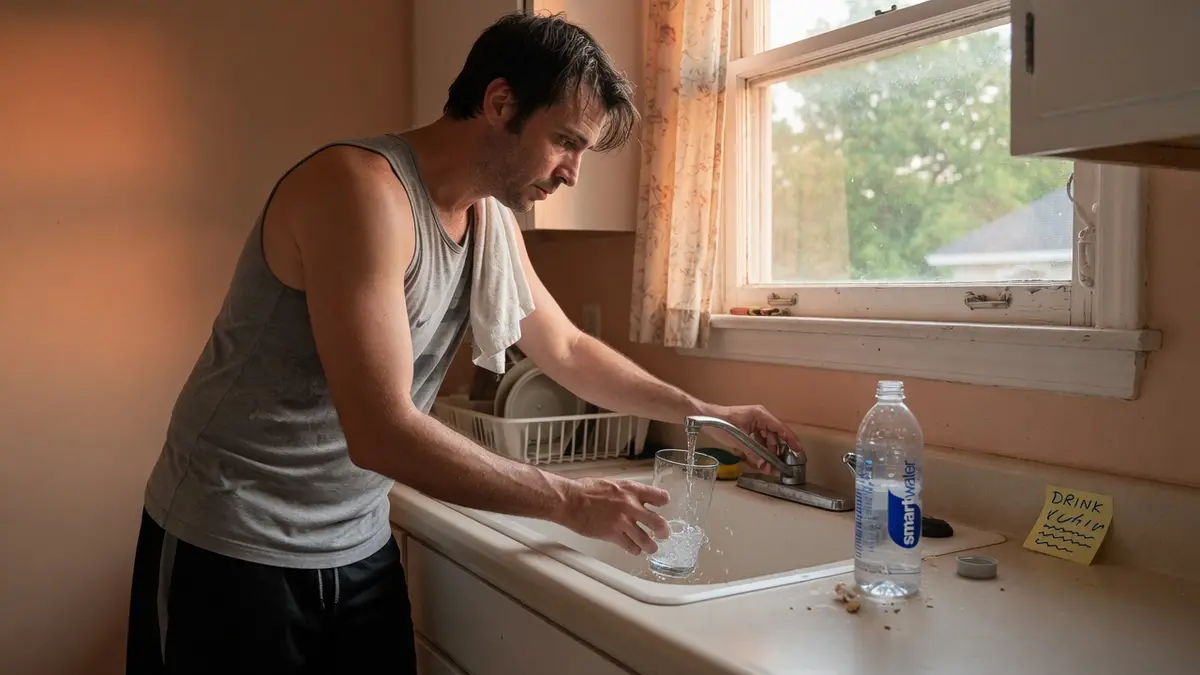
Anyone who has passed a kidney stone remembers the exact moment it started — that deep, twisting ache in the flank that no position seems to fix. And the first thing most urologists say afterward is almost insultingly simple: drink more water. But “more” is vague, and it raises real questions. How much is actually enough? Does it matter whether you’re pouring from the tap, a filter pitcher, or a fancy bottle of mineral water? Figuring out how much water to prevent kidney stones turns out to have a surprisingly specific, evidence-backed answer — and the type of water matters less than most people fear.
How much water to prevent kidney stones, by the numbers
The clearest target isn’t actually how much you drink — it’s how much urine you make. Clinical guidelines for stone prevention generally recommend producing at least 2 to 2.5 liters of urine per day. That’s roughly 8 to 10 cups. To hit that, most adults need to take in somewhere around 2.5 to 3 liters of fluid daily, because some of what you drink leaves through sweat, breath, and digestion rather than your bladder.
In practice, that lands at about ten to twelve 8-ounce glasses a day for many people — more if you’re physically active, live somewhere hot, or sweat heavily. The logic is straightforward: stones form when minerals like calcium, oxalate, and uric acid become concentrated enough in the urine to crystallize. More fluid dilutes those minerals, so they’re less likely to clump together and grow. Research following stone formers has found that hitting higher urine volumes roughly cuts the risk of a repeat stone in half compared to staying mildly dehydrated.
Here’s the honest part: “eight glasses a day” became famous because it’s easy to remember, not because it’s precise. For stone prevention specifically, the goal is higher than the casual hydration advice most people have heard. If you’ve already had a stone, your doctor may even ask you to measure your urine output for a day or two to see where you actually stand.
How to tell if you’re drinking enough
You don’t need a lab to get a rough read. Pale, straw-colored urine usually signals good hydration. Dark yellow or amber tends to mean you’re behind. Frequency matters too — making a reasonable amount of urine every few hours throughout the day is a better sign than going long stretches without needing a bathroom.
- Aim to drink steadily across the day rather than chugging a large amount at once.
- Have a glass with each meal and keep water within arm’s reach between them.
- Drink extra before bed and around exercise, when urine tends to concentrate most.
More Helpful Reads You Might Like:
- How to Prevent Kidney Stones: 7 Proven Strategies That Work
- 7 Evidence-Based Zinc Benefits—And Who May Need Supplements
- Brain Fog vs Memory Loss: What’s the Real Difference?
Does the type of water matter for kidney stones?
This is where a lot of people get tripped up by online advice. The short version: the volume you drink matters far more than the source. That said, water type isn’t completely irrelevant, and the details are genuinely interesting.
Tap water vs filtered water for kidney stones
A common worry is that hard tap water — water high in dissolved calcium and magnesium — might fuel calcium stones. It sounds logical, but the evidence doesn’t support that fear. Studies looking at hard versus soft water have generally found no meaningful increase in stone risk from hard water, and some data even suggest the calcium in water may bind dietary oxalate in the gut, slightly reducing how much oxalate reaches the kidneys. Magnesium and citrate, both sometimes present in water, can actually work against stone formation.
So in the tap water vs filtered water question for kidney stones, neither is clearly superior for prevention. Filtering with a standard carbon pitcher mainly improves taste and removes some contaminants like chlorine — it doesn’t strip enough minerals to change your stone risk one way or the other. If filtered water makes you drink more because you prefer how it tastes, that’s a real benefit, just not a chemical one.
Mineral water and kidney stones
Mineral water is a more nuanced case. Some bicarbonate-rich mineral waters can raise urinary citrate and pH, and citrate is one of the body’s natural defenses against calcium stones — it helps keep crystals from sticking together. For certain stone formers, particularly those with low urine citrate, mineral water high in bicarbonate may offer a small edge. Calcium-rich mineral waters appear neutral to mildly protective for most people, similar to hard tap water.
The catch is that mineral content varies enormously between brands, and very high-sodium mineral waters could work against you, since sodium tends to push more calcium into the urine. Reading the label helps: lower sodium, with bicarbonate or citrate present, is the friendlier profile.
What about other drinks?
Plain water is the backbone, but it isn’t the only fluid that counts. Citrus drinks deserve a mention because citrate is protective. Lemon and lime juice are especially high in citrate, and adding fresh lemon to your water is a cheap, evidence-supported tweak. Orange juice can raise urinary citrate too, though its sugar load means moderation is wise.
On the other side, a few drinks are worth limiting. Sugar-sweetened sodas, particularly dark colas containing phosphoric acid, have been associated with higher stone risk in large studies. Heavy intake of sweetened beverages overall tends to track with more stones. Coffee and tea, somewhat counterintuitively, don’t appear to raise risk for most people and may even be neutral to slightly protective despite the oxalate in tea — though anyone with calcium oxalate stones and very high tea intake may want to discuss it with their doctor.
Practical hydration habits that actually stick
Knowing the target is one thing; hitting it every single day is another. A few small adjustments tend to work better than willpower alone.
- Keep a marked bottle so you can see your progress toward 2.5 to 3 liters without counting glasses.
- Front-load earlier in the day if waking up at night to urinate bothers you.
- Pair drinking with existing habits — every time you check your phone or finish a meal, take a few sips.
- Increase fluids deliberately on hot days, during travel, and around workouts, when you’re losing more through sweat.
- Add a squeeze of lemon for flavor and a citrate bump in one move.
One safety caveat: more is not infinitely better. Drinking extreme amounts of water in a short window can dilute your blood sodium to dangerous levels, a condition called hyponatremia. This is rare and mostly affects endurance athletes or people who massively overdo it, but it’s the reason the advice is steady, consistent intake — not drowning yourself to hit a number.
When to seek medical care
Hydration is prevention, not treatment. If you think you’re passing a stone or your symptoms point that way, certain signs mean you should be evaluated promptly rather than toughing it out:
- Severe pain in your side, back, or lower abdomen that comes in waves
- Blood in the urine, or urine that looks pink, red, or brown
- Fever or chills alongside pain, which can signal infection — this is urgent
- Nausea and vomiting severe enough that you can’t keep fluids down
- Difficulty urinating or a near-total inability to pass urine
If you’ve had one stone, you’re at meaningful risk for another, and a doctor can run a 24-hour urine test to see exactly which minerals are running high. That personalizes everything — your ideal fluid target, whether citrate supplements make sense, and which dietary changes matter most for your stone type.
The bottom line on how much water to prevent kidney stones: aim for enough fluid to produce around 2.5 liters of urine a day, drink it steadily, and stop stressing about whether it comes from the tap, a filter, or a bottle. The volume is what protects you. A little lemon and a label-checking habit for mineral water are nice extras, not requirements.
Medical Disclaimer: This content is for educational purposes only and does not replace professional medical advice, diagnosis, or treatment. Always consult your physician or a qualified healthcare provider with any questions about a medical condition.
Sources & Further Reading
- NIH National Institute of Diabetes and Digestive and Kidney Diseases: Eating, Diet, & Nutrition for Kidney Stones
- NIH National Institute of Diabetes and Digestive and Kidney Diseases: Treatment for Kidney Stones
- Mayo Clinic Health System: Preventing Kidney Stones from Forming
- PubMed – NIH National Library of Medicine: Hydration for Adult Patients with Nephrolithiasis: Specificities and Current Recommendations
- PubMed – NIH National Library of Medicine: Self-Fluid Management in Prevention of Kidney Stones: A PRISMA-Compliant Systematic Review and Dose-Response Meta-Analysis
- PubMed – NIH National Library of Medicine: Water for Preventing Urinary Stones (Cochrane Review)