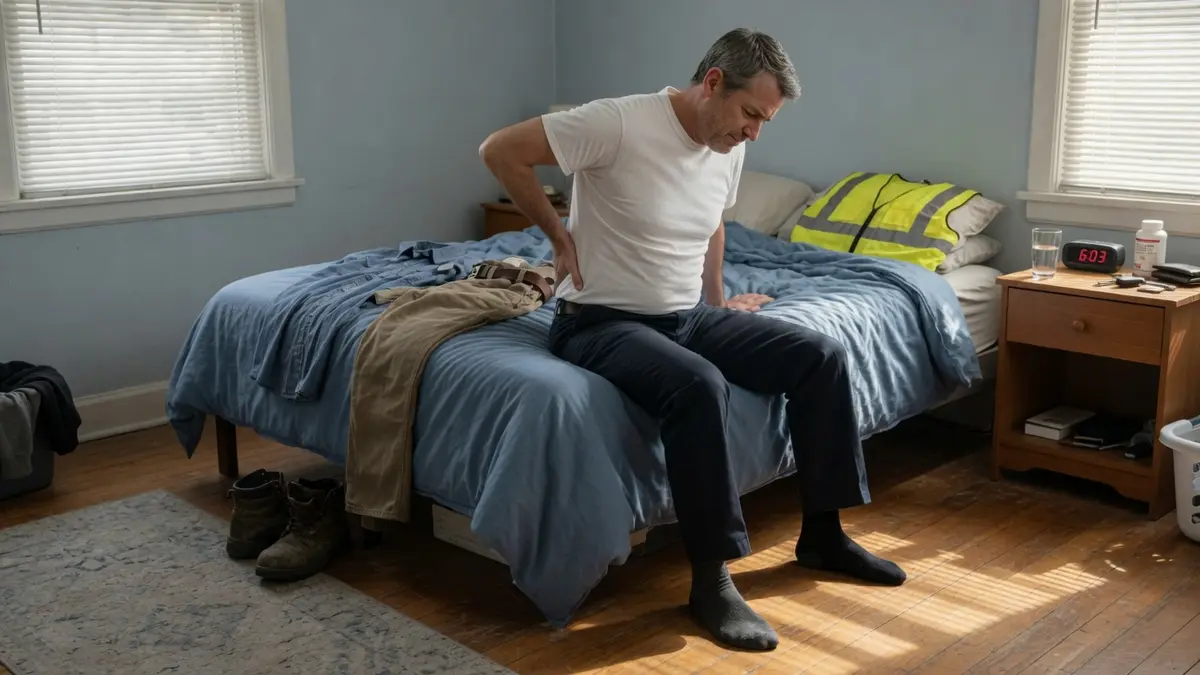
You bend down to pick up a laundry basket, feel a sharp twinge in your lower back, and spend the next three days walking like a question mark. Annoying? Absolutely. Dangerous? Almost never. The vast majority of back pain is mechanical — strained muscles, irritated joints, a disc that’s grumpy but not catastrophic — and it gets better on its own within a few weeks.
But not all back pain is created equal. A small slice of cases signal something that needs attention now, not next week. Knowing when is back pain serious comes down to recognizing a handful of specific warning signs that doctors call “red flags.” These are the symptoms that shift back pain from a nuisance to a reason to pick up the phone or head to the emergency room.
How to tell ordinary back pain from something more
Most everyday back pain has a recognizable rhythm. It often follows a specific movement or activity. It tends to feel worse with certain positions and better with others. It improves — gradually, sometimes frustratingly slowly, but it improves. You can usually find a position of relief, and over-the-counter measures take the edge off.
Serious back pain tends to break that pattern. It might not respond to rest or position changes. It can wake you from sleep or feel relentless regardless of what you do. And critically, it often comes packaged with other symptoms that have nothing to do with a pulled muscle — fever, numbness in unexpected places, or trouble controlling your bladder. The pain itself isn’t always the loudest clue. The company it keeps usually is.
More Helpful Reads You Might Like:
- Decoding Your Blood Pressure Monitor: The Numbers and the Features That Actually Matter
- Hair Thinning at 30? Here’What’s Actually Happening — and What Helps
Back pain red flags that warrant immediate care
Certain symptoms, when they appear alongside back pain, are considered red flags because they may point to nerve damage, infection, fracture, or other conditions that can worsen quickly if left untreated. None of these guarantee something serious is happening, but each one deserves a prompt evaluation rather than a wait-and-see approach.
Loss of bladder or bowel control
This is the symptom that should move fastest. New difficulty starting urination, leaking urine without realizing it, or losing control of your bowels — especially when paired with back pain and numbness — can be a sign of cauda equina syndrome, a condition where the bundle of nerves at the bottom of the spinal cord becomes compressed. It’s rare, but it’s a true emergency. Delayed treatment can lead to permanent loss of function, which is exactly why this one belongs in the “go to the ER now” category.
Numbness in the groin or inner thighs
A specific kind of numbness — what doctors call “saddle anesthesia” because it affects the area that would touch a saddle — is another marker of serious nerve compression. If you notice your inner thighs, groin, or buttocks feeling numb or tingly, that’s not a wait-it-out symptom. It often appears alongside the bladder and bowel changes described above.
Progressive weakness or numbness in the legs
Leg weakness that’s getting worse, foot drop (trouble lifting the front of your foot so it slaps the ground when you walk), or numbness that spreads can indicate a nerve being pinched hard enough to cause damage. Mild, stable tingling down one leg from a known disc issue is common and usually not an emergency. Weakness that’s increasing by the hour or day is different.
Fever, chills, or unexplained weight loss
Back pain combined with a fever can point to an infection in the spine or surrounding tissue. Pair back pain with unexplained weight loss, night sweats, or a history of cancer, and clinicians start thinking about causes beyond a simple strain. These symptoms don’t always mean something dire, but they change the conversation and warrant testing.
Pain after a significant injury
A fall from height, a car accident, or any forceful trauma followed by back pain raises the possibility of a fracture. This matters even more for people over 50, those with osteoporosis (thinning, more fragile bones), or anyone who takes steroids long-term, since bones can break with surprisingly little force in these situations.
Severe pain that won’t ease with rest
Back pain that’s intense and constant, doesn’t improve when you lie down, and particularly pain that’s worse at night or wakes you up, is worth taking seriously. Mechanical pain usually eases when you find the right position. Pain that ignores rest entirely is a pattern that sometimes points to infection, fracture, or other underlying causes.
When to go to the ER versus calling your doctor
Not every warning sign means a trip to the emergency room, and knowing the difference saves you a stressful, expensive night in a waiting room when a same-day clinic appointment would do.
Head to the ER right away for back pain emergency symptoms like new loss of bladder or bowel control, saddle numbness, rapidly worsening leg weakness, or back pain after major trauma. These can’t wait. The same goes for back pain accompanied by a high fever and feeling genuinely ill, or pain so severe you can’t move or function.
Call your doctor for a prompt — within a day or two — appointment if you have:
- Pain radiating down a leg that’s persistent but stable
- Mild numbness or tingling that isn’t spreading
- Back pain lasting more than six weeks without improvement
- A history of cancer, recent infection, or a weakened immune system
- Pain accompanied by a low-grade fever or feeling run-down
For the ordinary muscle-strain variety — pain that’s improving, responds to position changes, and has no red flags attached — home care is reasonable. Gentle movement, avoiding prolonged bed rest, and over-the-counter pain relievers used as directed are the usual first steps. The honest answer is that most of these cases resolve without anyone ever figuring out exactly what was injured, and that’s okay.
A word on “just in case” worry
Here’s the thing about red flags: their job is to catch the rare serious case, not to make every twinge feel like an emergency. Statistically, if you have back pain and none of the warning signs above, the odds heavily favor a benign cause. The point isn’t to scan your body anxiously for symptoms — it’s to know which specific ones actually change the plan so you can act decisively if they show up.
When is back pain serious enough to stop waiting it out?
The short version: back pain becomes serious when it stops behaving like a muscle problem and starts behaving like a nerve, bone, or systemic problem. Trouble with bladder or bowel control, numbness in the groin, worsening leg weakness, fever, unexplained weight loss, or pain following a real injury are the signs of serious back pain that mean the wait-and-see approach is off the table. Everything else — the stiff, achy, position-dependent pain that slowly fades — is the kind your body usually handles on its own. When you’re genuinely unsure, a phone call to your clinician is never the wrong move; describing your symptoms out loud often clarifies whether you’re dealing with an inconvenience or something that needs eyes on it today.
Medical Disclaimer: This content is for educational purposes only and does not replace professional medical advice, diagnosis, or treatment. Always consult your physician or a qualified healthcare provider with any questions about a medical condition.
Sources & Further Reading
- NCBI StatPearls: Low Back Pain: Evaluation and Management
- Mayo Clinic: When to See a Doctor for Back Pain
- Mayo Clinic Health System: When Should I Be Seen for Back Pain?
- PubMed: Red Flags for Low Back Pain Are Not Always Really Red — A Prospective Evaluation of the Clinical Utility of Commonly Used Screening Questions
- Cleveland Clinic: Cauda Equina Syndrome — Symptoms and Treatment
- NINDS NIH: Low Back Pain Fact Sheet