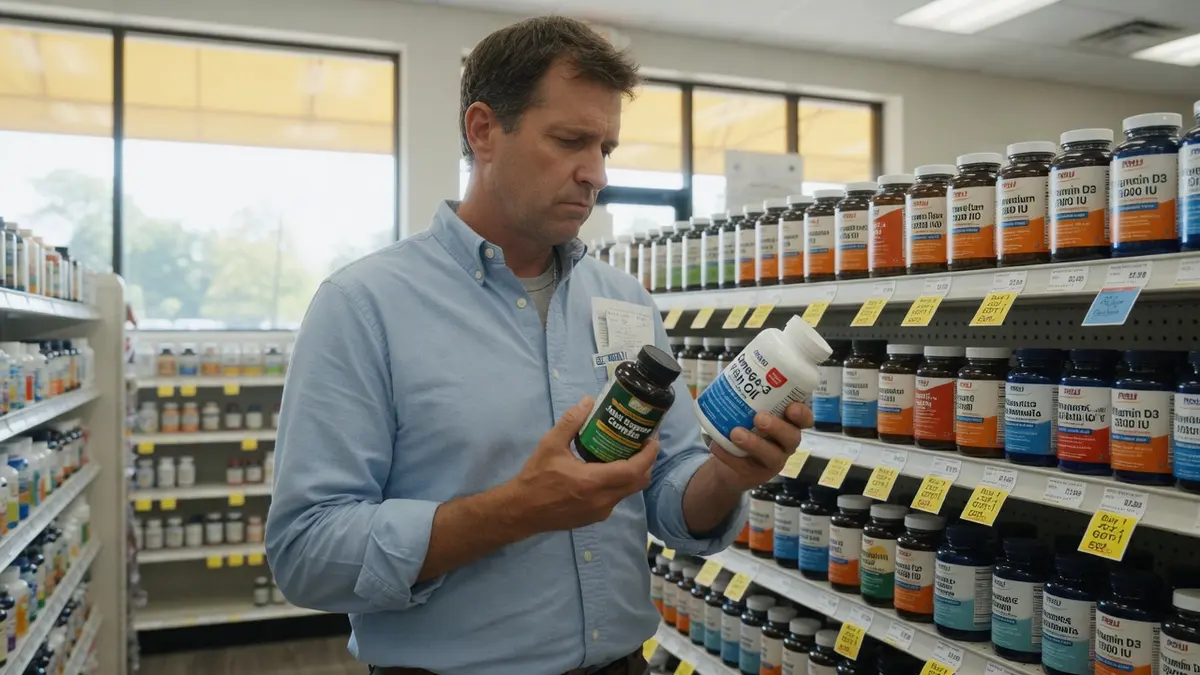
Walk down the supplement aisle in October and you’ll see it: bottles promising to “supercharge” your defenses, gummies shaped like little orange shields, powders you stir into water at the first sneeze. The marketing leans hard on fear, and it works. But most of these products fall into two camps — the few that have real evidence behind them, and the many that are mostly hope in a capsule.
Sorting out which vitamins that boost immune system function are worth buying comes down to a simple question: does the research actually show a benefit, and does that benefit apply to you? Because a supplement can help a deficient person quite a bit while doing almost nothing for someone who already eats reasonably well.
How your immune system actually uses micronutrients
Your immune system runs on a steady supply of certain vitamins and minerals. They’re cofactors — helper molecules — for the cells that detect invaders, the barriers that keep germs out, and the chemical signals that coordinate a response. When you’re genuinely short on one of these nutrients, that machinery runs less smoothly, and you may be more prone to infections.
Here’s the part the labels skip: above the point where a deficiency is corrected, piling on more rarely helps. Your body isn’t a machine where extra fuel means extra power. Topping off an empty tank matters. Overfilling a full one mostly just creates expensive urine, and occasionally side effects.
So the useful frame isn’t “what boosts immunity?” It’s “am I low on something that matters, and would correcting it help?”
More Helpful Reads You Might Like:
- 7 Evidence-Based Zinc Benefits—And Who May Need Supplements
- Best Supplements for Mental Focus: What Actually Works?
- 5 Science-Backed Ways Hormonal Changes Affect Mood and Energy
Vitamin D and immunity: the strongest case
If there’s one nutrient with a genuinely solid story, it’s vitamin D. The connection between vitamin D and immunity isn’t marketing — immune cells carry receptors for it, and low levels are common, especially in winter, in people with darker skin, in older adults, and in anyone who spends most days indoors.
Research on supplementation is more nuanced than the headlines suggest. Studies in people who were actually deficient have found that correcting low vitamin D may modestly reduce the risk of respiratory infections. For people who already have healthy levels, the benefit shrinks or disappears. That’s the recurring theme you’ll see throughout this piece.
A reasonable approach for many adults is somewhere in the range of 1,000 to 2,000 IU daily, though the right dose depends on your blood level, which a simple test can tell you. Going much higher without a reason isn’t better — very high doses over time can raise calcium to harmful levels.
Does vitamin C help immune system function?
This is the supplement people reach for the moment their throat feels scratchy, so it deserves a straight answer. Does vitamin C help immune system function? Sort of — and not in the way most people assume.
For the average person, taking vitamin C regularly does not prevent colds. That’s been studied extensively, and the evidence is consistent. What it may do is slightly shorten how long a cold lasts — on the order of a day or less — if you were already taking it before you got sick. Starting it after symptoms appear doesn’t seem to do much.
There’s one exception worth knowing: people under heavy physical stress, like marathon runners and soldiers training in extreme conditions, did see a meaningful drop in cold risk in some studies. For the rest of us sitting at a desk, the effect is small.
Vitamin C is cheap and safe at normal doses, so there’s little harm in it. Megadoses, though, can cause stomach upset and diarrhea, and your body simply flushes out what it can’t use.
Zinc for immune health: timing is everything
Zinc is one of the more interesting entries because when you take it changes the answer entirely. For zinc and immune health, the evidence points in two directions.
As a daily supplement to prevent illness, zinc only clearly helps people who are deficient — which is more common in older adults, vegetarians, and those with certain digestive conditions. As a treatment, though, zinc lozenges started within roughly 24 hours of cold symptoms may shorten the illness, possibly by a couple of days, based on several trials.
A few practical cautions:
- The lozenge form matters — it’s thought to work on contact in the throat, so swallowing a pill isn’t the same.
- Zinc can cause nausea and a genuinely unpleasant metallic taste.
- Long-term high doses can interfere with copper absorption, so daily supplementation above 40 mg isn’t something to do casually.
- Skip zinc nasal sprays — they’ve been linked to a lasting loss of smell.
The supplements that are mostly hype
This is where money tends to disappear. Several popular immune products have thin or contradictory evidence, despite confident packaging.
Echinacea. Trials have produced wildly mixed results, partly because different products use different plant parts and extracts. Overall, the evidence that it prevents or shortens colds is weak and inconsistent.
Elderberry. Popular and promising-sounding, with a few small studies hinting at shorter colds — but the research is limited and largely industry-funded. Not enough to recommend it confidently.
High-dose multivitamins marketed as “immune blends.” These often combine modest amounts of several nutrients with a premium price tag. If you already eat a varied diet, you’re paying for insurance you may not need.
Vitamin C megadose powders. The single-serving packets delivering 1,000 mg or more lean on the idea that more is better. As covered above, it isn’t.
None of these are dangerous in normal use. They’re just unlikely to deliver what the label implies, and that’s worth your honesty with yourself before you spend.
Who actually benefits from supplementing
The people most likely to see a real difference are those with a genuine shortfall. That includes:
- Older adults, whose absorption and intake often decline
- People with limited sun exposure or darker skin, for vitamin D specifically
- Vegetarians and vegans, who may run low on zinc and B12
- People with digestive conditions that impair nutrient absorption
- Anyone eating a consistently restricted or low-variety diet
If you don’t fall into one of these groups and you eat a reasonably balanced diet, the most honest answer is that the immune support supplements that work for deficient people probably won’t move the needle much for you. A plate with colorful vegetables, protein, and whole foods covers the same ground a pricey blend claims to.
When to skip the supplement aisle and call your doctor
Supplements aren’t the right tool for certain situations, and reaching for them can delay care that actually matters. Talk to a healthcare provider if you notice:
- Frequent infections that are unusually severe or slow to clear
- A fever that’s high or lasts more than a few days
- Unexplained fatigue, weight loss, or recurring illnesses
- Symptoms that keep coming back despite feeling like you’re doing everything right
These patterns can point to something a vitamin won’t fix, from an underlying medical condition to a medication effect. A blood test can also tell you whether you’re actually low on vitamin D or zinc — which beats guessing and self-prescribing.
One safety note worth repeating: supplements can interact with prescription medications and with each other. If you take blood thinners, immune-suppressing drugs, or have a chronic condition, run any new supplement past your physician or pharmacist first.
Which vitamins that boost immune system are actually worth buying?
Strip away the marketing and a short list remains. Vitamin D has the strongest case, particularly if you’re low. Zinc earns its place as a lozenge taken early in a cold, and as a daily supplement only if you’re deficient. Vitamin C offers a small, real benefit mostly for people under intense physical stress. Everything else is, at best, a maybe — and your grocery cart usually does more for your immune system than any bottle. Test before you treat, match the dose to the need, and put the money you save toward better food.
Medical Disclaimer: This content is for educational purposes only and does not replace professional medical advice, diagnosis, or treatment. Always consult your physician or a qualified healthcare provider with any questions about a medical condition.
Sources & Further Reading
- NIH Office of Dietary Supplements: Dietary Supplements for Immune Function and Infectious Diseases – Health Professional Fact Sheet
- PubMed – NIH: Vitamin C and Immune Function (Carr & Maggini, Nutrients 2017)
- PMC – NIH: An Update on the Effects of Vitamin D on the Immune System and Autoimmune Diseases
- PubMed – NIH: Dietary and Physiological Effects of Zinc on the Immune System
- NCCIH – NIH: Echinacea: Usefulness and Safety
- NCCIH – NIH: Using Dietary Supplements Wisely