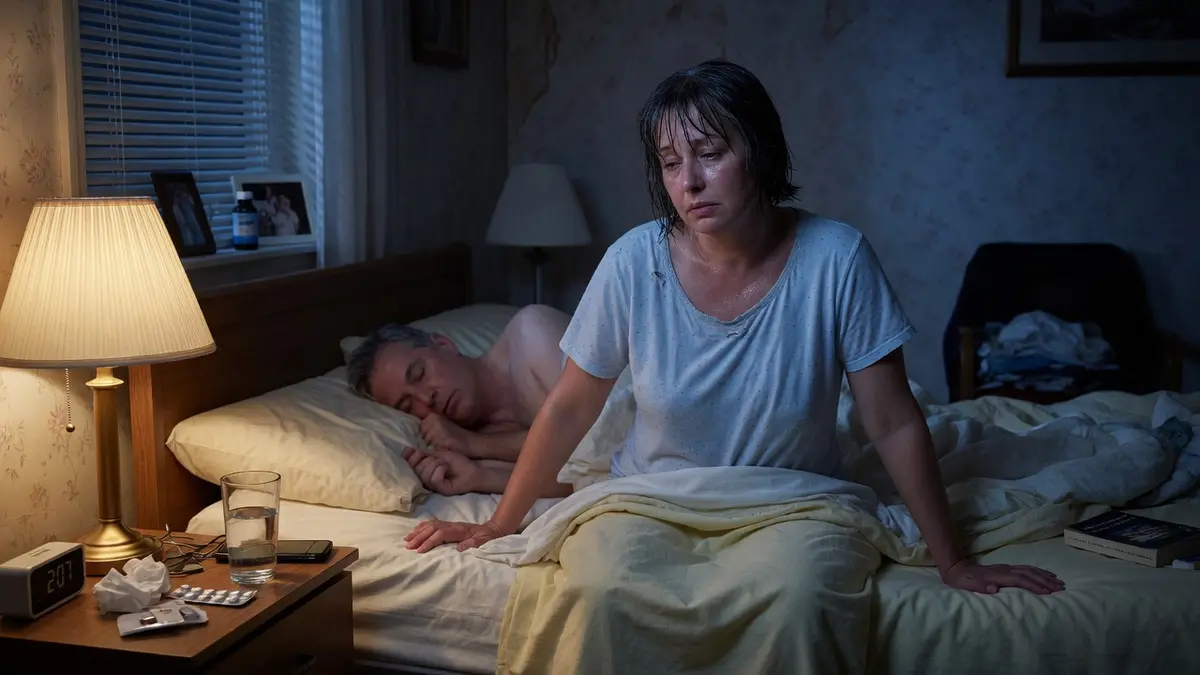
It’s 2:47 a.m. You’re suddenly awake, the sheets damp, your chest and neck radiating heat like you’ve been standing too close to an open oven. You kick off the blanket, maybe change your shirt, and just as the chill sets in and you start to drift back, it happens again an hour later. By morning you feel like you barely slept — because, honestly, you didn’t.
If that scene feels familiar, there’s a real biological reason behind it. The question of why are hot flashes worse at night isn’t just bad luck or stress. It comes down to how your body’s temperature control, your internal clock, and shifting hormones all collide while you sleep. Understanding what’s actually happening makes the whole experience less mysterious — and easier to manage.
What a hot flash actually is — and why nighttime changes the game
A hot flash is a sudden sensation of heat, usually across the face, neck, and chest, often followed by sweating and sometimes a racing heart or flushed skin. The trigger sits deep in the brain, in a region called the hypothalamus — think of it as your body’s thermostat.
During perimenopause and menopause, falling and fluctuating estrogen levels make that thermostat oversensitive. It starts misreading normal body temperature as “too hot” and slams on the cooling system: blood vessels near the skin widen, you sweat, and heat pours off your body. The technical term for this narrowed comfort zone is a shrunken “thermoneutral zone” — the small temperature range where your body feels fine without sweating or shivering. When that zone is tight, even a slight rise in core temperature can set off a flash.
So what makes night different? A few things stack up at once.
Your core body temperature naturally rises before deep sleep transitions
Your body temperature isn’t constant. It follows a daily rhythm, dipping in the early morning and climbing across the day. There are also small shifts overnight tied to your sleep cycles. For a thermostat that’s already touchy, these normal internal fluctuations are enough to cross the threshold and trigger a flash — something that might not have happened during the steadier hours of daytime.
Bedding traps heat you’d normally shed
During the day, you move around, your clothing breathes, and the air circulates. Under a comforter, heat has nowhere to go. A warm room, flannel sheets, or a partner generating their own body heat can nudge your core temperature up just enough to tip you over the edge.
There’s less distraction, so you notice every one
Here’s the candid part: you may be having hot flashes during the day too, but you’re busy, moving, talking, working — and many pass without fully registering. At night there’s nothing to compete with the sensation. A flash that wakes you also imprints itself on your memory in a way a daytime one never does, which is part of why nighttime hot flashes feel so much more intense and frequent.
More Helpful Reads You Might Like:
- Why Do I Cough More at Night? Understanding the Real Causes
- Why Am I Peeing So Often? Understanding Frequent Urination Causes
- Endometriosis Diet: 7 Foods That May Reduce Pain and Inflammation
What causes night sweats in women during menopause
Night sweats are essentially hot flashes that happen during sleep and produce enough sweating to wake you or soak your bedclothes. The underlying driver for most women in midlife is the same hormonal shift behind daytime flashes — estrogen changes affecting that brain thermostat.
But hormones aren’t the only thing that can cause night sweats in women, and that’s worth knowing because it affects how you respond. Other contributors that can worsen or mimic menopausal night sweats include:
- Alcohol, especially in the evening, which dilates blood vessels and disrupts sleep architecture
- Spicy foods or hot drinks close to bedtime
- Caffeine lingering in your system
- Certain medications, including some antidepressants and fever-reducers taken inconsistently
- Anxiety and stress, which raise core temperature and arousal
- A warm sleep environment or heavy bedding
Some medical conditions unrelated to menopause — thyroid problems, infections, low blood sugar, and a few others — can also cause night sweats. That’s why drenching sweats that don’t fit the usual menopause pattern deserve a conversation with your doctor rather than self-diagnosis.
Why the sleep disruption snowballs
The frustrating thing about hot flashes waking you up at night isn’t just the heat — it’s the cascade afterward. A flash often pulls you out of deeper, more restorative sleep into a lighter stage or full wakefulness. Then comes the sweat, the chill as it evaporates, the blanket adjustments, and sometimes a wide-awake brain that won’t settle.
Research suggests that fragmented sleep from nighttime flashes is strongly linked to the daytime fatigue, irritability, and brain fog that many women report during menopause. And poor sleep can lower your tolerance for the next night’s flashes, making the whole thing feel like a loop. Breaking even one part of that cycle tends to help the rest.
How to stop night sweats during menopause — practical steps that actually help
No single trick erases night sweats for everyone, but several evidence-supported changes can meaningfully reduce how often they wake you and how disruptive they feel.
Cool the environment before you need to
Set the bedroom cooler than feels strictly necessary — somewhere in the low-to-mid 60s Fahrenheit works for many people. A fan moving air across the bed helps heat escape faster when a flash hits. Keep a glass of cold water within reach.
Rethink what’s on and around your body
Breathable, moisture-wicking sleepwear and layered bedding let you shed heat fast and adjust without fully waking. Natural fibers like cotton or specialized cooling fabrics tend to beat synthetics that trap moisture. Some people find a separate lightweight blanket — so they can uncover without disturbing a partner — surprisingly effective.
Adjust the evening hours
Cutting alcohol, caffeine, spicy food, and large warm meals in the few hours before bed removes common triggers. A cooler shower before sleep and keeping the room dark and quiet support your body’s natural temperature dip at night.
Manage the stress side
Slow, paced breathing — long exhales, fewer breaths per minute — has shown some benefit for calming the nervous system, and several women find it helps them ride out a flash and fall back asleep faster. Regular daytime exercise also improves sleep quality overall, though intense workouts right before bed can backfire by raising core temperature.
Know that medical options exist
When lifestyle changes aren’t enough, there are effective treatments. Hormone therapy is the most consistently effective option for moderate to severe menopausal flashes and night sweats for women who are appropriate candidates. Non-hormonal prescription medications, including certain low-dose antidepressants and newer drugs that target the brain’s temperature pathway, can also help. These all have specific risks and benefits, so the right choice depends on your health history and a discussion with your clinician.
When to seek medical care
Occasional night sweats during the menopause transition are expected. Still, some patterns warrant a medical visit rather than waiting it out. Consider reaching out if you experience:
- Night sweats accompanied by unexplained weight loss, fever, or persistent cough
- Drenching sweats that feel out of proportion to your other menopause symptoms
- Sweats that began suddenly or don’t match the gradual pattern of perimenopause
- Sleep loss severe enough to affect your mood, focus, or daily function
- Symptoms you suspect may be tied to a new medication
A clinician can rule out other causes and walk you through treatment options tailored to you. There’s no prize for suffering through it quietly.
Why are hot flashes worse at night — and what to do tonight
The short version: a hormone-sensitized thermostat, natural overnight temperature shifts, heat-trapping bedding, and the simple fact that there’s nothing to distract you all converge after dark. That combination is why are hot flashes worse at night for so many women in midlife, even when daytime symptoms feel more manageable. None of it means something is wrong with you — it means your body’s cooling system is recalibrating, loudly. Start tonight by dropping the thermostat, switching to breathable bedding, and skipping the evening glass of wine, then bring the bigger picture to your doctor if sleep keeps slipping away.
Medical Disclaimer: This content is for educational purposes only and does not replace professional medical advice, diagnosis, or treatment. Always consult your physician or a qualified healthcare provider with any questions about a medical condition.
Sources & Further Reading
- Mayo Clinic: Hot Flashes – Symptoms and Causes
- Mayo Clinic: Hot Flashes – Diagnosis and Treatment
- National Institute on Aging: Hot Flashes – What Can I Do?
- National Institute on Aging: Sleep Problems and Menopause – What Can I Do?
- The Menopause Society: Hot Flashes Patient Education
- PubMed: Hot Flashes and Sleep in Women – Comprehensive Review (PMID 15556380)