
 Written by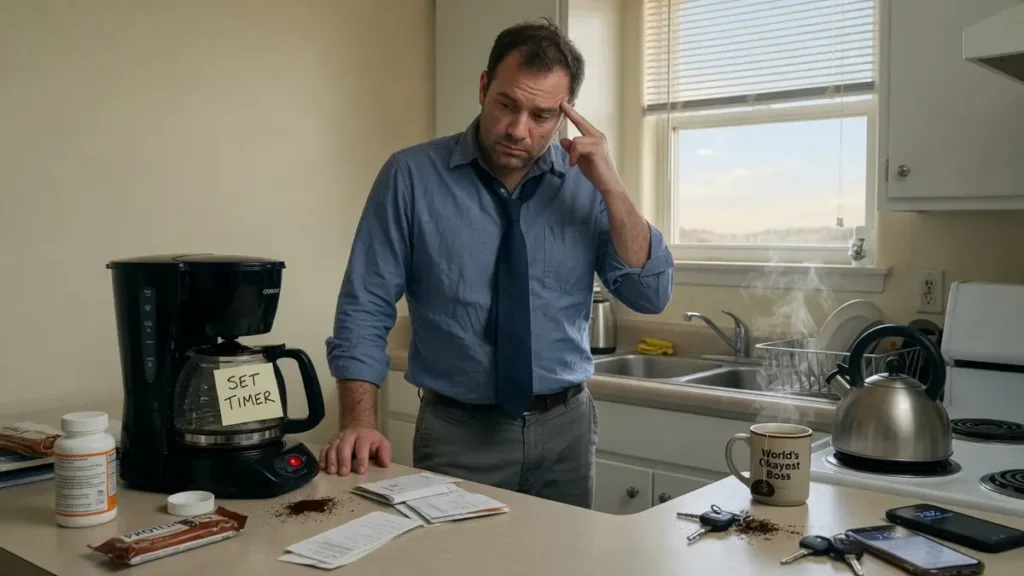
It’s Saturday. You sleep in, skip your usual 7 a.m. cup, and by mid-morning there’s a dull, throbbing ache settling in behind your eyes and across your forehead. You haven’t done anything differently except one thing — you didn’t drink your coffee. That pounding is almost certainly a caffeine withdrawal headache, and it’s one of the most predictable, well-documented reactions the human brain has to a missed dose of a drug most people don’t think of as a drug at all.
In this article
The good news is that it’s not dangerous, it’s not a sign something’s wrong with your brain, and it’s very manageable once you understand what’s actually happening.
What a caffeine withdrawal headache actually is
Caffeine is a stimulant, and your brain adapts to it. When you drink coffee regularly, caffeine blocks a chemical called adenosine — a molecule that builds up during the day and makes you feel drowsy. Caffeine plugs into the same docking sites adenosine uses, so you feel more alert. Simple enough.
Here’s the thing. Your brain doesn’t just sit there and accept being blocked. Over days and weeks of regular coffee, it grows more of those adenosine docking sites to compensate. So your brain becomes accustomed to a higher level of caffeine just to feel normal. This is physical dependence — not addiction in the dramatic sense, just your biology adjusting to a steady input.
When you skip your morning coffee, all those extra adenosine receptors are suddenly wide open. Adenosine floods in unopposed. One effect of that is on blood vessels in and around your brain — caffeine tends to narrow them, and without it, they widen. That shift in blood flow is thought to be a major driver of the throbbing, pressure-like headache that follows. Combine that with low alertness and a foggy, irritable mood, and you’ve got the classic skipping coffee headache.
How to tell it’s caffeine withdrawal and not something else
A caffeine withdrawal headache has a fairly recognizable pattern. It usually shows up within 12 to 24 hours of your last dose, often peaks around a day or two in, and tends to feel like a generalized, throbbing ache rather than a sharp, one-sided pain. It frequently comes packaged with other withdrawal symptoms:
- Fatigue or low energy
- Trouble concentrating or a “foggy” feeling
- Irritability or low mood
- Mild nausea in some people
- Feeling unusually drowsy
The giveaway is timing tied to your coffee routine. If the headache predictably arrives on mornings you skip caffeine and eases when you have some, that’s a strong clue. Migraines, tension headaches, and other types can overlap, though — so the pattern matters more than any single symptom.
More Helpful Reads You Might Like:
How long does a caffeine withdrawal headache last?
The honest answer is that it varies, but there’s a typical range. For most people, withdrawal symptoms begin 12 to 24 hours after the last dose, peak somewhere between 20 and 51 hours, and resolve within two to nine days. So if you’re wondering how long a caffeine withdrawal headache lasts, the rough answer is anywhere from a single rough morning to about a week of tapering discomfort, depending on how much caffeine you were used to.
People who drink larger amounts daily tend to have more noticeable and longer-lasting symptoms. Someone who has a single small cup might barely feel it. Someone running on four large coffees a day is more likely to get hit hard. The dose your brain adapted to is the dose it misses.
The fastest coffee headache remedy: just have some caffeine
This isn’t a trick. The most reliable caffeine headache cure is a modest amount of caffeine. Research and clinical experience both point to the same thing — reintroducing caffeine often relieves the headache within 30 to 60 minutes, because it reverses the very process causing the pain.
If you’re not trying to quit and just got caught off guard, a cup of coffee, tea, or even a caffeinated soda will usually do it. You don’t need your full usual amount. A smaller dose is frequently enough to take the edge off.
If you’d rather not reach for caffeine, a few other approaches can help in the meantime:
- Over-the-counter pain relievers. Acetaminophen or ibuprofen can ease the headache. Interestingly, some combination headache products include caffeine on purpose, because it can boost the effect of the pain reliever.
- Hydration. Coffee is a mild diuretic, and people who skip it sometimes drink less fluid overall in the morning. Dehydration can make any headache worse, so water genuinely helps.
- Eat something. Low blood sugar can pile onto the discomfort, especially if your coffee usually replaces breakfast.
- Rest and light movement. A short walk or simply lying down in a dim room can take the intensity down a notch while your brain readjusts.
How to quit or cut back without the headache
If the morning coffee headache is a sign you want to reduce your dependence — or you just don’t like being held hostage by a missed cup — the key is to taper, not quit cold turkey. Going from a full dose to zero overnight is what triggers the worst withdrawal.
A gradual reduction over one to two weeks gives your brain time to shed those extra adenosine receptors slowly, which keeps symptoms mild or absent. In practice, that might look like:
- Cutting your daily intake by roughly a quarter every few days rather than all at once
- Mixing decaf with regular coffee and slowly shifting the ratio toward decaf
- Swapping one coffee for a lower-caffeine option like tea
- Pushing your reductions on days when you have less stress and more flexibility, since a mild headache is easier to handle on a quiet afternoon than during a packed workday
There’s no medical reason you have to give up caffeine, to be clear. Moderate intake — generally considered up to about 400 milligrams a day for most healthy adults, roughly four small cups of coffee — is widely regarded as safe. The goal for many people isn’t elimination. It’s just not being floored by a headache on the one morning they skip.
Keeping it from happening in the first place
If you want to keep drinking coffee but avoid the surprise headaches, consistency helps more than anything. Wildly variable intake — three cups on workdays, none on weekends — sets you up for predictable weekend withdrawal. Keeping your daily amount roughly steady, including on days off, smooths out the peaks and valleys that cause the pain.
When to seek medical care
A caffeine withdrawal headache is uncomfortable but typically harmless and self-limiting. Still, not every headache is withdrawal, and some warning signs deserve prompt attention regardless of your coffee habits. Consider contacting a healthcare provider if you experience any of the following:
- A sudden, severe headache that comes on like a thunderclap
- A headache with fever, stiff neck, confusion, vision changes, weakness, or difficulty speaking
- Headaches that are getting progressively worse over days or weeks
- A headache after a head injury
- Headaches that don’t fit your usual pattern, or that aren’t relieved by caffeine or standard pain relievers
- Frequent reliance on over-the-counter pain medication, which can sometimes cause its own rebound headaches
If headaches are interfering with your daily life or you’re using pain relievers more than a couple of days a week, that’s worth a conversation with your physician rather than something to manage alone.
Why you get a caffeine withdrawal headache when you skip coffee
The short version: your brain adapted to daily caffeine, and skipping it leaves adenosine unchecked and blood vessels widening, which produces that familiar throb. A caffeine withdrawal headache is predictable, time-limited, and usually relieved either by a modest dose of caffeine or by tapering down gradually so your brain never goes into withdrawal in the first place. If you’d like to cut back, do it slowly over a week or two, stay hydrated, and keep your intake steady from day to day — that combination prevents most of the misery.
Medical Disclaimer: This content is for educational purposes only and does not replace professional medical advice, diagnosis, or treatment. Always consult your physician or a qualified healthcare provider with any questions about a medical condition.
Sources & Further Reading
How we sourced this article: we rely on peer-reviewed studies, clinical guidelines and public-health agencies (CDC, NIH, AHA, WHO), check every link before publishing, and update articles when the evidence changes. Read our editorial approach.
- NIH StatPearls: Caffeine Withdrawal
- PMC: Caffeine and Primary (Migraine) Headaches—Friend or Foe?
- PMC: Caffeine for Headaches: Helpful or Harmful? A Brief Review of the Literature
- Mayo Clinic Health System: Does Caffeine Treat or Trigger Headaches?
- Mayo Clinic: Caffeine – How Much Is Too Much?
- FDA: Spilling the Beans – How Much Caffeine Is Too Much?