 Written by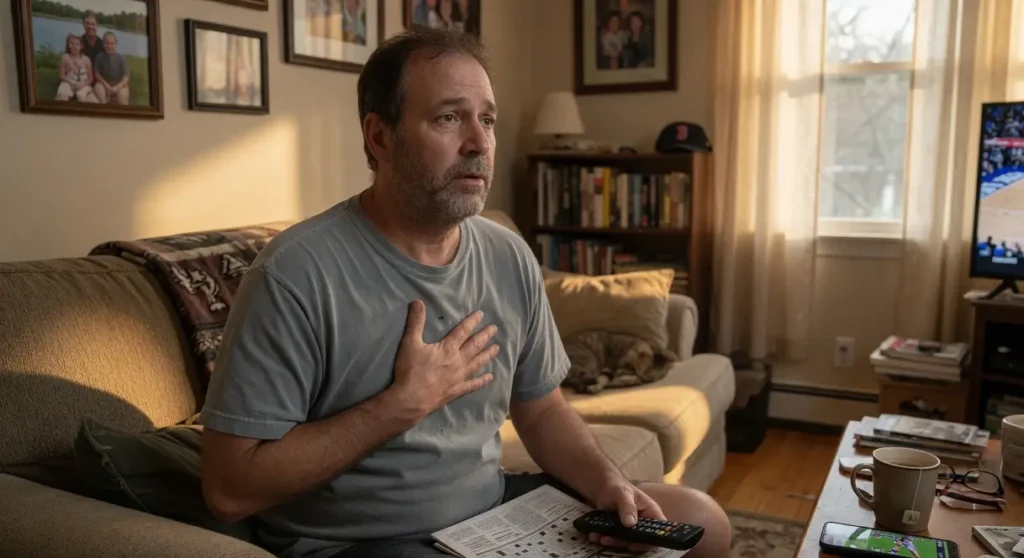
You’re sitting on the couch, maybe halfway through dinner, when a sharp pressure builds behind your breastbone. Your mind goes straight to the worst-case scenario. An hour later, after some pacing and a glass of water, it fades — and you’re left wondering what on earth that was.
In this article
That experience is incredibly common, and the reassuring news is that chest pain not from heart problems is actually more frequent in primary care visits than true cardiac pain. The chest is a crowded neighborhood: muscles, ribs, nerves, the esophagus, lungs, and stomach all live there, and any of them can throw off a signal that feels alarming. The trick is knowing which causes are usually benign, which deserve a same-week appointment, and which mean stop reading and call 911.
Why the chest is such a confusing place to feel pain
Nerves in the chest don’t draw neat boundaries. A muscle strain near the sternum can mimic a heart attack. Acid splashing up the esophagus can feel like crushing pressure. Anxiety can produce stabbing pains that move around. Even gallbladder trouble sometimes shows up as discomfort high in the chest.
Because of this overlap, even experienced doctors often need an EKG, blood work, or imaging to sort out what’s going on. So if you’ve ever felt foolish for going to the ER and being sent home with a diagnosis of “probably reflux,” don’t. The honest answer is that ruling out the heart first is exactly the right approach.
The most common non cardiac chest pain causes
Acid reflux and GERD
Chest pain from acid reflux is probably the single most common imposter for heart pain. When stomach acid backs up into the esophagus — the tube connecting your throat to your stomach — it can cause a burning sensation behind the breastbone that some people describe as squeezing or pressure rather than burning. It often shows up after meals, when lying down, or when bending over.
Clues that point toward reflux: a sour taste in the mouth, worse symptoms at night, relief with antacids, and a connection to specific foods like tomato sauce, coffee, chocolate, or alcohol. That said, severe reflux can cause spasms in the esophagus that genuinely feel indistinguishable from a heart attack, which is one reason this gets misdiagnosed in both directions.
Musculoskeletal chest pain
Musculoskeletal chest pain — pain from the muscles, ribs, cartilage, or joints of the chest wall — is another heavy hitter. Costochondritis, an inflammation of the cartilage where the ribs meet the breastbone, is a classic example. It usually causes sharp, localized pain that gets worse when you press on the spot, take a deep breath, twist, or reach overhead.
A useful rule of thumb: if you can reproduce the pain by poking a specific spot on your chest wall, it’s much more likely to be musculoskeletal than cardiac. Heart pain doesn’t generally care whether you’re pressing on your chest.
Strained pectoral or intercostal muscles (the small muscles between the ribs) can do the same thing, especially after lifting, a hard workout, prolonged coughing, or even sleeping in an odd position.
Chest pain from anxiety and panic attacks
Chest pain from anxiety is real, not imagined, and the physiology behind it is well documented. When the body’s stress response kicks in, muscles tense, breathing becomes shallow and fast, and the heart rate climbs. The result can be sharp or pressure-like chest discomfort, often along with shortness of breath, tingling in the hands or face, lightheadedness, and a sense of impending doom.
Panic attacks deserve special mention because they so often send people to the emergency room — and they should, the first time. The symptoms genuinely overlap with cardiac events. Over time, people who’ve been thoroughly evaluated may start to recognize their own pattern: a racing pulse without exertion, peaking within ten minutes, fading within thirty.
More Helpful Reads You Might Like:
- Panic Attack vs Anxiety Attack: How to Tell the Difference
- 7 Acid Reflux Symptoms You Shouldn’t Ignore
- Why Chest Tightness When Stressed Occurs and What It Means
Lung-related causes
The lungs and the membranes around them can also cause chest discomfort. Pleurisy, an inflammation of the lining around the lungs, typically causes a sharp pain that worsens with each breath. Pneumonia can produce a deeper, achier chest pain along with cough and fever. Asthma flares can feel like chest tightness rather than wheezing in some people.
One lung-related cause that does warrant immediate care: a pulmonary embolism, which is a blood clot in the lung. It can cause sudden sharp chest pain, shortness of breath, and a racing heart. Risk factors include recent surgery, long travel, hormonal birth control, pregnancy, smoking, or a history of clots.
Esophageal spasm and swallowing disorders
Beyond reflux, the esophagus itself can cramp. Esophageal spasm produces sudden, intense squeezing pain in the chest, sometimes triggered by very hot or cold drinks. It can last seconds or hours and is one of the most convincing heart attack mimics. If you also have trouble swallowing or feel like food gets stuck, mention that to your doctor.
Shingles
Before the telltale rash appears, shingles can cause burning or stabbing pain along one side of the chest, following the path of a nerve. The pain typically stays on one side and doesn’t cross the midline. If a rash with small blisters shows up a few days later in the same area, that’s the answer.
Stress, poor sleep, and posture
Less dramatic but worth mentioning: hunching over a laptop for ten hours, sleeping in a twisted position, or carrying chronic tension in the shoulders and upper back can all produce chest wall discomfort that lingers for days. It’s not glamorous, but it’s surprisingly common.
When to worry about chest pain
Knowing when to worry about chest pain is the part worth memorizing. Call 911 or go to the nearest emergency department if you experience:
- Chest pressure, squeezing, or heaviness lasting more than a few minutes, especially if it radiates to the arm, jaw, neck, or back
- Chest pain with shortness of breath, sweating, nausea, or vomiting
- Sudden severe chest pain with lightheadedness or fainting
- Chest pain with a fast or irregular heartbeat that doesn’t settle
- Coughing up blood
- Chest pain after a recent long flight, surgery, or leg swelling — possible blood clot
- Any chest pain in someone with known heart disease, diabetes, or significant risk factors
Risk factors that lower the threshold for getting checked include being over 40, smoking, high blood pressure, high cholesterol, diabetes, a family history of early heart disease, or being postmenopausal. Women, in particular, sometimes have heart attacks with atypical symptoms — fatigue, jaw pain, nausea, or back pain rather than classic chest pressure — so erring on the side of caution is reasonable.
What to do for non-emergency chest pain
If the pain is mild, brief, clearly tied to a specific movement or meal, and you have no risk factors, it’s reasonable to watch and see. A few practical steps that often help:
- For suspected reflux: avoid eating within three hours of bed, prop the head of the bed up a few inches, and try an over-the-counter antacid or H2 blocker for a few days
- For musculoskeletal pain: rest, ice or heat, gentle stretching, and an over-the-counter anti-inflammatory if your doctor has said those are safe for you
- For anxiety-related pain: slow nasal breathing (four seconds in, six seconds out), and consider talking to a clinician about longer-term strategies if it’s happening often
Schedule a non-urgent visit if chest pain is recurring, lasting more than a few days, interfering with sleep or daily activities, or simply not making sense. A physical exam, EKG, and a short conversation can clarify a lot.
What chest pain not from heart problems usually means in the long run
Most of the time, non-cardiac chest pain turns out to be reflux, muscle strain, anxiety, or some combination of the three. None of those are dangerous in the short term, but they can absolutely degrade quality of life if ignored. Getting an honest diagnosis — even one that ends with “it’s not your heart” — is worth the visit, because the next step is usually a treatment that works.
And if the pain comes back differently, more intensely, or with new symptoms, get it re-evaluated. The body doesn’t always read the textbook, and a pattern that was reflux last year can be something else this year.
Medical Disclaimer: This content is for educational purposes only and does not replace professional medical advice, diagnosis, or treatment. Always consult your physician or a qualified healthcare provider with any questions about a medical condition.
Sources & Further Reading
How we sourced this article: we rely on peer-reviewed studies, clinical guidelines and public-health agencies (CDC, NIH, AHA, WHO), check every link before publishing, and update articles when the evidence changes. Read our editorial approach.
- Mayo Clinic: Chest Pain – Symptoms and Causes
- Cleveland Clinic: Noncardiac (GERD) Chest Pain
- American College of Gastroenterology: Non-Cardiac Chest Pain (NCCP)
- PMC / NIH: Diagnosis and Management of Noncardiac Chest Pain
- PMC / NIH: Noncardiac Chest Pain – Epidemiology, Natural Course and Pathogenesis
- NIH / StatPearls: Costochondritis