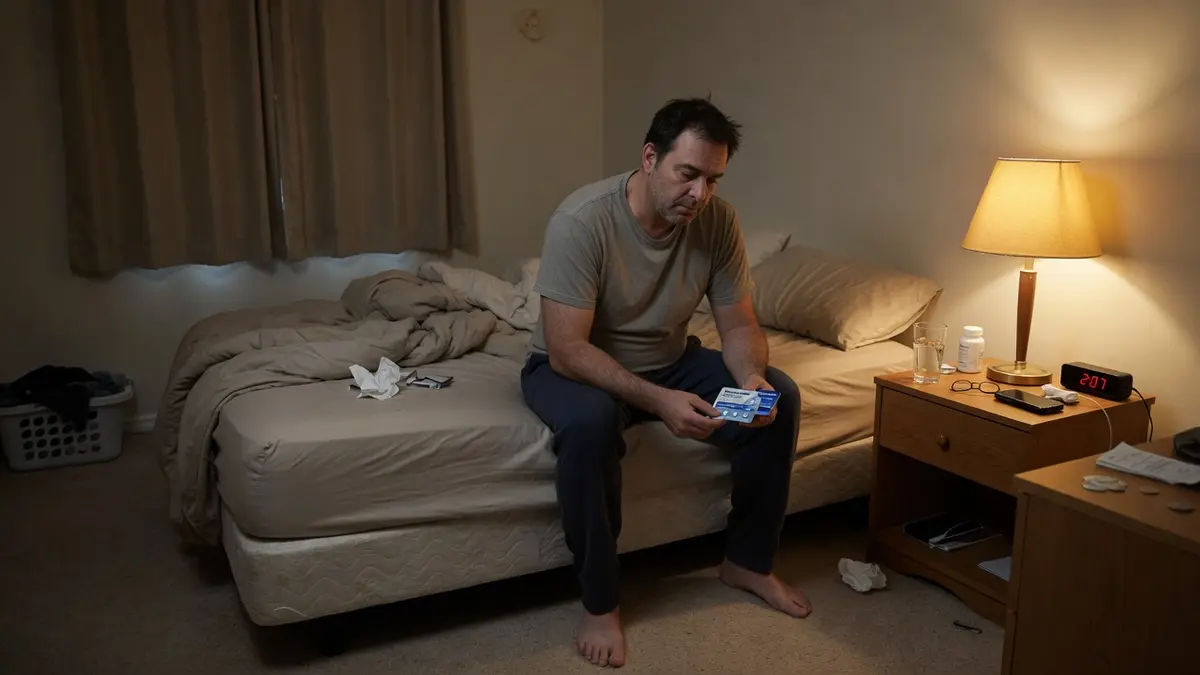

It’s 11 p.m. You’ve finally settled into bed, lights off, ready to drift away — and then your legs start. There’s an itch you can’t scratch, a crawling tightness deep in the calves, a pull that says move me now. You shift. You stretch. Maybe you get up and walk a lap around the bedroom. The sensation fades for a moment, then creeps back the second you lie down again. If that scene feels familiar, you’re describing one of the most recognizable restless legs at night symptoms there is.
The condition behind it — restless legs syndrome, sometimes called Willis-Ekbom disease — is a neurological issue, meaning it involves the way nerves and the brain process sensation and movement. It’s surprisingly common, and it’s frequently mistaken for ordinary leg cramps, anxiety, or just “having too much energy.” Sorting out what’s actually going on starts with understanding how RLS tends to feel and behave.
What does restless leg syndrome feel like?
Here’s the tricky part: the sensation is genuinely hard to put into words, and people describe it in wildly different ways. Some call it crawling or creeping, like something moving under the skin. Others say it’s an electric, tingly buzz, a deep ache, or a tugging sensation that sits inside the muscle rather than on the surface. A few describe it simply as “uncomfortable” with no better word available.
What unites these descriptions isn’t the exact feeling — it’s the response it triggers. The hallmark of RLS is an almost irresistible urge to move. Your legs feel like they need to move, and movement actually helps. Walking, stretching, jiggling your foot, even rubbing the muscles can dial down the discomfort, at least temporarily.
Clinicians lean on a few consistent features when they’re trying to identify RLS. Think of this as an informal RLS symptoms checklist:
- An urge to move the legs, usually paired with an uncomfortable or unpleasant sensation
- Symptoms that start or get worse during rest or inactivity — sitting, lying down, long car rides
- Relief, partial or complete, when you move
- A clear pattern of being worse in the evening or at night than during the day
That last point matters a lot. The nighttime tilt isn’t just because you happen to be lying still in bed. RLS follows a daily rhythm, and the urge genuinely intensifies in the evening hours for most people, even when they’re resting at the same level earlier in the day.
More Helpful Reads You Might Like:
- What an Enlarged Prostate Actually Feels Like (and the Signs Men Brush Off)
- Why Acid Reflux Gets Worse at Night—and What Actually Helps
- How Poor Sleep Can Lead to Weight Gain (and What to Do About It)
RLS or something else? Untangling nighttime leg discomfort causes
Plenty of things make legs feel rotten at night, and not all of them are RLS. Getting the distinction right changes what helps.
Leg cramps
A nighttime leg cramp is a sudden, visible muscle contraction — the calf knots up, it’s sharply painful, and you can feel the muscle gone rigid. RLS isn’t a cramp. There’s no hard knot, the discomfort is more diffuse, and the defining feature is the urge to move rather than a locked muscle.
Peripheral neuropathy
Nerve damage in the feet and legs — often related to diabetes — can cause burning, tingling, or numbness. It can overlap with RLS sensations, but neuropathy usually doesn’t improve with movement, and it tends to be present steadily rather than flaring specifically at rest.
Positional discomfort and circulation
Sometimes legs just ache from a long day, poor positioning, or vein issues that cause heaviness and swelling. These can feel worse at night too, but they don’t carry that signature need-to-move quality.
A related cousin: periodic limb movements
Many people with RLS also have leg twitches or jerks during sleep, often without knowing it — a bed partner usually notices first. That’s a separate phenomenon that frequently travels alongside RLS.
The honest answer is that you can’t always tell these apart on your own, and a couple of them can coexist. But the rest-triggered, movement-relieved, evening-heavy pattern is what points most strongly toward restless legs.
What’s actually causing it
RLS comes in two broad flavors. Primary RLS often runs in families and tends to show up without an obvious underlying trigger; genetics appear to play a real role. Secondary RLS is linked to something else going on in the body, and that’s the version worth checking for because it can sometimes be addressed directly.
A few factors are commonly associated with RLS or with making it worse:
- Low iron. Iron is involved in how the brain uses dopamine, a signaling chemical tied to movement control. Low iron stores — even when standard blood counts look normal — are one of the more consistent links researchers have found.
- Pregnancy. RLS often appears or worsens during pregnancy, especially the third trimester, and frequently eases after delivery.
- Kidney disease. Reduced kidney function is associated with higher rates of RLS.
- Certain medications. Some antidepressants, antihistamines (the sedating kind in many cold and sleep products), and anti-nausea drugs can trigger or amplify symptoms.
- Caffeine, alcohol, and nicotine. These don’t cause RLS, but they can stir it up in people who already have it.
Restless legs syndrome relief you can try at home
Before any prescription enters the picture, there’s a fair amount you can experiment with. None of this is a cure, and results vary from person to person, but these strategies are low-risk and worth a genuine try.
Movement is the most reliable in-the-moment tool. Walking, gentle stretching of the calves and thighs, or simply pacing for a few minutes can quiet a flare. Some people find that a warm bath or a heating pad helps, while others swear by cool packs — the temperature that works seems to be individual, so it’s fair to test both.
Regular, moderate exercise during the day is associated with milder symptoms for many people, though overdoing it with intense late-night workouts can backfire and make things worse. Aim for consistent activity earlier in the day rather than a hard session right before bed.
Look hard at your evenings. Cutting back on caffeine — and remembering it hides in chocolate, tea, and some sodas — can make a noticeable difference. The same goes for trimming alcohol and nicotine, particularly in the hours before sleep. A steady sleep schedule helps too, because being overtired tends to amplify RLS rather than override it.
If you take a sedating antihistamine for sleep or allergies, that’s worth a conversation with a pharmacist or doctor, since those medications are a known aggravator. Don’t stop a prescribed medication on your own, but do flag the possible connection.
On iron: because low iron is so often involved, your doctor may check your ferritin level, a measure of stored iron. Supplementing iron can help when stores are low — but taking iron when you don’t need it isn’t harmless, so this is one to handle with testing rather than guessing.
When to see a doctor
Home strategies are a reasonable starting point for mild, occasional symptoms. It’s worth booking an appointment when the picture is more serious:
- Symptoms happen most nights and consistently wreck your sleep
- You’re exhausted, foggy, or low during the day because of disrupted rest
- The discomfort is spreading, intensifying, or now showing up during daytime rest
- You’re pregnant and symptoms are interfering with sleep
- You have a condition like kidney disease or diabetes that could be feeding into it
A clinician can check for iron deficiency and other contributors, review your medications, and discuss treatment options if lifestyle measures aren’t enough. There are effective therapies, and you don’t have to white-knuckle through it indefinitely.
One caution worth keeping in mind: some prescription RLS treatments can, over time, paradoxically make symptoms worse — a phenomenon called augmentation. That’s not a reason to avoid treatment, but it is a reason to stay in regular contact with your prescriber rather than quietly increasing doses on your own.
Recognizing the restless legs at night symptoms — the urge to move, relief with movement, the evening pattern — is the part you can do yourself. Matching that pattern to the right cause, and finding lasting relief, is where a good conversation with your doctor earns its keep.
Medical Disclaimer: This content is for educational purposes only and does not replace professional medical advice, diagnosis, or treatment. Always consult your physician or a qualified healthcare provider with any questions about a medical condition.
Sources & Further Reading
- National Institute of Neurological Disorders and Stroke: Restless Legs Syndrome
- Mayo Clinic: Restless Legs Syndrome – Symptoms and Causes
- Mayo Clinic: Restless Legs Syndrome – Diagnosis and Treatment
- StatPearls (NIH/NCBI): Restless Legs Syndrome – Clinical Review
- PubMed: Restless Legs Syndrome – Understanding Its Consequences and the Need for Better Treatment
- American Academy of Sleep Medicine: New Guideline Provides Treatment Recommendations for Restless Legs Syndrome