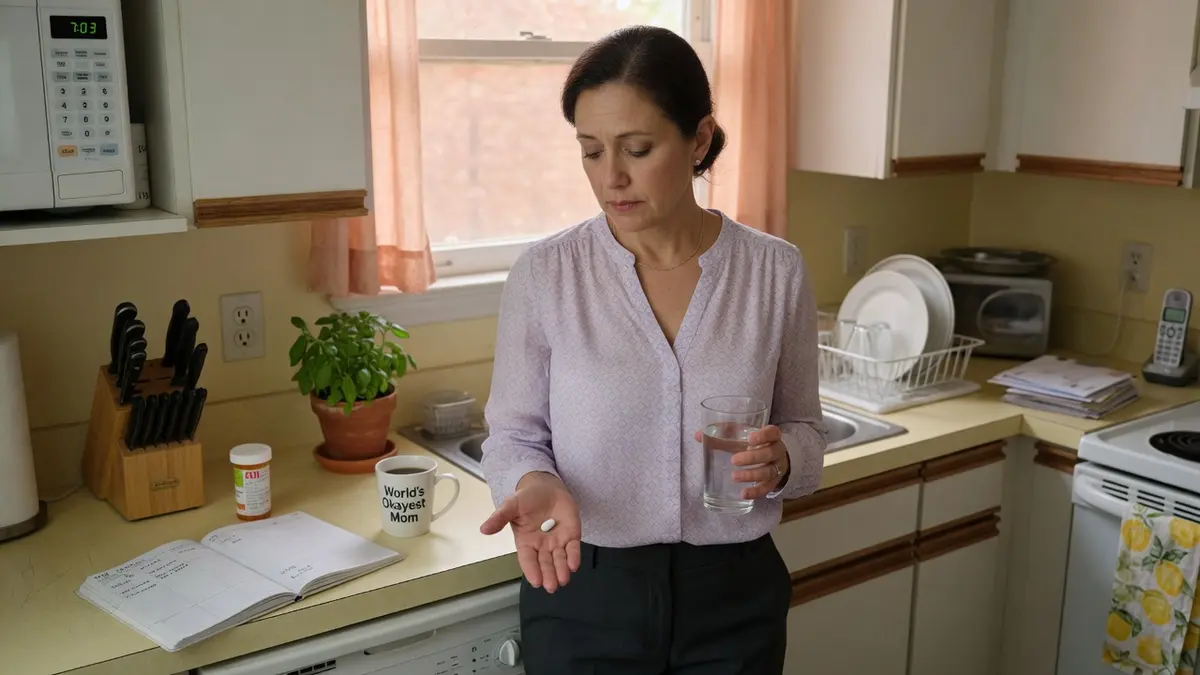

Your period showed up twice this month, you woke up at 3 a.m. drenched in sweat for the fourth night running, and you snapped at your partner over something you can’t even remember now. Then a friend casually mentions she had heavy bleeding that turned out to be something her doctor wanted to investigate, and suddenly every twinge feels suspicious. That’s the tricky part of this stage of life — the symptoms are real, they’re disruptive, and most of them are completely expected. But not all of them.
Knowing when to see a doctor for perimenopause symptoms comes down to telling apart the ordinary hormonal noise from the signals that deserve a closer look. The good news: the vast majority of what happens during perimenopause is normal, even when it feels anything but. The honest answer is that a smaller set of symptoms genuinely warrant a call — and those are the ones worth memorizing.
What counts as normal perimenopause side effects
Perimenopause is the stretch of time — sometimes several years — when your ovaries gradually wind down and hormone levels swing unpredictably before periods stop for good. That hormonal turbulence drives most of the symptoms people notice, and a surprising range of them falls squarely within the normal category.
Here’s the thing about estrogen and progesterone during this phase: they don’t decline in a smooth, tidy line. They spike and dip, sometimes within the same week. That erratic pattern explains why symptoms can feel scattered and inconsistent.
Commonly reported and generally expected experiences include:
- Irregular periods. Cycles may get shorter, longer, lighter, or heavier. Skipping a month and then having two close together is typical.
- Hot flashes and night sweats. Sudden waves of heat, flushing, and sweating — often worse at night — affect a majority of women at some point.
- Sleep disruption. Trouble falling asleep or waking in the early hours, sometimes tied to night sweats, sometimes not.
- Mood shifts. Irritability, anxiety, or feeling more emotionally raw than usual.
- Brain fog. Word-finding trouble and forgetfulness that’s annoying but tends to settle over time.
- Vaginal dryness and lower libido. Thinning tissues and shifting hormones can change comfort and desire.
- Breast tenderness and bloating. Often more pronounced during hormonal swings.
None of these are pleasant, exactly, but on their own they’re rarely a sign that something is wrong. They’re the body doing what it does during a major hormonal transition. That said, “normal” doesn’t mean you have to white-knuckle through it — many of these symptoms can be treated, and feeling miserable is a perfectly good reason to book an appointment even when nothing is medically alarming.
More Helpful Reads You Might Like:
Perimenopause warning signs that deserve a closer look
Some symptoms overlap with conditions that have nothing to do with menopause — thyroid problems, anemia, fibroids, and in rare cases more serious issues. The challenge is that perimenopause can mask these by making everything feel like “just hormones.” Distinguishing perimenopause vs serious health problems often hinges on the pattern and severity of bleeding, plus a few specific changes.
Bleeding that isn’t typical
Bleeding is where abnormal perimenopause symptoms most often show up, partly because heavy or unusual bleeding can point to fibroids, polyps, or changes in the uterine lining that a doctor should evaluate. Reasons to get checked include:
- Very heavy bleeding — soaking through a pad or tampon every hour for several hours, or passing large clots.
- Periods lasting much longer than usual, such as bleeding for more than seven days.
- Bleeding between periods or after sex.
- Cycles that come closer together than every 21 days on a repeated basis.
- Any bleeding after you’ve gone a full 12 months without a period. Postmenopausal bleeding always warrants evaluation, even if it’s light.
Symptoms that don’t fit the hormonal picture
A few other changes are worth raising with a clinician because they may signal something beyond perimenopause:
- Unexplained weight loss without changes to diet or activity.
- A racing or pounding heart, heat intolerance, or significant unexplained weight change — these can overlap with thyroid conditions, which are common in this age group.
- Extreme fatigue, breathlessness, or looking pale, which can suggest anemia, sometimes from heavy bleeding.
- Pelvic pain or pressure that’s persistent rather than the occasional cramp.
- New or worsening headaches, especially migraines with visual changes, which can affect decisions about certain hormone treatments.
Worth knowing: hot flashes and irregular cycles get blamed for a lot. If a symptom feels out of proportion or genuinely new, it’s reasonable to ask whether something else might be going on.
When is perimenopause not normal — the urgent red flags
Most perimenopause concerns can wait for a regular appointment. A handful shouldn’t. Seek prompt or emergency care if you experience:
- Bleeding so heavy that you feel dizzy, lightheaded, or faint, or you’re soaking through protection extremely fast.
- Chest pain, severe shortness of breath, or pain spreading to the arm or jaw. Cardiovascular risk rises around this stage, and these symptoms are never something to wait out.
- Sudden severe headache, especially with vision changes, weakness, or trouble speaking.
- Thoughts of harming yourself. Mood changes are common, but a persistent low mood, loss of interest, or suicidal thoughts deserve immediate support, not dismissal as “just hormones.”
Mental health deserves a specific mention. Anxiety and low mood can be part of the hormonal landscape, and they’re also treatable. If your mood is interfering with work, relationships, or daily life, that’s a clinical conversation worth having — the threshold for getting help is lower than many people assume.
How to prepare before you call
Whether your symptoms are clearly normal or genuinely puzzling, a little preparation makes the appointment more useful. Walking in with specifics helps a clinician sort hormones from everything else far faster than vague descriptions.
- Track your cycles. Note start dates, length, and how heavy the bleeding is. Many people use a phone app; a paper calendar works just as well.
- Log your most disruptive symptoms. Frequency, timing, and how much they affect sleep, work, or mood.
- List your medications and supplements. Some interact with hormone therapies.
- Note your family history of conditions like breast cancer, blood clots, heart disease, or osteoporosis, since these shape treatment options.
If a clinician brushes off bleeding that fits the warning-sign list above, it’s reasonable to ask directly whether it should be evaluated — and to seek a second opinion if you’re not satisfied. Persistent, disruptive symptoms are not something you’re expected to simply tolerate.
So when should you see a doctor for perimenopause symptoms, really?
The short version: book a routine appointment if symptoms are interfering with your life, even if they’re “normal,” because real relief is often available. Get evaluated sooner for abnormal bleeding, symptoms that don’t fit the hormonal pattern, or anything that feels out of proportion. And don’t wait at all for chest pain, fainting, sudden severe headaches, or thoughts of self-harm. Knowing when to see a doctor for perimenopause symptoms isn’t about second-guessing every hot flash — it’s about recognizing the specific signals that mean it’s time to pick up the phone, and trusting yourself when something feels off.
Medical Disclaimer: This content is for educational purposes only and does not replace professional medical advice, diagnosis, or treatment. Always consult your physician or a qualified healthcare provider with any questions about a medical condition.
Sources & Further Reading
- Mayo Clinic: Perimenopause – Diagnosis and Treatment
- Mayo Clinic Press: Signs of Perimenopause and When to See a Doctor
- National Institute on Aging (NIH): What Is Menopause?
- The Menopause Society: Perimenopause – Patient Education
- ACOG: Mood Changes During Perimenopause Are Real – Here’s What to Know
- PubMed / NIH (PMC): Management of the Perimenopause